From the days of scarce power supplies to today’s modern, automated, and data-driven grid, the journey of electricity mirrors the growth of Ha Noi itself. Looking back, electricity represents more than just power lines, substations, or generating plants; it is woven into the memories of generations of Hanoians—in streetlights, tram rides, factory shifts, the hum of machinery, and the familiar rhythms of daily family life.
These intimate details reveal just how far Ha Noi has come.
From the days of taking over the power supply
In October 1954, coinciding with the liberation of the Capital city, Ha Noi’s power sector embarked on a new chapter. The Bo Ho Power Plant was taken over, and the flow of electricity was maintained to serve the city.
Yet, a long journey lay ahead. Through the war years and periods of national hardship, power shortages occurred and the grid was often patchwork, even as the demands of a recovering and developing city continued to grow. There were times when trams stalled mid-journey due to power outages; nights when students sought out streetlights to study; and families at the end of the supply line who struggled with weak voltage.
These are memories of a Ha Noi that once lived with electricity shortages—and it was from those very shortages that a journey of transformation began.
From the workers of the past to today’s Capital electricians
Ha Noi’s transformation has been accompanied by the evolution of the very people who keep the power flowing. In the early years following the takeover, electricians worked with machinery, power lines, and equipment that were severely limited.
During the war, they repaired the power grid amidst bombardment. After the war, they continued to gradually expand and upgrade the electrical system to meet the needs of a rapidly growing capital.

Today, that work has entered a new realm. The Capital city’s power grid currently comprises 69 substations (220/110kV). Many power lines have been moved underground alongside urban beautification efforts. The 110/220kV substations operate unmanned; SCADA systems enable remote monitoring and control, making operations increasingly proactive and flexible.
Tasks that once required manual recording and on-site inspections are now performed using data. 100% of electricity customers have been equipped with remote-reading electronic meters, with readings collected automatically. Grid operating status is monitored in real-time, and many inspection, analysis, and troubleshooting tasks can be carried out remotely.
The flow of electricity remains the same, yet the way electricians work with it has changed.
As Ha Noi enters a new era of electricity
That transformation has continued. In 2026, Battery Energy Storage Systems (BESS) have been deployed at five 110kV substations, enhancing grid regulation capabilities and flexibility. Artificial Intelligence is also being explored to detect potential electrical safety hazards early.
It is a long journey from the pliers, screwdrivers, and bamboo ladders used by electricians in the past to the data, automation, BESS, and AI technologies of today.
Yet, behind these technologies lies a familiar mission: ensuring the safe, stable, and continuous flow of electricity so that Ha Noi can live, work, and thrive.
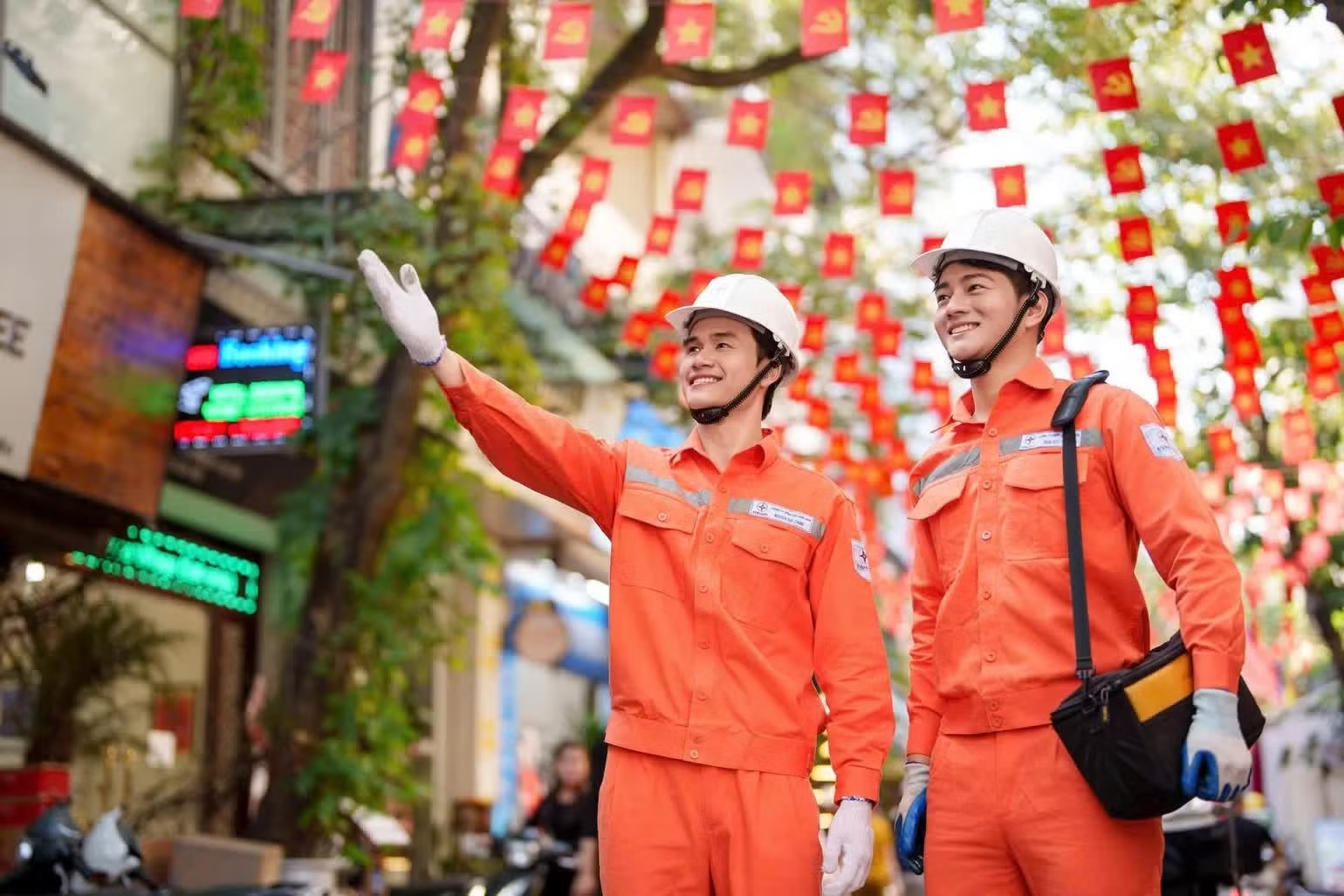
Seventy-two years after the Liberation of the Capital city, Ha Noi is no longer a city defined by families waiting for electricity, trains stalled mid-journey due to power outages, or students seeking out streetlights just to study. Today, Ha Noi is a major metropolis powered by an increasingly modern, smart, and flexible electrical grid.
The evolution of the city’s power supply clearly illustrated the distance Ha Noi has travelled: from the days of waiting for light to becoming a city powered by it. Throughout this 72-year journey, the flow of electricity has not merely accompanied the Capital city’s transformation; it also serves as a lens through which to witness Ha Noi’s growth.