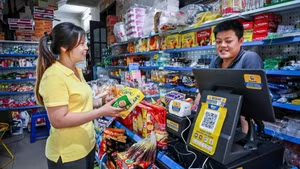
Sellers can easily remain anonymous, making goods difficult to trace
On online platforms, goods can be advertised, sold, and delivered to buyers within just a few hours. However, this very mode of transaction also complicates the inspection of goods and the determination of responsibility when violations occur, as sellers do not necessarily operate from fixed premises, accounts can be changed, and goods may pass through multiple warehouses and transport service providers.
According to a report by the Agency for Domestic Market Surveillance and Development under the Ministry of Industry and Trade, smuggling, trade fraud, counterfeit goods, and intellectual property rights infringements remained complex across numerous localities and sectors in the first nine months of 2026. Notably, violations in the e-commerce environment showed a trend towards increasingly diverse methods and greater sophistication.
Violators have exploited social media, e-commerce platforms, livestreaming platforms, delivery services, and transit warehouses to advertise, sell, and distribute illicit goods. They frequently change accounts, business locations, and transaction methods, making violations more difficult to detect, verify, and handle.
In the first nine months of 2026, market surveillance forces nationwide conducted 35,727 inspections and handled 29,223 cases, contributing 376 billion VND to the state budget. The value of confiscated and destroyed goods reached 112.7 billion VND, while the value of exhibits and vehicles involved in administrative violations subject to remedial measures amounted to 164 billion VND. A total of 239 cases were referred to investigative authorities, including many complex violations associated with e-commerce activities.
Tran Huu Linh, Director General of the Agency for Domestic Market Surveillance and Development under the Ministry of Industry and Trade, said the nature of online transactions made it difficult to identify sellers, verify the origins of goods, and trace violations. He stressed: “Regulations may be very comprehensive, but if they cannot be enforced, their effectiveness will be limited.”
This assessment goes to the heart of market surveillance in the digital space. Detecting an online shop selling counterfeit goods is only the first step. More importantly, authorities must identify the sources of supply, the parties organising the business, and other links in the chain to prevent violations from continuing. If action is limited to dealing with an account or removing infringing content, the goods may still be sold through other channels.
According to a notice issued by the E-commerce Agency under the Ministry of Industry and Trade on October 14, 2026, from January 1, 2027, operators of intermediary e-commerce platforms and social media platforms engaged in e-commerce activities will be responsible for electronically verifying the identities of sellers and livestream sellers in accordance with regulations.
This is a necessary step towards curbing the problem of sellers whose identities are difficult to establish. However, verifying a seller's identity does not in itself guarantee the origin or quality of the goods.
The authorities still need to inspect product information, verify relevant documentation, and clarify responsibility when counterfeit goods, smuggled products, or goods of unknown origin are detected. An online transaction may involve a seller, a livestream seller, a platform, a transport service provider, and a payment intermediary. Each party has a different role and set of obligations.
Therefore, when a violation occurs, identifying who supplied the goods, where they were stored, and how the transaction chain operated is crucial to the handling process.
The problem lies not only in the lack of regulations but also in the capacity to implement them. If information about sellers, goods, and transactions is not retained, linked, or provided promptly in accordance with the law, verification may be prolonged while offending goods continue to enter the market.
Managing everything from accounts to sources of goods
To keep pace with business practices in the digital environment, market surveillance forces will need to combine online monitoring with physical inspections of warehouses, storage and collection points, and distribution hubs whenever there are sufficient grounds to do so. Tracing sources of goods and identifying the parties organising violations should be given priority, rather than focusing solely on the final point of sale.
At the same time, coordination among the Agency for Domestic Market Surveillance and Development, the E-commerce Agency, public security authorities, customs, tax authorities, and local enforcement forces needs to be made more effective. Data on sellers, goods, transportation, and transactions, within the scope permitted by law, should directly support the verification and handling of violations.
E-commerce platforms must also fully discharge their regulatory responsibilities, from verifying sellers and retaining information to receiving complaints and cooperating in handling cases when signs of violations are detected.
Responsibility must be determined according to each party's role. Platforms cannot automatically be regarded as bearing responsibility on behalf of sellers, nor should a lack of information be allowed to obstruct verification.
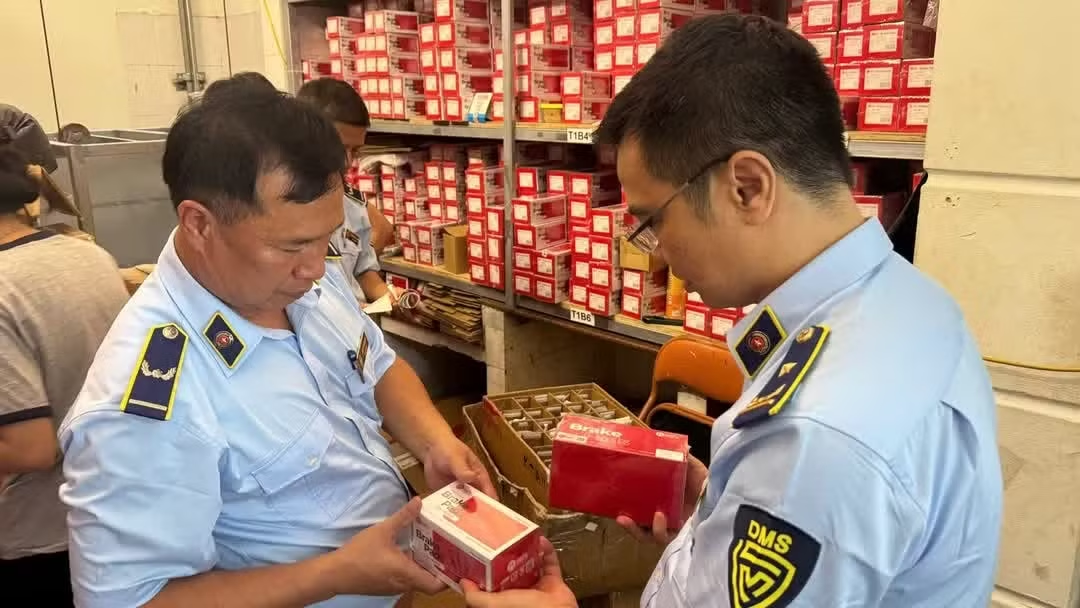
The effectiveness of digital market surveillance should not be measured solely by the number of inspections conducted, online shops penalised, or goods seized. More important is whether the authorities can trace the sources of goods, deal with the parties organising violations, and prevent repeat offences. These are the outcomes that truly reflect the ability to maintain effective control over the commercial market under new circumstances.
At the same time, consumers need better protection when shopping online. Unable to inspect products directly before receiving them, they rely heavily on information provided by sellers and the protection mechanisms offered by platforms.
If goods fail to meet the stated commitments, complaints, returns, and compensation claims need to be resolved in accordance with regulations, rather than leaving buyers to fend for themselves when dealing with potentially unlawful transactions.
Meanwhile, legitimate businesses must invest in product quality, ensure the traceability of goods, and fully comply with their legal obligations. If offending goods can readily reach customers, the compliance costs borne by legitimate businesses risk putting them at a competitive disadvantage.
Therefore, tighter management of the digital market is not intended to restrict business activities, but to ensure that all participants compete in the same transparent environment.
Ultimately, e-commerce will struggle to develop sustainably if buyers are repeatedly left to work out how to distinguish genuine products from counterfeits, while the authorities can only take action against individual accounts.
As the new regulations come into force, what needs to be tested is whether the authorities can correctly identify sellers, trace the sources of goods, and pursue violations through to their final resolution. This will provide a more meaningful measure of the effectiveness of digital market management.