Pioneering compliance with PEFC, ISO, and EUDR green standards
In line with the trend toward sustainable development, enterprises under the Viet Nam Rubber Group (VRG) are proactively meeting standards for supply chain traceability and the reduction of environmental impact. This approach aimed to secure their position in traditional markets while facilitating expansion into more demanding, strictly regulated markets.
As part of the bilateral cooperation strategy between the governments of Viet Nam and Laos—and in alignment with VRG’s own development orientation—the operational model of the Viet Lao Rubber Joint Stock Company in Champasak Province serves as a clear testament to a commitment to sustainable growth.
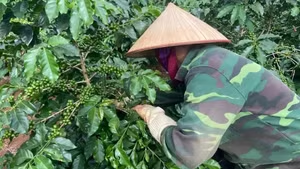
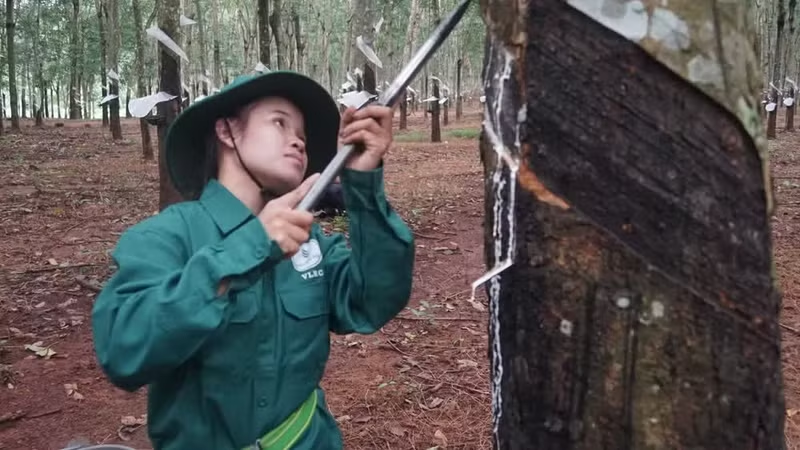
After more than two decades of operations in southern Laos, the Viet Lao Rubber Joint Stock Company currently manages 10,032 hectares of rubber plantations. Despite challenges such as prolonged rainy and stormy weather, as well as the pressure of fluctuating costs, the company has reported positive results for the first eight months of the year: rubber output reached over 9,210 tonnes (an increase of 10.7% compared to the same period last year); revenue hit over 886 billion VND; and pre-tax profit reached over 251 billion VND.
The company continues to provide employment for 2,166 workers, who earn an average monthly income of 8 million VND. The firm is currently on track to meet its annual production target of 17,800 tonnes.
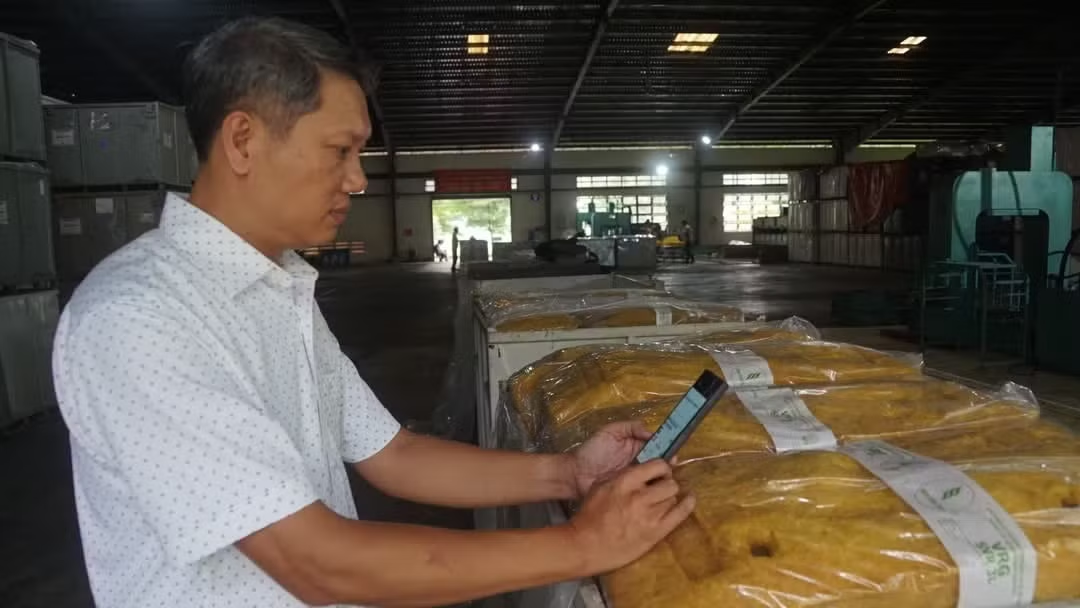
Alongside its production and business operations, the company is focused on implementing sustainable development standards. Discussing this roadmap, Phan Van Hieu, Director of the Viet-Lao Rubber Joint Stock Company, stated that the firm has successfully adhered to the standards of the Programme for the Endorsement of Forest Certification (PEFC) and is actively working to comply with the European Union Deforestation Regulation (EUDR). The company is collaborating closely with the Lao Ministry of Agriculture and Forestry to verify land origins.
For degraded forest areas in need of restoration—subject to confirmation by competent authorities and suitable soil conditions—the company has proposed planting rubber trees, a strategy designed to both restore vegetation cover and foster economic development.
Notably, the company has completed the implementation of the ISO 14067 standard for calculating the carbon footprint of its products. Following six months of preparing documentation and working with an independent assessor, the entire operational chain—from latex tapping and transportation to electricity and water consumption, as well as wastewater treatment—has been subjected to rigorous measurement.
The results indicate that the company’s emission levels are relatively low, with an index of approximately 0.7 for SVR3L and SVR5 rubber grades, and 1.1 for SVR10 and SVR20 grades.
“Obtaining ISO 14067 certification serves as a vital ‘green passport,’ enabling the company’s products to expand into demanding markets beyond China and Viet Nam,” emphasised Phan Van Hieu.
Similarly, after 20 years of operations abroad, Quasa Geruco Laos Co., Ltd., based in Savannakhet Province, continues to solidify its position as a cornerstone of sustainable development in Central Laos. The company currently manages approximately 7,369 hectares of rubber plantations, with its flagship product, SVL10, consistently maintaining a strong reputation in the market.
To enhance its competitiveness, the firm has implemented ISO quality management systems, the ISO 14001:2015 environmental management standard, VILAS-accredited laboratory testing, and various green product certifications.
Discussing the standards for exporting to the European market, Pham Truong Sang, Deputy General Director of Quasa Geruco Laos Co., Ltd., emphasised: “The company is actively pursuing EUDR (European Union Deforestation Regulation) certification. Our greatest advantage is that our entire existing plantation area was cleared and planted prior to 2016; therefore, we face no issues regarding land-use conversion or the origin of the forest. We aim to secure these certifications within this year to facilitate the smooth export of our products to international markets.”
Technical improvements and resource optimisation
To align with the trend toward green production, upgrading technological processes at processing plants is crucial for reducing costs and enhancing product quality. At the Se Pon Rubber Processing Plant—operated by Quasa Geruco Laos Co., Ltd. and boasting an annual capacity of 15,000 tonnes—several technical solutions have been implemented effectively. Notable examples include improvements to the cooling fan system for finished products and the optimisation of floor-cleaning procedures.
Nguyen Tuan An, the plant manager at the Se Pon Rubber Processing Plant, noted that the upgrades to the cooling fan system have led to a significant boost in labor productivity. Previously, workers could process approximately 15–16 tonnes of product per 8-hour shift; following these improvements, capacity has increased, which has raised the average daily income for workers from 180,000–200,000 VND to 250,000–270,000 VND.
In terms of operations, this solution has increased the factory’s output—reaching over 1,600 tons per month during peak periods—while maintaining stability despite fluctuations in raw latex supply between the dry and rainy seasons in Laos. More importantly, a rapid cooling system has significantly reduced the waiting time for latex exiting the drying oven; it now cools from 50–60°C to the temperature required for baling almost immediately, whereas previously, a 15–20 minute cooling period was necessary.
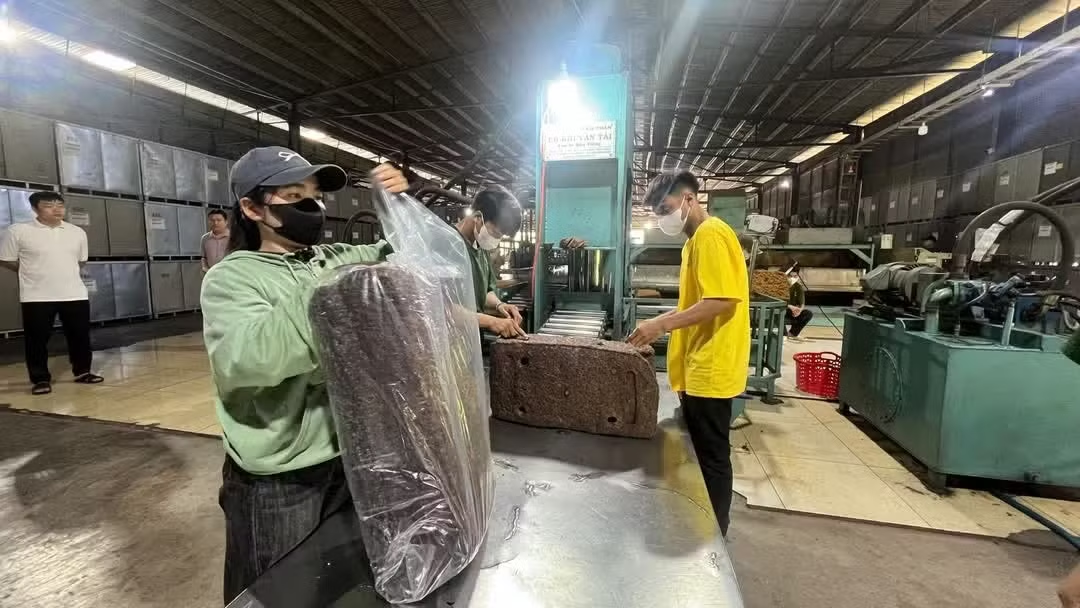
Precise temperature control ensures that the final product consistently meets the technical specifications set out in TCVN 3769. Furthermore, shorter processing times and improved equipment efficiency have led to lower energy consumption per unit of output, supporting the company’s goal of reducing carbon emissions within the factory.
In Central Viet Nam, Quang Tri Rubber Company Limited has also seen significant improvements in management efficiency and strategic development. By streamlining its organisational structure—eliminating intermediate management layers and establishing five dedicated production teams—the company has achieved a marked boost in operational effectiveness.
Currently, the enterprise manages 4,203 hectares of land and employs 417 workers. Despite the challenges posed by drought, the company’s latex harvest reached 1,631 tons, ranking third within the Viet Nam Rubber Group (VRG) in terms of progress toward annual production targets.
As of September 2026, business performance has shown remarkable growth compared to the same period last year. Revenue is estimated at 325 billion VND, nearing the full-year target of 350 billion VND; profit has reached over 28 billion VND (113% of the annual plan), with the company aiming to exceed 40 billion VND for the full year.
Thanks to a strong brand reputation, the average selling price of the company’s products stands at approximately 56 million VND per tonne—one of the highest rates within the group.
Regarding the shift toward green growth, Nguyen Dai Duong, Chairman of the Board of Members of Quang Tri Rubber Company Limited, stated that the company’s sustainable development plan was approved by the group in August.
The enterprise is currently finalising tender documentation, completing procedures related to fire safety and EUDR (EU Deforestation Regulation) compliance, and expects to meet ISO 14067 standards in the near future.
Furthermore, local authorities have designated an industrial zone on land currently held by the company, a proposal for which the group has granted investment approval. The enterprise is also preparing an investment plan to develop approximately 320 hectares of new crops, selected to suit the local soil and climatic conditions.
Regarding actual operations at the processing plant of Quang Tri Rubber, Plant Manager Le Tu Thong stated that the facility runs two production lines: SVR3L (accounting for 68% of capacity, utilising raw materials from the company’s own rubber plantations) and SVR10 (accounting for 40% of capacity, processing raw materials sourced from smallholder farmers as well as those from Nghe An and Thanh Hoa provinces). Maintaining an annual processing output of 8,000–9,000 tons ensures stable employment for the workforce.
To meet “green” standards, the plant focuses on upgrading technology and exercising strict control over the legal status and quality of raw material inputs, ensuring compliance with both corporate standards and FSC certification requirements. Furthermore, the plant remains flexible, adjusting technical specifications to meet the unique requirements of long-standing clients in Quang Ngai and Da Nang, thereby optimising production.
Achieving breakthroughs through modern technology and an ESG strategy
Beyond the rubber sector, the engineered wood processing industry serves as a cornerstone of the Viet Nam Rubber Group’s (VRG) strategy for green growth and the development of a circular economy in Central Viet Nam.
Quang Tri MDF Joint Stock Company is currently the largest and longest-established manufacturer of engineered wood panels in the region, ranking among the top 10 contributors to the state budget in Quang Tri province. With an average capacity of 18,000 tonnes of panels per month (equivalent to 200,000 m³ per year), the plant consumes approximately 400,000 tonnes of raw timber annually.
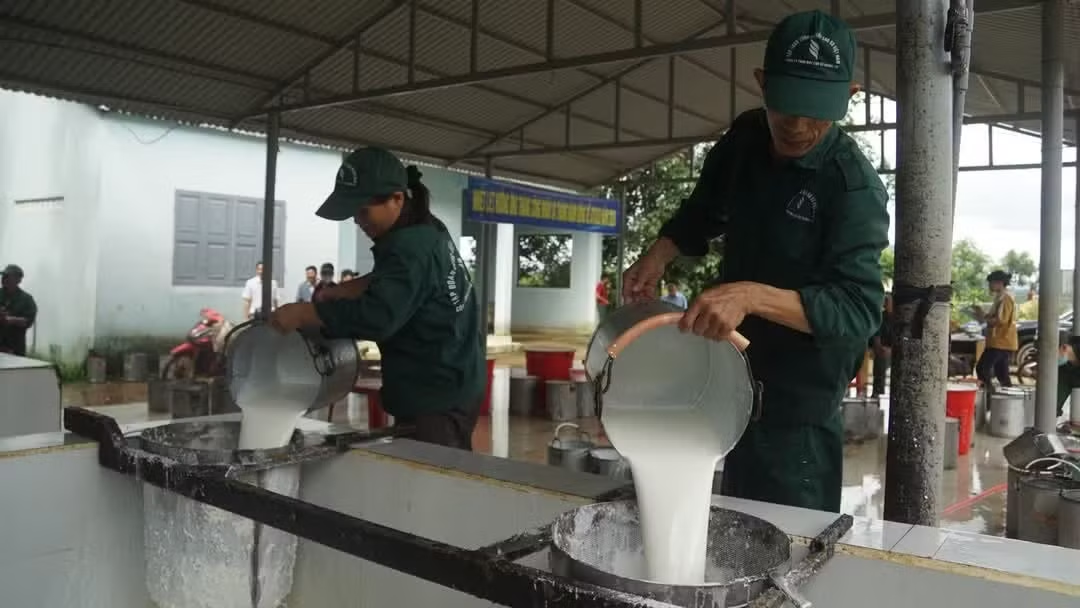
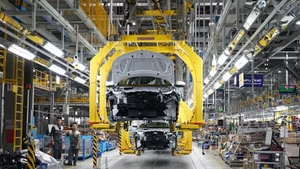
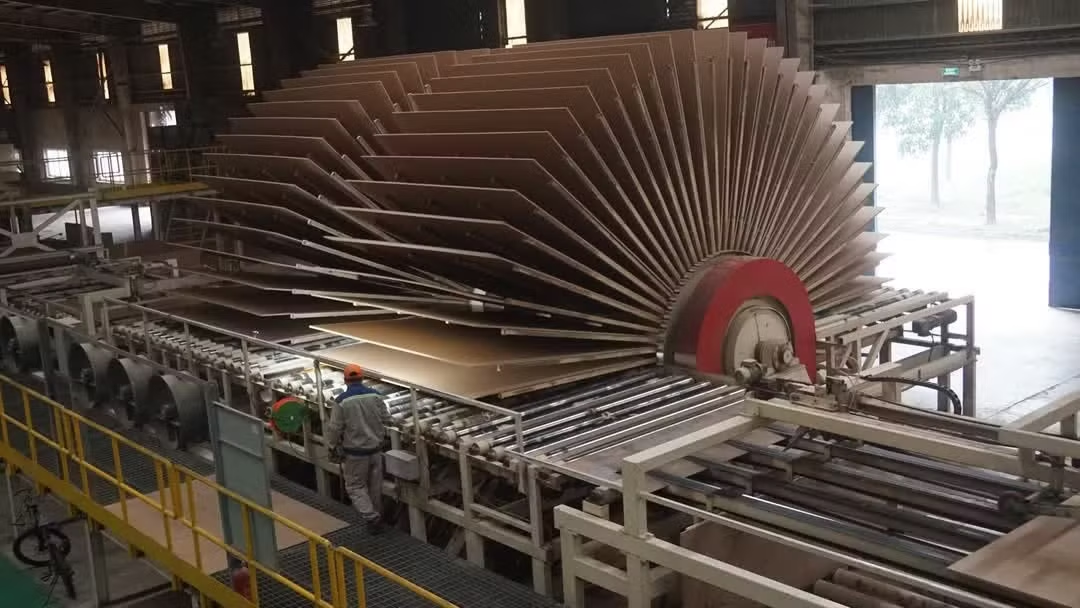
VRG Quang Tri MDF’s products have successfully penetrated demanding markets by combining modern technology with human expertise. The company currently operates two advanced production lines—sourced from Germany and Italy—with the entire process automated via a SCADA system.
Duong Tan Thanh, General Director of VRG Quang Tri MDF Joint Stock Company, stated: “The entire production process—from wood chipping, fiber refining and steaming, resin blending, drying, and mat forming to high-pressure hot pressing and surface sanding—is fully automated. Yet, regardless of how sophisticated the machinery may be, human input remains the decisive factor. Our team of highly skilled engineers has introduced numerous technical improvements, such as optimising the steam injection system and installing variable-frequency drives (VFDs) to conserve energy. These enhancements have enabled the plant to reduce electricity consumption by 5–7% and fuel usage by 15–20%.”
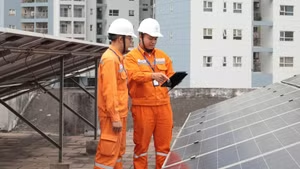
By identifying ESG (Environmental, Social, and Governance) criteria as a core competitive advantage, the company has implemented comprehensive initiatives across all three pillars. In its manufacturing operations, the plant has cut CO2 emissions by over 60% through the use of a biomass boiler fueled by tree bark and wood dust. Furthermore, it meets 30% of its electricity demand via rooftop solar panels and recycles 35% of its water through a closed-loop treatment system.
Additionally, all of the company’s wood panel products utilise resins that meet ultra-low formaldehyde emission standards—such as the E0 and U.S. CARB P2 standards—ensuring maximum health and safety for consumers.
Regarding the social pillar, the company has committed to ensuring that all timber sourced is certified under the Forest Stewardship Council (FSC) sustainable forest management standard. This initiative enhances the value of timber crops and secures the livelihoods of tens of thousands of households.
In terms of governance, the company adheres to ISO 9001 and ISO 14001 standards, has secured BIS certification for exports to India, and is currently compiling geolocation data for its plantation areas to ensure compliance with the European Union Deforestation Regulation (EUDR).
By remaining steadfast in its "green" strategy and shifting toward high-tech engineered wood products—such as HDF (High-Density Fiberboard) and moisture-resistant HMR (High Moisture Resistance) boards—the company achieved impressive business results during the first eight months of 2026. Sales volume reached over 127,000 m³, generating revenue exceeding VND 778 billion. Pre-tax profit hit VND 9.73 billion—nearly 89% of the annual target and more than five times the figure recorded during the same period in 2025.
The efforts made by rubber and timber enterprises—ranging from the management of raw material sources and the technical optimisation of factory operations to the proactive adoption of international standards such as PEFC, FSC, ISO 14067, and EUDR—demonstrate a methodical approach to sustainable growth. The integration of economic efficiency, environmental responsibility, and social well-being serves as a vital foundation, enabling these businesses to solidify their market position and achieve robust, long-term development in this new era.