Expanding into the international market
Many Vietnamese enterprises are striving to “Go Global”—venturing into international markets to broaden their growth potential. Notably, this trend is no longer limited to large corporations; it also presents a vast opportunity for small and medium-sized enterprises (SMEs) and innovative startups.
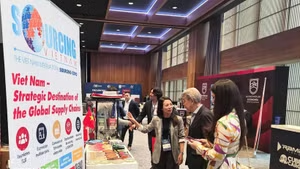
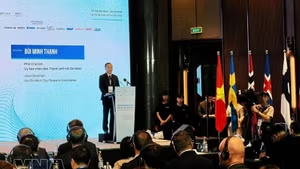
According to experts at the Da Nang Innovation Startup Festival (SURF) 2026, while Viet Nam possesses a promising domestic market, international venture capital firms argue that for an innovative startup to achieve a major breakthrough, it must offer a product competitive enough to succeed on the global stage.
James Tan, Managing Partner at the venture capital firm Quest Ventures, stated: “For an innovative startup, addressing only domestic challenges is insufficient to become a major company or a ‘tech unicorn’. To scale up significantly, businesses must think bigger and aim for international markets.”
In Da Nang, “Go Global” has emerged as a strategic path for many technology firms seeking to overcome the limitations of the local market size.
Ngo Tan Tien, CEO of BookShare, remarked: “Relying solely on the Da Nang market makes it very difficult for innovative startups to achieve a major breakthrough; they must reach out to the international market. Therefore, the city should focus on helping businesses establish global connections”.
In recent times, the city of Da Nang has organised a diverse range of international events across various sectors. These initiatives have helped expand connectivity networks and paved the way for international cooperation agreements in the fields of technology and innovation-driven startups.
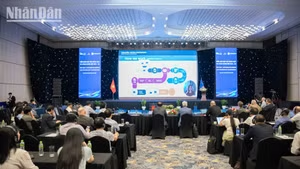
Beyond promoting outward investment, the city has also proactively created spaces to connect domestic and international enterprises locally. These serve as a bridge, enabling local businesses to access advanced technologies, attract venture capital, and collaborate with leading international experts and technology firms.
For instance, the recently launched Daegu (the Republic of Korea) Technology and Innovation Showcase Space in Da Nang has become a hub for exchanging technologies, ideas, and business opportunities between enterprises from the two cities.
Here, businesses from both sides can engage in discussions and presentations, aiming to facilitate technology transfers and foster collaborative programs in areas such as artificial intelligence, semiconductors, smart cities, and green technology.
Jong-tai CHOE, Chairman of the Daegu-Gyeongbuk ICT Industry Association, stated: “In recent years, technology enterprises in Da Nang and Daegu have been actively engaging and collaborating with one another. Much like Da Nang, our Daegu-Gyeongbuk region is also focused on developing high-tech industries. Through the partnership between the local governments and businesses of both cities, I anticipate a significant surge in investment activities and joint efforts to expand into international markets.”
Innovating the development model
Resolution No. 59-NQ/TW, issued by the Political Bureau on January 24, 2025, regarding international integration in the new context, emphasised the proactive and active role of citizens, businesses, and local authorities. Furthermore, for the first time, it establishes international integration in science, technology, and innovation as a distinct, independent set of solutions—aligning with the spirit of the Politburo Resolution No. 57-NQ/TW, which focuses on breakthroughs in national science, technology, innovation, and digital transformation.
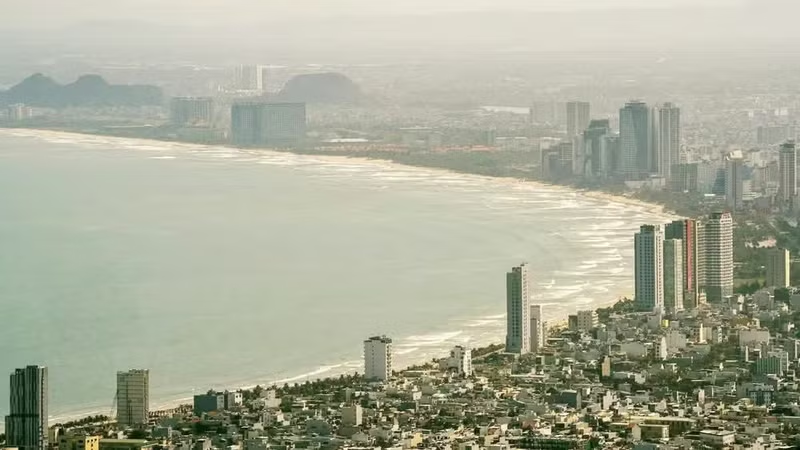
Consequently, building upon the initial achievements of the local business community and the strategic objectives set for Da Nang by the Party Central Committee, the city is striving to become a global hub. This vision is anchored in enhancing governance quality, improving the investment climate, fostering innovation, and proactively integrating into the global flows of knowledge, technology, and finance.
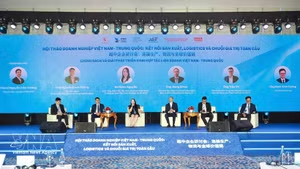
During the high-level policy dialogue at the recent Da Nang Economy, Finance, and Technology Week, numerous experts and policymakers noted that the traditional avenues for growth—heavily reliant on low-cost labour, resource extraction, expanded capital investment, input-based incentives, and simple scaling—are increasingly narrowing.
Meanwhile, the world is undergoing rapid transformation driven by artificial intelligence, automation, the digital and green economies, shifting supply chains, strategic competition, climate change, and an aging population.
According to experts, this is a pivotal moment for Viet Nam—and for Da Nang in particular—to innovate its development model and ascend to a new level. In this process, Da Nang’s ambition to become a global city serves both as a catalyst for proactively adopting international development models and as a launchpad to make significant breakthroughs amidst rapid technological and environmental shifts.
Da Nang holds great appeal for the international professional community, thanks to its favourable living environment and natural landscapes; however, these are merely initial draws. To successfully implement new development initiatives—such as an international financial centre, a free trade zone, or a semiconductor industry ecosystem—Da Nang must attract and retain a highly specialised workforce.
Lessons from global financial hubs demonstrate that constructing modern office towers is far easier than cultivating an ecosystem capable of retaining top-tier talent. According to Dr. Lindsey DeWitt Prat, Director of Research at Bold Insight and a board member of EPIC (USA), the challenge lies not only in attracting them but also in retaining them over the next three to five years. By breaking down the various stages of the living and working experience for international professionals, members of the diaspora, and local students, a city can better understand the specific barriers they face and, in turn, design targeted support strategies.
Dr. Le Quang Dam, General Manager of Marvell Viet Nam Technology Co., Ltd., remarked: “Wherever we can find talent, we want to invest—because talent is the single most critical factor for success.”
Nguyen Manh Hung, Chairman of the Da Nang City People’s Committee, emphasised that competition among cities today centres on securing investment capital and attracting high-quality resources—including human capital, scientific and technological expertise, international finance, and strategic investors.
Transforming Da Nang into a city that is worth living in, visiting, investing in, and contributing to will not only benefit its residents but also enhance the nation’s overall competitiveness amidst an increasingly intense global race for high-quality talent.