From state-owned enterprises and private businesses to start-ups and freelancers, a quiet but determined wave of reskilling is gathering pace, driven by the need to adapt, reinvent and contribute to the country's broader development goals.
At the national level, as ambitious growth targets demand comprehensive modernisation of infrastructure and technology, reskilling has become an institutional imperative. For key economic sectors, the challenge is not simply to import modern machinery or infrastructure, but to equip the existing workforce with the capabilities needed to master new technologies.
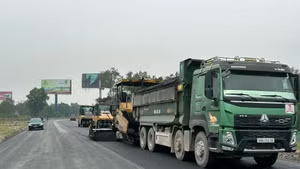
The railway sector provides a clear example, facing the need to fundamentally transform its operational mindset from conventional railways to modern electrified railway technology.
Politburo’s Conclusion No. 49-KL/TW, together with National Assembly’s Resolution No. 172/2024/QH15 on the investment policy for the North-South high-speed railway project and Resolution No. 187/2025/QH15 on the Lao Cai-Ha Noi-Hai Phong railway line, requires the Viet Nam Railways Corporation (VNR) to address workforce retraining from the perspective of state-owned enterprise governance.
Cam Anh Tuan, Deputy General Director of VNR, said: “Human resource training is fundamental and must be approached with a long-term vision rather than treated as a temporary solution. Training and retraining officials and employees is not simply about improving professional skills. It is a strategic task that determines whether the enterprise has sufficient capacity to receive, manage, operate, exploit and maintain high-speed railway lines in accordance with the State's development orientation.
“This requires VNR to shift from training people merely to meet job requirements towards investing in capability development to drive change.”
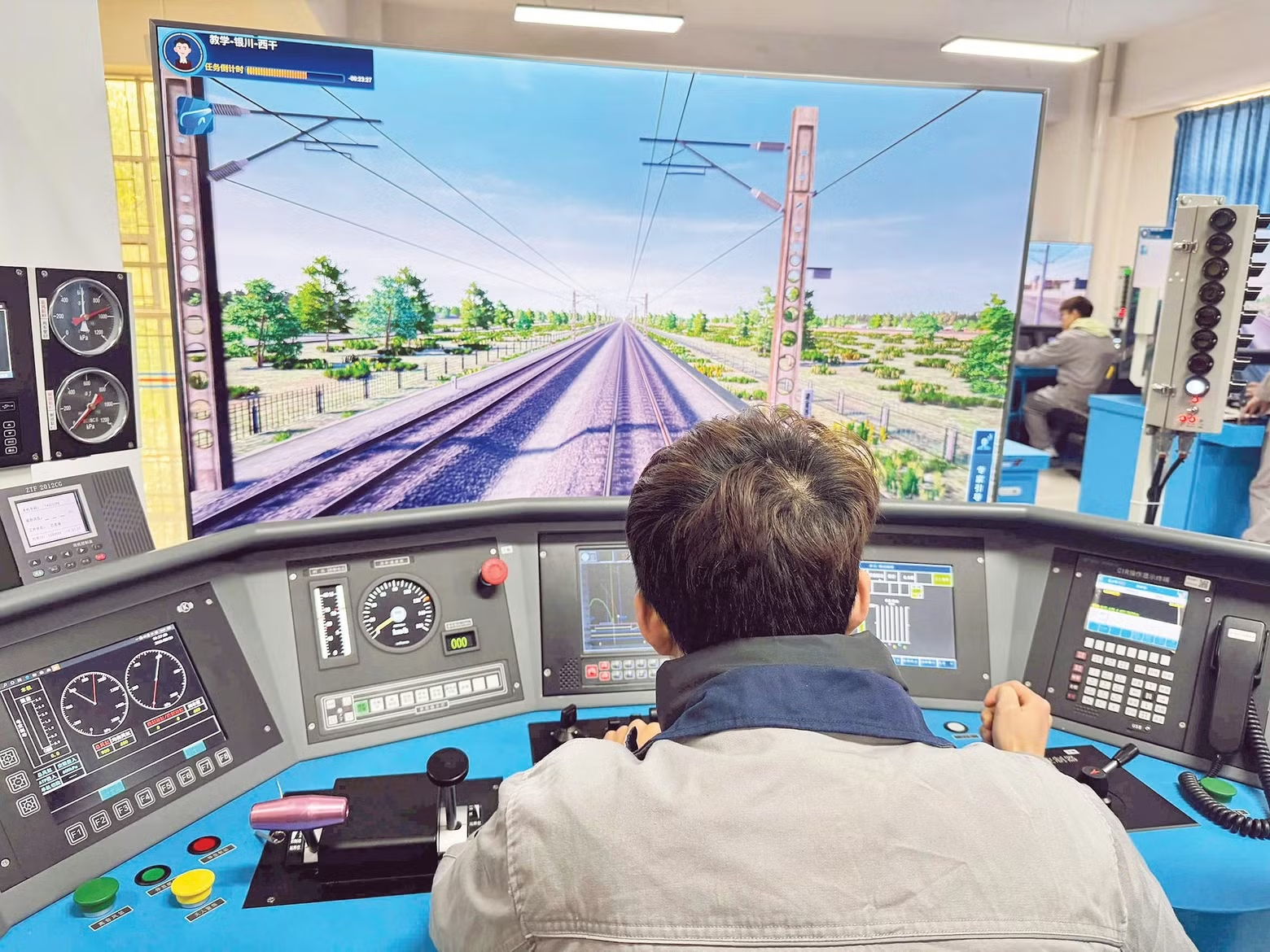
Dao Lam Que, a specialist in the Locomotive and Rolling Stock Department with 19 years of experience, graduated from the University of Transport and Communications and holds a master's degree in business administration. He proactively applied to participate in specialised training programmes on high-speed railway technology in China.
Que shared: “My advantage is that I have practical experience with conventional locomotives and rolling stock, which helps me absorb new knowledge quickly. However, the sheer volume of knowledge about high-speed and electrified railways is enormous, and it requires specialised foreign-language skills.
“Therefore, I had to study Chinese and pass the HSK Level 3 examination to gain a deeper understanding of technical documents. After each training course, we are also responsible for preparing detailed technical reports and sharing what we have learned with colleagues to help improve their skills.”
The one-person enterprise model represents a new technology-driven form of business organisation in which an individual, supported by technology, algorithms and AI, can run a business without establishing the cumbersome organisational structure traditionally required. Implementing Resolution No. 86 will help unleash creativity and lay the groundwork for a favourable, simple and transparent legal framework, fostering a new generation of flexible and independent entrepreneurs capable of creating value on their own.
While retraining in state-owned enterprises is driven by broader national strategies, the wave of reskilling in the private sector and among freelancers stems from individuals' determination to adapt and their understanding of market demands.
The Government's Resolution No. 86/NQ-CP, dated April 5, 2026, on the National Strategy for Innovative Start-ups has introduced a pilot mechanism for the “one-person enterprise” model, aimed at establishing a legal framework that enables highly skilled individuals to proactively apply technology and become “digital entrepreneurs”.
After more than 20 years in the software industry, Quang Huy established Sorax in 2026, drawing on self-directed learning and the application of artificial intelligence (AI). He single-handedly manages the entire business process, from product development to marketing.
In April 2026, SoraLMS, an AI-powered learning management system designed for internal corporate training, was officially launched, becoming the first in a series of nine digital products developed by Sorax.
Quang Huy said: “Thanks to AI, software development costs have fallen significantly, creating opportunities for experienced professionals to build their own products. However, running a one-person enterprise demands a strong commitment to self-learning, continuous experimentation and listening to market feedback to make necessary adjustments.”
Dr Nguyen Minh Thao from the Institute of Economic and Financial Strategy and Policy under the Ministry of Finance observed: “The one-person enterprise model represents a new technology-driven form of business organisation in which an individual, supported by technology, algorithms and AI, can run a business without establishing the cumbersome organisational structure traditionally required. Implementing Resolution No. 86 will help unleash creativity and lay the groundwork for a favourable, simple and transparent legal framework, fostering a new generation of flexible, independent entrepreneurs capable of creating value on their own.”
Nevertheless, this model also carries potential risks, including the danger of becoming overwhelmed when one person must manage an entire business, challenges arising from a working environment with limited interaction, financial vulnerability and gaps in social protection.
In practice, many freelancers are now opting for a complete career change. After nearly 20 years in journalism, Le Thanh Son decided to become a tour guide. He spent several months undergoing professional training, improving his foreign-language skills and taking the examination required to obtain a tour guide licence.
“Changing careers at the age of 40 brings enormous pressure. There were nights when I could not sleep. But my accumulated life experience helped me adapt quickly, and I have now signed a contract and established a stable working relationship with a travel company,” Son said.
The spirit of self-learning, willingness to undergo training and continuous adaptation among individuals and businesses is generating a powerful wave of adjustment to the labour market's evolving development demands.
From infrastructure engineers mastering high-speed railway technology and workers changing careers in their forties to digital entrepreneurs independently running their own businesses, these individuals are helping shape the profile of Viet Nam's workforce in the new era.
Their commitment to self-learning, training and continuous adaptation is driving a strong response to the labour market's changing requirements.
However, for this wave of transformation to become truly sustainable, individual efforts must be supported by improved social security policies, effective retraining opportunities and a legal framework that protects freelancers. These measures will provide an essential foundation for workers as they adapt and contribute to the country's development.