Building on the past to drive innovation
Resolution No. 19-NQ/TW, issued by the 14th Party Central Committee on July 28, 2026, on renewing Viet Nam’s development model, sets the goal of fundamentally completing the transition to a self-reliant, creative, humane, sustainable and internationally integrated development model by 2035.
Under the resolution, growth must shift decisively away from reliance on capital, labour, natural resources and contract manufacturing towards science, technology, innovation, digital transformation and high labour productivity. It also calls for Vietnamese enterprises to grow stronger, develop the capacity to master technology and secure important positions in industries, value chains and modern development ecosystems.
These requirements call for a broader perspective on young entrepreneurs, who represent the next generation of business leaders. Their role extends beyond starting businesses or taking over family enterprises. As the economy seeks new growth drivers, they are expected to pioneer new business models, adopt emerging technologies, create new jobs and generate value for society, thereby providing fresh impetus to economic growth. A business may be transferred in terms of assets, brand, market position and scale, but if its management practices, technology and business methods remain unchanged, the transition amounts to little more than a change of leadership.
Do Quang Vinh, Vice Chairman of the Board and Deputy General Director of Sai Gon-Ha Noi Commercial Joint Stock Bank (SHB), believes that the most important aspects of succession lie not in assets or business performance, but in corporate culture, core values, business philosophy and the way a company treats its customers, employees and community — all of which have been established by previous generations of leaders and must be preserved.
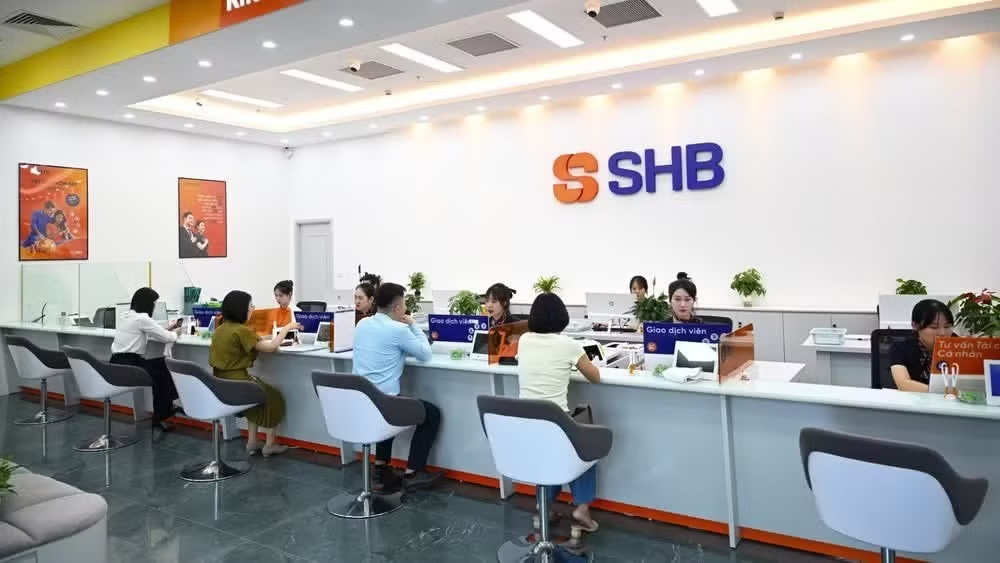
However, new thinking, technology and modern management practices must also be incorporated into the existing foundations. Vinh cites SHB’s transformation process, which places technology at its centre and aims to harness data, cloud computing, artificial intelligence and mobile banking. The important point is not simply that the business is introducing new technologies, but that technology is becoming an integral part of how the organisation is structured and operated. For young leaders, this provides an opportunity to demonstrate that their capabilities extend beyond taking over an established business to helping it adapt to a changed market environment.
Drawing on the experience of Hop Luc Joint Stock Corporation, Dr Nguyen Bao Uyen, Vice Chairwoman of the Board and Chief Executive Officer of the Hop Luc Healthcare System, argues that innovation does not begin only when the younger generation takes over a business. Previous generations have themselves continuously adapted, expanded and changed to build the foundations of today's enterprises. The responsibility of their successors is to carry this process forward by drawing on their own capabilities and youthful energy, strengthening management capacity, improving workforce quality and fostering creativity to ensure sustainable growth, enhance competitiveness and make a greater contribution to the country.
According to Uyen, management approaches may change, but the core values shaped by a company's history and purpose must be preserved. At Hop Luc, these values stem from the need to provide healthcare, medical examinations and treatment for the public, as well as serve the community. Successors must therefore continue to innovate in management, develop human resources, apply technology and respond to society's changing needs.
However, leading a business whose employees have long-standing ties with the previous generation of leaders also presents challenges. Employees may question whether their successors understand the work and deserve their trust. In such circumstances, trust cannot be secured through a title or family connections alone; it must be earned through credibility, working methods, results and the ability to address new challenges.
Turning youthful energy into growth capacity
If business succession is the starting point, creating new growth capacity is a much greater challenge for young entrepreneurs. Their advantages include rapid access to science and technology, knowledge, markets and new business models, as well as the determination and willingness to take risks and experiment with approaches that depart from tradition. Yet these advantages translate into economic value only when they generate higher productivity, new products, expanded markets and jobs.
Youth can provide speed, but taking a business further also requires the ability to mobilise resources, manage risks and maintain discipline in execution. These are the criteria that distinguish a passing business idea from a growth driver capable of generating sustainable value.
According to SHB Vice Chairman and Deputy General Director Do Quang Vinh, the pioneering spirit of young people must be translated into tangible economic capabilities by creating new products, markets, jobs and ways of generating value. As businesses grow, their leaders must look beyond their own profits to consider employees, communities and their enterprises' contributions to the economy.
This view is consistent with the requirements set out in Politburo Resolution No. 68-NQ/TW, dated May 4, 2025, on private sector development. The resolution identifies the private sector as one of the most important drivers of the national economy. It sets a target of having two million active enterprises by 2030, with at least 20 large enterprises participating in global value chains, while positioning the private sector as a pioneering force in science, technology, innovation and digital transformation.
These targets show that the challenge is not simply to establish more businesses. Vinh believes that, more importantly, enterprises must grow on the strength of genuine capabilities, improve productivity, master technology, participate more deeply in value chains and generate greater added value. For young entrepreneurs, the responsibility is therefore not merely to keep their businesses running, but to help them adapt, innovate and grow in an increasingly competitive environment.
From this perspective, Dr Nguyen Bao Uyen believes that the next generation of business leaders must be capable of delivering new results while remaining steadfast in their core values when faced with decisions that may bring short-term gains but undermine employees, customers or the company's long-term reputation.
In healthcare, the adoption of new technologies must go hand in hand with professional expertise, safety procedures and coordination between departments. Technology must deliver tangible benefits, making operations more efficient and ensuring that patients receive safer and more convenient care.
Hop Luc will continue to strengthen domestic and international cooperation, particularly in training, professional exchanges and technology transfer. These efforts will help its staff, healthcare workers and doctors gain access to advanced knowledge and technologies, gradually master them and apply them effectively in their work, creating practical benefits for patients and the wider community. This will provide a foundation for sustainable competitiveness, enabling Vietnamese enterprises not merely to grow in size, but also to strengthen their capabilities, improve quality and compete more effectively at regional and international levels.
Resolution No. 19-NQ/TW places Vietnamese enterprises in an important position within the new development model, calling for the emergence of leading enterprises and companies at the top of value chains, alongside stronger links across innovation ecosystems. This further highlights the role of young entrepreneurs beyond the boundaries of individual businesses.
A more competitive enterprise can create additional jobs, support the growth of satellite businesses, expand business networks, facilitate technology adoption and participate more deeply in supply chains. Developing the next generation of entrepreneurs is therefore not simply a matter of preparing replacements for current business leaders. It means cultivating a new leadership force capable of transforming inherited foundations into competitive strengths and new drivers of growth.
Previous generations built their businesses through experience, determination and years of accumulated knowledge. The younger generation must carry this legacy forward through knowledge, technology, management capabilities and the ambition to advance. Ultimately, an entrepreneur's success should be measured not only by how much their business grows, but also by the additional value they create for the country's economy.