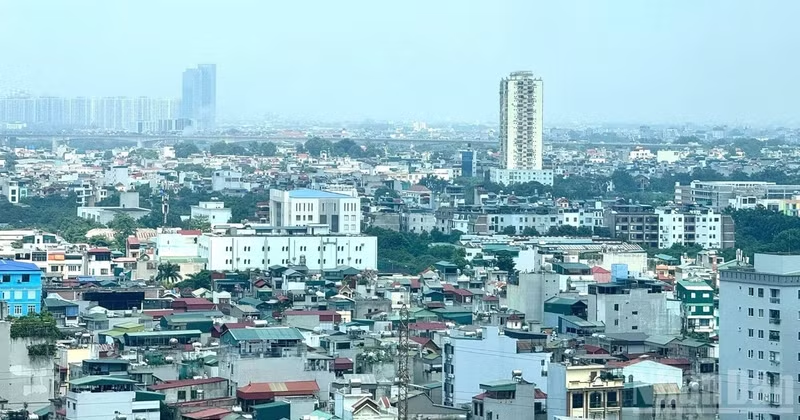
As businesses expand and operating environments become increasingly complex, facility management is playing a more prominent role in controlling costs, ensuring business continuity, meeting sustainability standards and enhancing customer experience. Once regarded primarily as a support function, FM is evolving into a strategic component of business operations.
FDI inflows raise standards for facility management
According to the National Statistics Office under the Ministry of Finance, total registered foreign direct investment (FDI) in Viet Nam reached 50.36 billion USD in the first nine months of 2026, up 76.4% year on year. Meanwhile, disbursed FDI totalled 21.07 billion USD, the highest figure for the nine-month period in five years. Notably, the processing and manufacturing sector continued to lead in attracting newly registered investment, with 13.38 billion USD.
As international businesses expand their operations and increasingly establish a presence in Viet Nam, requirements for facility management are also evolving. For companies operating manufacturing plants, office buildings, logistics infrastructure or networks of facilities across multiple locations, FM plays a crucial role in optimising costs, maintaining operational efficiency and minimising the risk of business disruption.
International enterprises also bring established global management standards, including consistency in operational procedures, measurable performance indicators, transparent cost control, regulatory compliance, energy efficiency and environmental, social and governance (ESG) objectives. These developments are creating an urgent need for FM service providers capable of combining international standards with local implementation capabilities, while adapting flexibly to Viet Nam's regulatory framework and business environment.
For Viet Nam's domestic FM industry, this transition presents a strategic opportunity to standardise professional competencies, develop a skilled local workforce and strengthen connections with global networks of industry experts.
Professional association to be established in Viet Nam
Against this backdrop, the International Facility Management Association's Viet Nam Chapter (IFMA Viet Nam Chapter) is currently being established, marking what is expected to be an important milestone in the development and professionalisation of the country's facility management sector.
Founded in 1980, the IFMA is the world's oldest and one of its most respected professional organisations in the field, pioneering the advancement of facility management through specialised training programmes, practical knowledge sharing and internationally recognised professional certifications. Today, IFMA has more than 25,000 members across over 140 countries.
In Viet Nam, the association's forthcoming presence will provide direct access to standardised knowledge resources, international training programmes and prestigious industry certifications. It will also establish an official platform for professionals, businesses and educational institutions to exchange practical experience and connect with the global FM community.
In the longer term, a well-structured professional ecosystem will help nurture the next generation of FM professionals, strengthen the sector's overall competitiveness and promote its sustainable development in Viet Nam.
On this occcasion, Luca Vadala, National Director of Integrated Facility Management (IFM) at Savills Viet Nam and a LEED Green Associate accredited under the US green building certification system, will join the interim Executive Committee of IFMA Viet Nam Chapter as Interim Vice President.
"Facility management today is no longer simply about maintaining individual operational services. Its real value lies in integrating the entire operating environment into a coordinated system. As business operations in Viet Nam become increasingly complex, companies need clear, transparent reporting on performance, costs and resources, supported by standardised processes, technology and data," Vadala said.
This approach also underpins Savills' IFM model, which brings together technical operations, security and safety, cleaning, landscaping, office services and other support functions under a unified management framework.
By integrating standardised processes, technology, data and key performance indicators (KPIs), these functions can operate as a seamless system rather than as separate, fragmented services.
Technology also plays an important role in this model. Digital platforms such as Savills Property Cube help collect and standardise operational data within a centralised digital environment, enabling management teams to oversee day-to-day operations and make faster, more accurate, data-driven decisions.
For businesses, a single-point-of-contact integrated management model provides clear accountability across the entire service portfolio, tighter control over costs and performance, and greater flexibility in allocating resources across departments and facilities.
"Viet Nam has a growing community of FM professionals with extensive practical experience. The next step is to create more opportunities for this knowledge to be shared, while enabling industry professionals to access international standards and structured career development pathways. IFMA will serve as an important bridge, bringing together resources from across the industry and supporting the development of the next generation of facility management professionals in Viet Nam," Vadala added.
By fostering an increasingly connected professional community, IFMA Viet Nam Chapter will help bridge international expertise and local practices, encourage knowledge sharing, strengthen professional capabilities and gradually establish new standards for Viet Nam's growing FM industry.