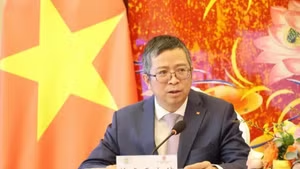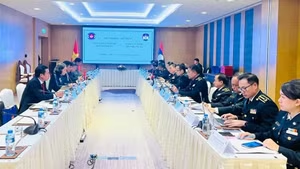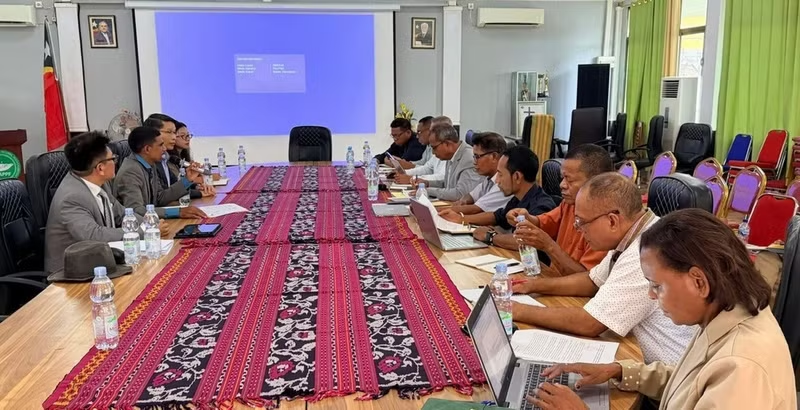
At the meeting, Ambassador Pham Binh Dam emphasised that, building on the two countries’ strong friendship and spirit of partnership, Viet Nam wished to translate cooperation orientations agreed upon by their senior leaders into concrete action in line with Timor-Leste’s development needs and priorities.
He noted that fisheries held considerable potential to make practical contributions to job creation, improved livelihoods, food security, and export development in Timor-Leste.
The Ambassador said that, from small-scale production, fisheries had become one of Viet Nam’s key export sectors, with export turnover rising from nearly 1.5 billion USD in 2000 to 11.3 billion USD in 2025, making Viet Nam the world’s third-largest seafood exporter. On this basis, he affirmed that Viet Nam stood ready to share its experience in developing the fisheries sector, from aquaculture and fishing to preservation, processing, market development, and sector management.
Regarding the cooperation framework, Ambassador Pham Binh Dam said Viet Nam had sent Timor-Leste a draft memorandum of understanding on fisheries cooperation and hoped to receive feedback soon so that the two sides could finalise and sign the document to put it into effect.
On human resource development, the Ambassador suggested several forms of cooperation for the two sides to explore, including professional training for officials and technicians, expert exchanges, and technical assistance for fishers. These could be implemented through bilateral channels or with the participation of development partners and international organisations, based on specific and feasible projects.
He also proposed exchanging experience in developing a comprehensive fisheries development strategy that links assessments of aquatic resources and the identification of aquaculture and fishing areas with production organisation, the development of preservation and processing infrastructure, and consumer markets. The two sides could also share experience in monitoring fishing vessels, applying technology to fisheries management, and combating illegal, unreported, and unregulated (IUU) fishing, with a view to promoting responsible fisheries and improving market access.
Director General Akasio dos Santos spoke highly of Viet Nam’s achievements in fisheries development, expressed a desire to learn from its experience, and called for Viet Nam’s support in human resource training in both fisheries management and fishing.
During the meeting, a representative of Vietnamese investors introduced a fisheries exploitation and processing project in Timor-Leste, with a focus on applying technology to manage fishing operations, monitor fishing vessels, and trace product origins.
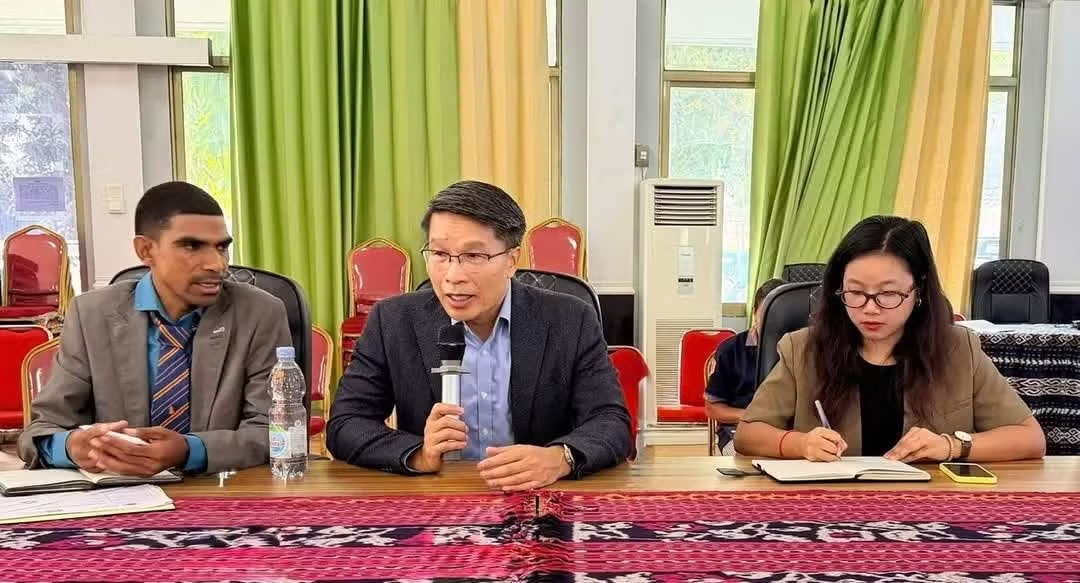
Welcoming Vietnamese investors’ plans to invest in infrastructure development and marine fisheries in Timor-Leste, Akasio dos Santos said the country was actively considering issuing a licence for the Vietnamese company’s investment project.
Ambassador Pham Binh Dam called on the relevant local authorities and the company to strengthen communication and coordination to resolve obstacles and complete procedures in accordance with regulations, while linking investment with technology transfer, local workforce training, and the sustainable use of aquatic resources.
According to the Ambassador, the effective implementation of a specific project, following a roadmap suited to raw material supplies and workforce capacity, would help build up cooperation experience, lay the groundwork for expanding business links, and attract further investment into Timor-Leste’s fisheries sector.
He affirmed that the Vietnamese Embassy stood ready to continue supporting the process and acting as a bridge between the two countries’ agencies and businesses to turn cooperation opportunities into tangible results.