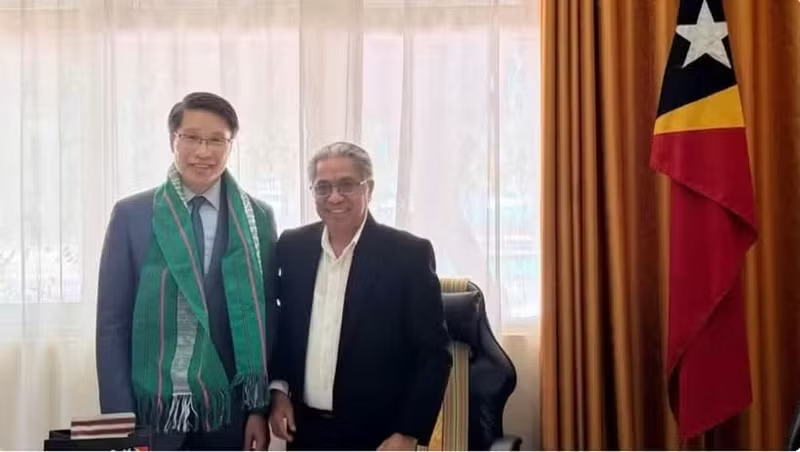
The prospects for cooperation were discussed at a meeting between Vietnamese Ambassador to Timor-Leste Pham Binh Dam and Timor-Leste’s Minister of Agriculture, Livestock, Fisheries and Forestry Marcos da Cruz in Dili on October 8. The talks also covered preparations for the first meeting of the Viet Nam–Timor-Leste Joint Commission.
Marcos da Cruz spoke highly of Viet Nam’s experience in agricultural and fisheries development, noting Timor-Leste’s potential in agriculture, livestock farming and marine resources.
However, agricultural production remains largely small-scale while fisheries infrastructure and human resources need further investment. The country therefore seeks to draw on Viet Nam’s experience to boost domestic production and strengthen food security, he added.
Rice and coffee were identified as promising areas for agricultural cooperation, spanning crop varieties, cultivation techniques, equipment and manpower training.
Dam proposed combining Viet Nam's agricultural supplies with support for production capacity in Timor-Leste, while exploring trilateral cooperation involving international organisations and development partners.
In fisheries and the marine economy, the two sides considered collaboration in aquaculture, fishing, shipbuilding, seafood processing, fisheries infrastructure and workforce development. They also discussed applying digital technologies to fishing fleet monitoring, seafood traceability and the combat against illegal, unreported and unregulated (IUU) fishing.
Marcos da Cruz welcomed Vietnamese businesses’ interest in Timor-Leste’s fisheries and processing sectors, emphasising the importance of technology transfer and human resources development. He encouraged Vietnamese enterprises to engage directly with relevant ministry agencies to develop concrete proposals and assess their feasibility.
Preparations for the first meeting of the Viet Nam–Timor-Leste Joint Commission, to be co-chaired by the two countries’ foreign ministers, were also discussed, with both sides stressing the need to identify priority areas, programmes, projects and cooperation agreements in a timely manner.
The two countries expected to translate their discussions into practical initiatives that create business opportunities, strengthen Timor-Leste’s domestic production and support sustainable livelihoods.