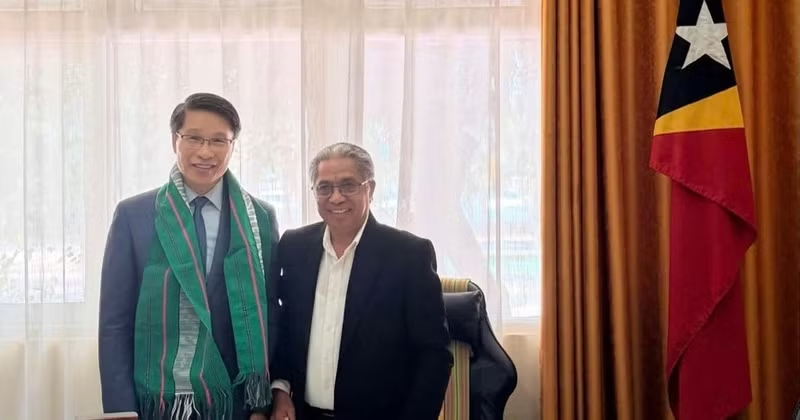
Minister Marcos da Cruz thanked Viet Nam for its support for Timor-Leste’s accession as ASEAN’s 11th member and spoke highly of Viet Nam’s achievements and experience in agricultural and fisheries development.
According to the minister, Timor-Leste has considerable potential in land resources, livestock farming, and marine resources. However, agricultural production remains predominantly small-scale, while fisheries infrastructure and human resources require further investment and development. Timor-Leste hopes to learn from Viet Nam’s experience to enhance production capacity, ensure food security, and sustainably exploit its resources.
Ambassador Pham Binh Dam affirmed that Viet Nam attaches importance to its ties of friendship and cooperation with Timor-Leste and wishes to work with the country to effectively implement agreements reached by the two countries’ senior leaders during Prime Minister Xanana Gusmão’s official visit to Viet Nam in June 2026, including the promotion of cooperation in rice, agricultural products, and fisheries.
Viet Nam stands ready to share the country’s experience and connect specialised agencies and businesses from both countries to implement programmes suited to Timor-Leste’s development needs, delivering tangible results and practical benefits to people and businesses on both sides.
In agriculture, Ambassador Pham Binh Dam proposed linking the supply of agricultural products with support for Timor-Leste in strengthening its domestic production capacity. Rice and coffee offer promising areas for cooperation in crop varieties, farming techniques, equipment, and human resource training. Drawing on Viet Nam’s experience of agricultural cooperation with Cuba and several African countries, the ambassador suggested that the two sides explore trilateral cooperation models, mobilising additional resources from international organisations and development partners to complement bilateral cooperation.
In fisheries and the marine economy, the two sides discussed potential cooperation in aquaculture, fishing, shipbuilding, processing, fisheries infrastructure development, and human resource training. The ambassador proposed expanding the application of digital technologies in fisheries monitoring, traceability, and efforts to combat illegal, unreported and unregulated (IUU) fishing. He also suggested selecting several feasible areas for pilot projects before expanding successful initiatives. The Vietnamese Embassy stands ready to connect Timor-Leste with Vietnamese businesses interested in these fields.
Minister Marcos da Cruz welcomed the interest shown by Vietnamese businesses in investing in fisheries and processing in Timor-Leste, expressing his hope that projects would incorporate technology transfer and human resource training.
Minister Marcos da Cruz proposed that businesses continue direct discussions with the ministry’s specialised departments to develop concrete plans and assess their feasibility. He also expressed his desire for the two sides to step up experience-sharing and cooperation in areas closely linked to local livelihoods.
Regarding preparations for the first session of the Viet Nam–Timor-Leste Joint Commission, co-chaired by the two countries’ foreign ministers, Ambassador Pham Binh Dam stressed the need to identify priority areas, programmes, projects, and cooperation documents at an early date.
As an immediate step, he proposed that Timor-Leste work with Viet Nam to finalise a draft memorandum of understanding on fisheries cooperation and explore the development of a cooperation document on agriculture as well as establish a framework for long-term, effective bilateral cooperation in agriculture and fisheries.