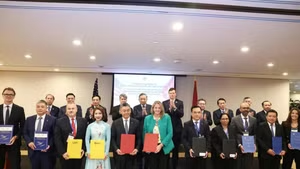
In her welcome remarks, Nguyen Thi Hong, Member of the Party Central Committee and Vice President of the National Assembly (NA), affirmed that, over more than three decades of development, the State Audit Office of Viet Nam had continued to grow and gradually established its position, prestige, and important role. It had become an effective and powerful instrument of the Party and the State in auditing and overseeing the management and use of public finances and assets, strengthening financial discipline, and combating corruption, wastefulness, and other negative practices, thereby contributing to transparent, ethical, and effective national governance.
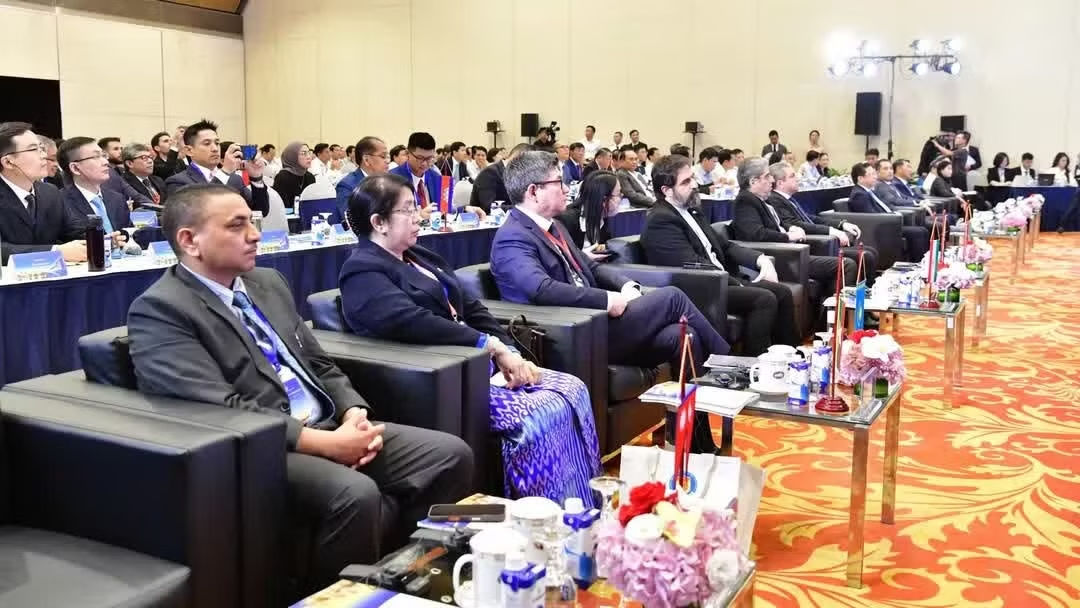
“Audit findings provide objective and reliable information to support the NA in performing its legislative and supreme oversight functions and deciding on important national issues, particularly national finance and the state budget. They also assist the Government in directing and managing its work, identifying and addressing shortcomings in mechanisms and policies, and improving the effectiveness and efficiency of public resource management and use,” the NA Vice President emphasised.
According to Nguyen Thi Hong, modern public-sector auditing around the world has increasingly become an important tool for providing evidence to support macroeconomic policymaking, issuing early warnings of systemic risks, and enhancing public value.
Technologies such as artificial intelligence, big data analytics, geographic information systems, and satellite imagery, together with real-time auditing methods, are reshaping audit methodologies. Meanwhile, the emergence of new audit subjects, including digital assets, national databases, green finance, green bonds, and climate change response programmes, is opening up new opportunities while also posing new requirements for supreme audit institutions.
Nguyen Thi Hong said the conference provided an important opportunity for the State Audit Office of Viet Nam to learn from international experience and good practices in order to improve its institutional framework, strengthen the effectiveness of audit recommendations, accelerate the application of digital technologies, and expand the scope of auditing to new areas such as green finance, the environment, cybersecurity, public data, and sustainable development.
The NA Vice President called on the State Audit Office of Viet Nam to continue renewing its thinking, improving its institutional framework, applying modern technologies, and strengthening its workforce to adapt promptly to the new context.
She also expressed confidence that the conference would produce valuable and insightful policy recommendations, helping build a professional and modern State Audit Office of Viet Nam with strong prestige in the region and worldwide, while making a practical contribution to the development of the international auditing community.
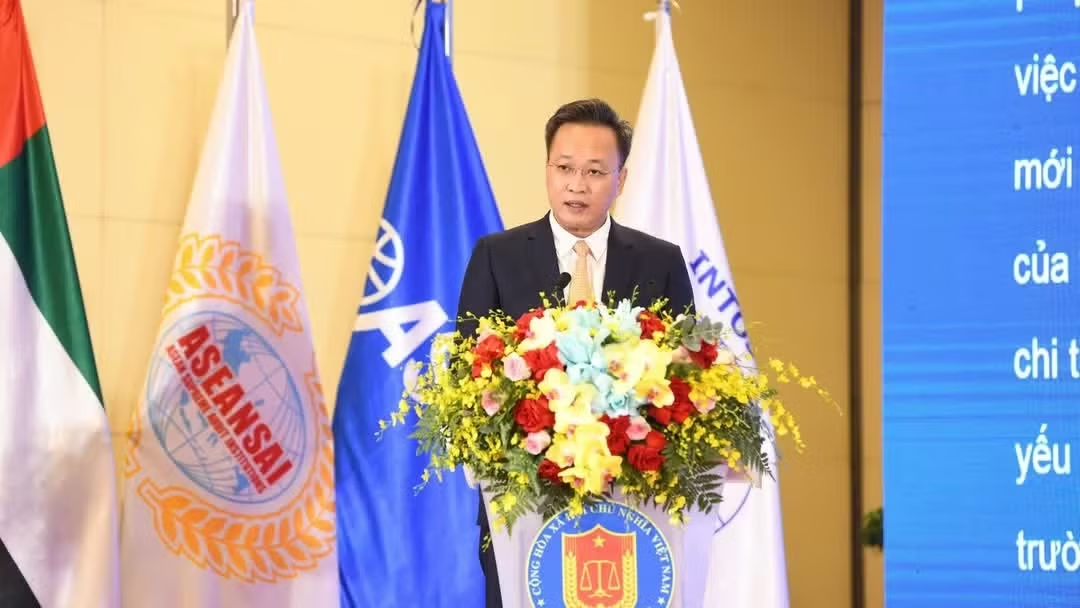
In his opening remarks, Member of the Party Central Committee and Auditor General of the State Audit Office of Viet Nam Nguyen Huu Nghia affirmed that the conference was a high-level forum and a valuable opportunity for leaders of supreme audit institutions, as well as domestic and international leaders, managers, experts, and scholars, to exchange knowledge and share their experiences regarding difficulties and challenges, measures to respond and adapt to change, and good practices in institutional, legal, and policy reform; organisational restructuring; risk control; audit quality management; and efforts to renew and improve the effectiveness and efficiency of auditing amid new developments in digital transformation and the application of artificial intelligence (AI) and big data.
According to Nguyen Huu Nghia, the conference’s main theme — Vision, Institutions and Innovation — covered key issues that are attracting considerable attention from audit institutions today.
In recent years, supreme audit institutions have continued to reform their institutional frameworks and policies, accelerate digital transformation and the application of artificial intelligence, develop audit models based on AI and big data analytics, and conduct continuous monitoring, risk assessment and analysis, and remote auditing.
To adapt to the new context and meet the country’s development requirements in the coming period, the State Audit Office of Viet Nam has been actively pursuing comprehensive reforms to its institutional framework, policies, legislation, organisational structure, and operations. Key priorities include developing its strategy through 2035, with a vision to 2045, and amending and supplementing the Law on State Audit.