Building on success stories
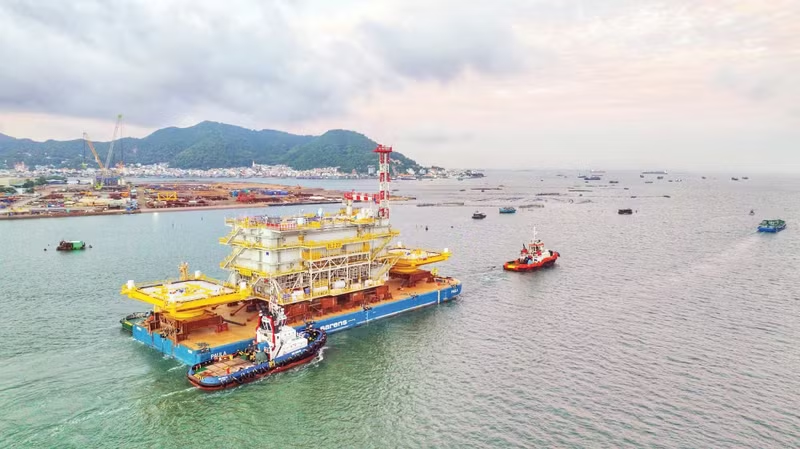
As one of Viet Nam’s leading providers of technical services to the oil and gas and industrial sectors, PetroVietnam Technical Services Corporation (PTSC) — a subsidiary of the Viet Nam National Industry and Energy Group — recently completed, launched, and successfully transported four offshore substations for the Baltica 2 project off the coast of Poland. This marked the first time an offshore wind power product manufactured in Viet Nam had been exported to Europe. The achievement demonstrates Viet Nam’s engineering, procurement, and construction (EPC) contracting capabilities and represents a strategic step forward for the oil and gas sector in the global renewable energy supply chain.
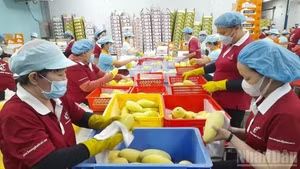
With a strong focus on export-oriented manufacturing under models such as Free on Board (FOB), which involves sourcing materials, manufacturing, and selling finished goods, and Original Design Manufacturing (ODM), which includes product design and manufacturing, Garment 10 Corporation has gradually established itself as an important link in global supply chains, exporting products to more than 60 countries and territories. Alongside its established domestic labels, the company has recently developed several brands targeting export markets. These include DeTheia, a premium womenswear line, and Generos, a brand aimed at younger consumers. By making extensive use of social media platforms and e-commerce, the company has achieved impressive results, with Garment 10-branded products now sold in 19 countries, including demanding markets such as the US, the UK, and other European countries.
Over more than 30 years of economic opening and international integration, Viet Nam has gradually become an important link in global production and trade networks. Deeper participation in free trade agreements, the attraction of foreign direct investment (FDI), and the development of export-oriented manufacturing industries have helped expand trade rapidly. Between 2021 and 2025 alone, merchandise exports rose from 336.25 billion USD to 475.04 billion USD. However, this expansion has not been matched by a corresponding and sustained strengthening of domestic businesses’ role. In 2025, domestic enterprises accounted for just 22.7% of export turnover, while FDI enterprises accounted for 77.3%.
The gap is also evident in the extent of participation in global value chains and the ability to generate value. The proportion of domestic enterprises linked to global value chains fell from around 35% in 2009 to 18% in 2023. Services account for approximately 12% of total exports, while highly skilled workers make up only around 5% of the workforce in the processing and manufacturing sector. This shows that Viet Nam’s challenge is not simply to increase the number of domestic exporters but also to connect local businesses more effectively with global production networks and gradually shift towards activities with greater knowledge content and higher added value.
The substantial presence of FDI enterprises creates opportunities for domestic businesses to access technology, management standards, and markets. However, their ability to become suppliers and participate more deeply in global production networks remains limited.
Dr Do Dieu Huong,
Deputy Director of the Centre for Strategy and Policy, Viet Nam Institute of Economics and World Affairs
Addressing this issue, Dr Do Dieu Huong, Deputy Director of the Centre for Strategy and Policy at the Viet Nam Institute of Economics and World Affairs, said the substantial presence of FDI enterprises has offered domestic businesses opportunities to access technology, management standards, and markets, however, their ability to become suppliers and integrate more deeply into global production networks remains inadequate. The issue lies not only in the proportion of local procurement but, more importantly, in the quality of business linkages. Domestic enterprises need to improve their ability to control quality, refine processes, handle data, and coordinate technical activities, eventually progressing towards product design, testing, and joint development. The main bottleneck, therefore, is not simply a lack of connections with FDI enterprises but a shortage of stable, substantive supply relationships that foster learning, technology accumulation, and capability upgrading.
Meeting standards
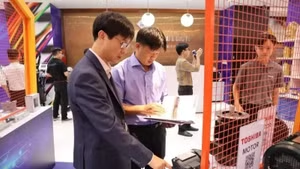
In practice, getting products from domestic businesses into global supply chains remains challenging. Companies must meet increasingly stringent technical requirements imposed by customers and markets, while Vietnamese enterprises often face disadvantages in terms of capital, management capabilities, and technological expertise. According to a representative of AEON, one of Japan’s leading retail groups, more than 90% of the products displayed on its shelves come from Vietnamese suppliers. When expanding into new localities, AEON proactively engages and negotiates with regional suppliers to increase the proportion of locally sourced products across its retail network, thereby contributing directly to regional economic development.
In addition to procurement, AEON is stepping up cooperation with Vietnamese businesses to develop high-quality private-label products at reasonable prices. However, some enterprises have not invested sufficiently in brand identity, making it difficult for them to compete directly with major brands. Many small businesses also struggle to complete legal documentation and obtain quality certifications, particularly those relating to raw material traceability.
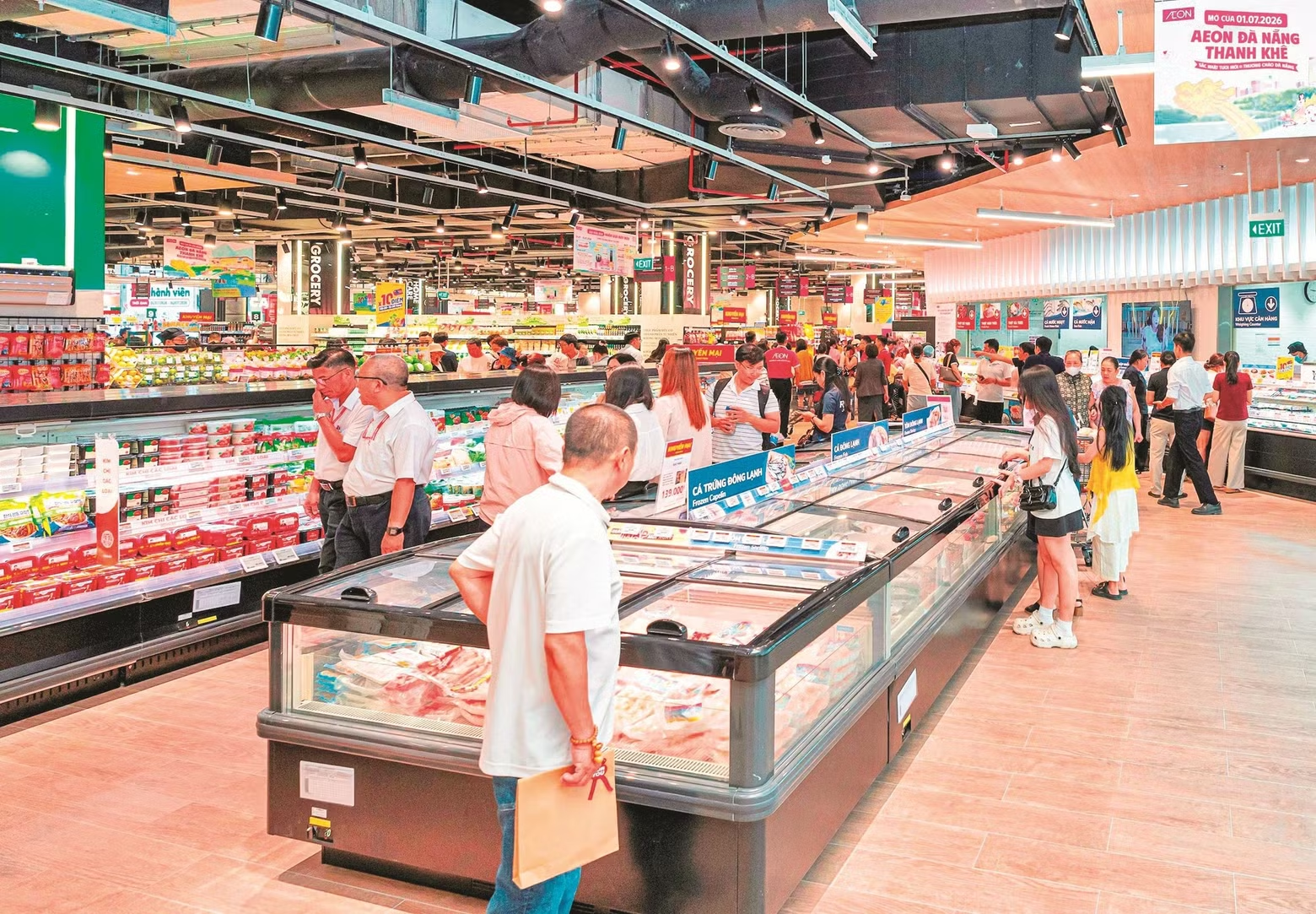
The AEON representative also noted that Vietnamese businesses face high logistics operating costs and limited capacity to deliver goods across wide geographical areas. In addition, they often struggle to manage and implement traceability procedures when sourcing raw materials from multiple suppliers or farming households.
To participate more deeply in global supply chains, Vietnamese enterprises must comply with international standards and sustainability requirements. Beyond ensuring product quality, they must adhere to global codes of conduct, including requirements relating to environmental protection, labour management, working hours, and waste discharge under the Code of Conduct (CoC), particularly when manufacturing goods under contract or producing private-label products for export. Businesses must also strengthen their ability to supply goods on a wider scale and establish nationwide or network-wide delivery and distribution capabilities to ensure product availability.
To participate more deeply in global supply chains, Vietnamese enterprises must comply with international standards and sustainability requirements. Beyond ensuring product quality, they must adhere to global codes of conduct, including requirements relating to environmental protection, labour management, working hours, and waste discharge under the Code of Conduct (CoC), particularly when manufacturing goods under contract or producing private-label products for export.
According to the AEON representative
Cha Ji Ho, Deputy General Director in charge of Samsung Vietnam’s Purchasing Centre, added that since 2015, Samsung Viet Nam had worked with the Ministry of Industry and Trade, local authorities, and relevant agencies to help Vietnamese enterprises improve shop-floor operations, increase productivity and product quality, train specialised personnel, and develop smart factory models.
Going forward, Samsung will continue to work alongside Vietnamese enterprises, shifting from providing support to jointly building capabilities and from developing individual companies to strengthening the competitiveness of the wider ecosystem. Its focus will be on foundational areas such as production management, core technologies, digital transformation, automation, and human resource development. These efforts will help businesses meet Samsung’s standards while also improving their competitiveness in international markets.
Samsung also shared its hope the Government of Viet Nam will continue identifying and introducing domestic enterprises with the capacity and potential to join global supply chains. It further emphasised the importance of developing mechanisms and policies to attract investment in technological equipment that meets international standards, alongside strengthening the training of highly skilled workers.
From a tax policy perspective, Le Thi Duyen Hai, Vice President and Secretary-General of the Viet Nam Tax Consultants’ Association, observed that Vietnamese exports remain concentrated in sectors that generally generate limited added value, such as garment manufacturing, seafood processing, agricultural products, and steel. Meanwhile, most electronic products and components are produced by FDI enterprises. Global supply chains are undergoing substantial restructuring, with production locations being diversified, dependence on individual markets reduced, resilience strengthened, and supply chains shortened.
Tax policy needs to shift its focus from attracting investment into Viet Nam towards upgrading domestic enterprises’ capabilities so that they can become high-value links in global supply chains.
Le Thi Duyen Hai,
Vice President and Secretary-General of the Viet Nam Tax Consultants’ Association
Viet Nam has an opportunity to attract additional projects, orders and production activities relocating to Southeast Asia. More than 30,000 foreign-invested enterprises currently operate in Viet Nam. Although they account for only 3% of all businesses, they contribute more than 30% of government revenue from production and business activities. However, Viet Nam risks becoming a low-value-added assembly base, while domestic enterprises have yet to participate in service supply chains for FDI companies to the extent expected. Tax policy therefore needs to shift its focus from attracting investment into Viet Nam towards upgrading domestic enterprises’ capabilities so that they can become high-value links in global supply chains.
Global supply chains continue to be restructured, with buyers increasingly diversifying their sources of supply and Viet Nam featuring more prominently in international sourcing strategies. Viet Nam has established an extensive network of FTAs, including major agreements such as the Comprehensive and Progressive Agreement for Trans-Pacific Partnership (CPTPP), the EU–Viet Nam Free Trade Agreement (EVFTA), the UK–Viet Nam Free Trade Agreement (UKVFTA), and the Regional Comprehensive Economic Partnership (RCEP).
When goods meet the relevant requirements and rules of origin, buyers sourcing from Viet Nam can benefit from preferential tariffs in numerous markets. Vietnamese enterprises therefore need to invest more in modern technology, improve productivity and management efficiency, and minimise costs to strengthen their competitiveness and expand exports. These efforts will help them gradually establish a stronger position in global supply chains.