From single deals to chain resilience
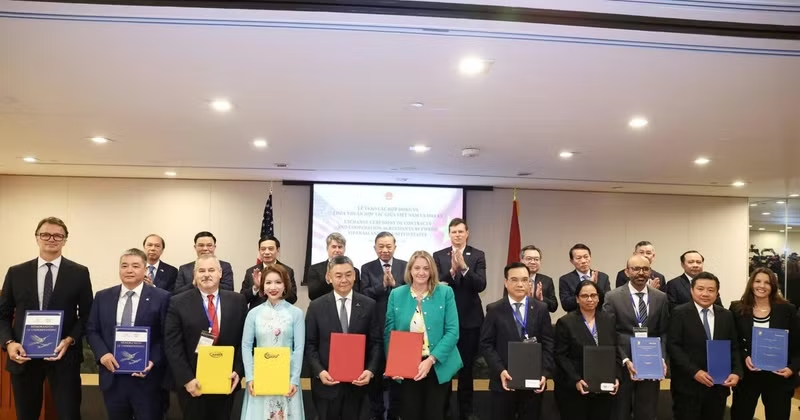
On paper, Petrovietnam’s US meetings covered disparate ground: GE Vernova on power and technology, Murphy on oil and gas projects; Chevron on crude, liquefied natural gas (LNG), liquefied petroleum gas (LPG) and energy supply chains; ExxonMobil on crude for Dung Quat Refinery. The common thread: cooperation is shifting from one-off transactions and projects to linked nodes across the energy chain.
That shift matters. In stable markets, companies can optimise individual stages. When oil and gas prices, freight costs and international supply chains are repeatedly hit by external shocks, an energy company’s resilience depends more on how many options it has across supply, technology, markets and partners.
Chevron is therefore more than a framework deal. Tying up with an integrated energy group that has sourcing, trading, transport and international operations gives Petrovietnam more routes to crude, LNG, LPG and refining petrochemical feedstock, plus scope to study import infrastructure, energy storage, finance – trade, technology and emissions cuts.
More concretely, the crude supply agreement between Petrovietnam's Binh Son Refining and Petrochemical Joint Stock Company (BSR) and ExxonMobil Asia-Pacific shows the value of stable supply relationships. The disclosed minimum is 2 million barrels a year. For a refinery, feedstock determines not just whether production continues but product mix and the economics of the whole plant.
Meanwhile, Petrovietnam and Murphy are pushing Lac Da Vang oil field, preparing development steps for Hai Su Vang and studying links between potential structures in the Cuu Long Basin and existing infrastructure, a sign showing the approach is to optimise the whole chain, not just individual fields.
Resources are only half the battle
If supply is one side of energy security, technology and capital are what turn resources into production capacity.
Petrovietnam and GE Vernova are a case in point. Building on GE Vernova’s gas turbines for Nhon Trach power plants No. 3 & 4, the two sides discussed technical solutions, equipment progress and support, with the study scope widened to long-term maintenance, digital operations, offshore wind power, training and technology transfer.
The requirement is sharper for Petrovietnam as it moves beyond traditional oil and gas into gas-fired power, LNG, offshore wind power, renewables and new industrial-energy fields. Each has different technology, standards and investment structures, making the ability to absorb and master technology part of competitiveness.
At a roundtable with US financial institutions and investment funds, Petrovietnam CEO Le Manh Cuong put investment demand for 2026–2030 at about 29.2 billion USD across 99 projects in core fields, roughly 4.8 times the 2021–2025 level.
What comes after the signatures
The role of a large energy company is no longer measured only by oil and gas output or budget payments. As the economy targets faster growth, the ability to secure energy supply, build related industrial chains, absorb technology, raise international capital and run large projects is becoming just as important.
From that angle, Petrovietnam’s US push is an attempt to connect resources that sit in different places: domestic resources with international markets, energy demand with supply, projects with technology, investment plans with capital, and Vietnamese companies with global energy groups.
If those links become on-schedule, effective projects, the value will spill beyond individual companies, adding supply, production capacity, technology and headroom for the industrial chains that sit behind energy.
So the real test after the US trip isn’t how many more documents get signed. It’s how far the ones already exchanged travel from commitment to project, from project to product, and from product to actual value.