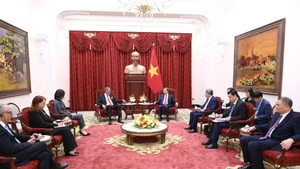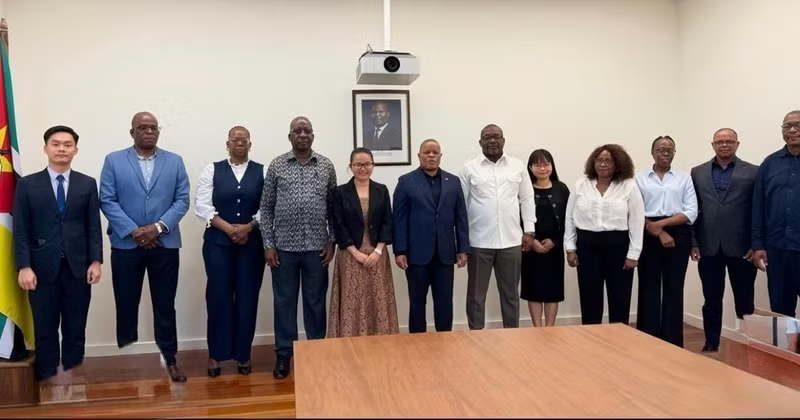
During the meeting, Ambassador Tran Thi Thu Thin conveyed greetings and regards from Viet Nam’s Minister of Agriculture and Environment Trinh Viet Hung to Minister Roberto Mito Albino. She also expressed her sincere appreciation for the close cooperation extended by Mozambique’s Ministry of Agriculture, Environment, and Fisheries and relevant Mozambican authorities in promoting collaborative programmes between the two countries.
The Ambassador affirmed that the traditional friendship and brotherly solidarity between Viet Nam and Mozambique, nurtured by successive generations, continued to grow stronger and deeper across a wide range of fields. The relationship was underpinned by firm political trust and tangible, mutually beneficial bilateral cooperation in trade, investment, telecommunications, education, healthcare, and people-to-people exchanges, among other areas.
She emphasised that agricultural cooperation was a pillar of bilateral relations, given the many similarities between the two countries in their diverse geographical features, natural conditions, and soil characteristics. Building on this foundation, Viet Nam had sent numerous agricultural experts to Mozambique over the years to conduct surveys and provide direct technical assistance. The two sides had also stepped up exchanges while sharing experience and farming techniques to boost productivity and enhance the quality of agricultural and aquatic products.
In addition, Viet Nam has awarded scholarships to Mozambican students and supported the training of highly qualified personnel across various fields under the Agreement between the two Governments on Cooperation in Higher Education. Many of these students have pursued studies in agriculture, fisheries, and food processing, among other disciplines.
A major milestone in bilateral agricultural cooperation was the project on rice, soybean, and vegetable production in Mozambique’s central provinces during the 2013–2017 period. The project delivered tangible results, particularly by helping local communities adopt advanced farming techniques and high-quality seed varieties, thereby driving higher yields of the region’s main crops.
Building on this success, the Ambassador welcomed the fact that the relevant authorities of both countries were actively holding discussions and finalising procedures to expedite the project’s second phase, which aims to further boost agricultural production and bolster food security in Mozambique.
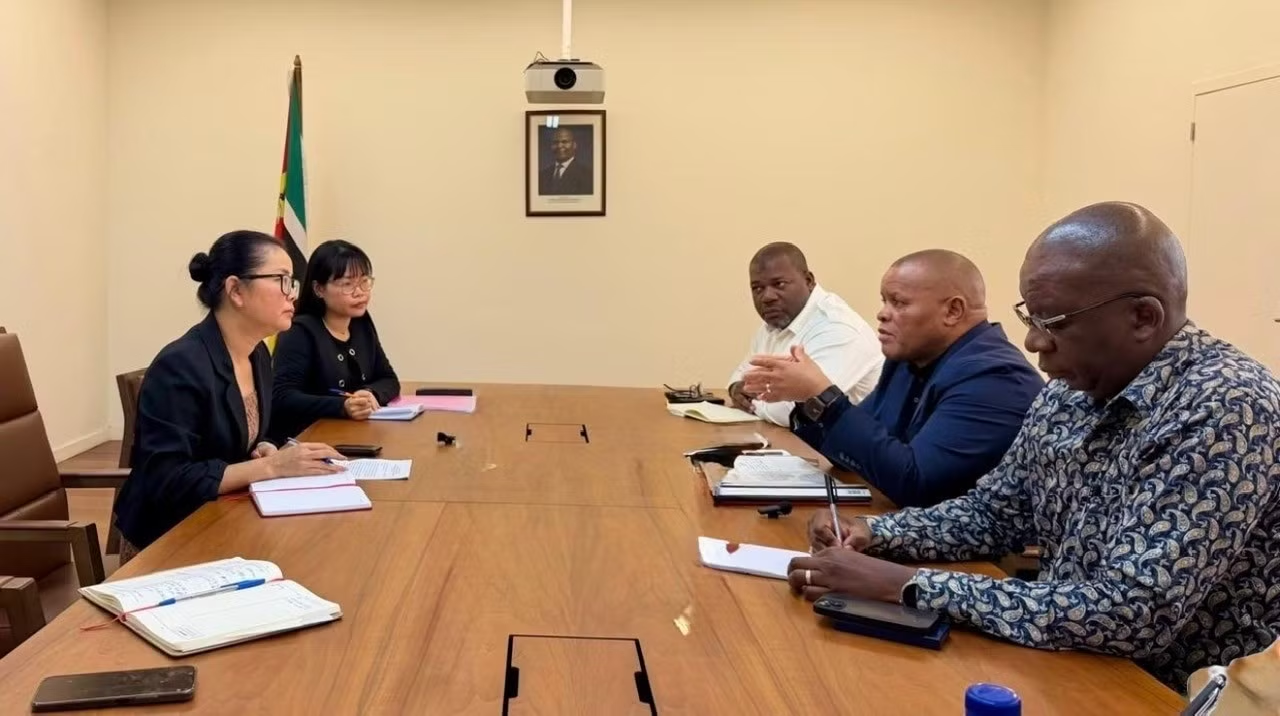
Expressing pleasure at the effective cooperation achieved between Viet Nam and Mozambique in recent years, Minister Roberto Mito Albino stressed that Viet Nam was one of the countries from which Mozambique wished to learn valuable lessons in socio-economic development in general, and in agriculture, the environment, and fisheries in particular. Mozambique regarded Viet Nam as a leading strategic partner in agricultural technical cooperation to advance its goals of ensuring food security and achieving sustainable development.
Building on the traditional friendship and positive results of bilateral cooperation in recent years, the Minister said Mozambique would soon send delegations of officials and experts to Viet Nam to studymodels practical experience, learn from Vietnamese counterparts, and strengthen their professional expertise.
On this occasion, the Minister expressed his wish to visit Viet Nam at an appropriate time. He also called on Viet Nam to continue exchanging experience while sharing expertise and technical knowledge with Mozambique in key areas, including intensive wet-rice cultivation, aquaculture, and agricultural processing, particularly cashew production.