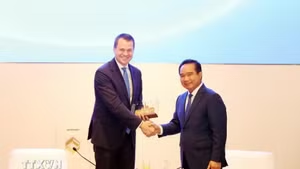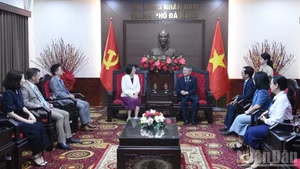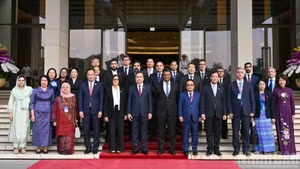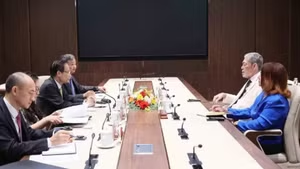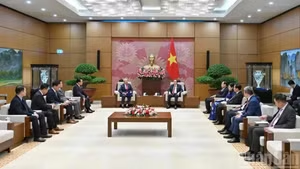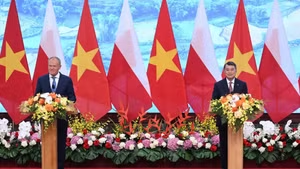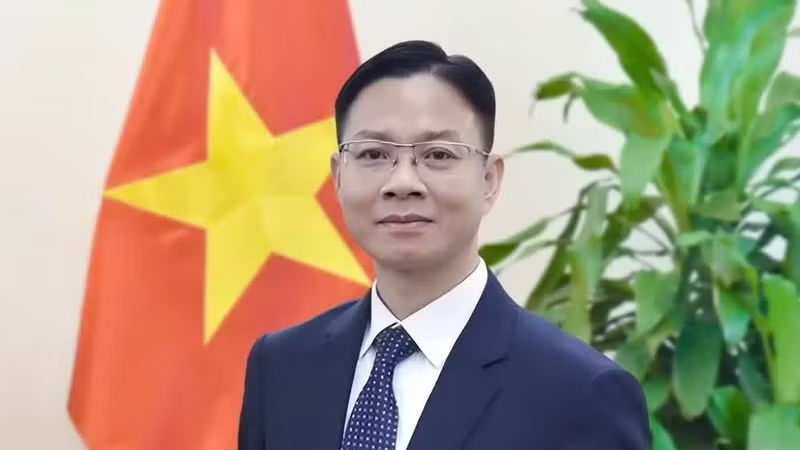
Talking to the press on the outcomes of Polish Prime Minister Donald Tusk’s official visit to Viet Nam on October 24-26, during which the two sides announced the establishment of the new partnership framework, Van highlighted the trip as an important landmark in the 76-year history of bilateral diplomatic relations.
The upgrade was significant in four respects, he noted. First, it established a long-term framework for cooperation between traditional friends, with Viet Nam regarding Poland as a leading priority partner in Central and Eastern Europe, and Poland considering Viet Nam a leading partner in Southeast Asia and one of its most important partners in Asia.
Second, the new framework will also expand development opportunities by combining Poland’s strengths in industry, science, technology, education and the maritime economy with Viet Nam’s market, manufacturing capacity and position in regional supply chains. This will create opportunities for businesses from both countries and strengthen connectivity between ASEAN and the European Union (EU).
Third, it will create momentum to translate traditional friendship into tangible results. Accordingly, the two sides adopted an action plan for 2026-2030 to implement their joint statement on establishing the Strategic Partnership. This also represents a concrete step in implementing Viet Nam’s foreign policy of independence, self-reliance, multilateralisation and diversification, which attaches importance to traditional partners and friends.
Fourth, this move helps strengthen Viet Nam’s network of partners in Europe and provides fresh impetus for Viet Nam-EU relations. This trip followed the visits to Denmark, the European Union (EU) and Belgium by General Secretary of the Communist Party of Viet Nam Central Committee and President To Lam, amid the elevation of Viet Nam-EU ties to a Comprehensive Strategic Partnership.
The establishment of a Strategic Partnership with Poland builds on this positive momentum, deepening Viet Nam’s ties with key European partners and creating a stronger foundation for more substantive and effective Viet Nam-EU cooperation, the official stated.
Regarding the outcomes, Van highlighted the two sides’ strong consensus on priorities for more substantive cooperation. They agreed to maintain regular contacts at all levels, particularly at the highest level, improve existing cooperation mechanisms, resume meetings of the Intergovernmental Committee on Economic Cooperation and maintain deputy-ministerial political consultations. Parliamentary cooperation will also help improve the legal framework and oversee the implementation of agreements.
In economic ties, both sides set a target of raising two-way trade to 6 billion USD by 2030 in a balanced, sustainable and mutually beneficial manner. They agreed to make better use of the EU-Viet Nam Free Trade Agreement (EVFTA), reduce barriers and facilitate market access. Investment cooperation will focus on complementary sectors, including processing and manufacturing, information technology, pharmaceuticals, energy and logistics, thereby leveraging each country’s role as a gateway to the ASEAN and EU markets, respectively.
The two countries also identified science and technology, innovation and digital transformation as key areas for cooperation. They will promote links among universities, research institutes and businesses, connecting training with research, technology transfer and production needs. Collaboration in the maritime economy, clean energy and high technology will offer further long-term opportunities. Defence and security ties will continue to develop through training, defence industry cooperation and efforts to combat transnational and high-tech crime.
People-to-people exchanges will be strengthened through cooperation in higher education and tourism. The two PMs witnessed the exchange of two collaboration documents in these fields. The reopening of direct flights by LOT Polish Airlines was welcomed as a means of facilitating tourism, business activities and people-to-people exchanges. Both sides also agreed to facilitate citizens’ residence, work and study, and promote the role of the Vietnamese community in Poland as a bridge between the two countries.
On regional and international issues, the two sides reaffirmed the central role of the United Nations and respect for international law and the peaceful settlement of disputes. They underscored the importance of peace, stability, security, cooperation and development, as well as maritime and aviation safety and freedom in the East Sea/ South China Sea in accordance with international law, particularly the 1982 United Nations Convention on the Law of the Sea (UNCLOS). They also agreed to strengthen cooperation within the Viet Nam-EU, Poland-ASEAN and ASEAN-EU frameworks.
To ensure effective implementation, Van emphasised the need to translate the 2026-2030 action plan into specific tasks, programmes and projects, with clear responsibilities, resources, deadlines and expected outcomes. The two sides need to activate cooperation mechanisms, prioritise feasible projects with broad impact, regularly review progress and promptly address obstacles facing ministries, localities and businesses.
He stressed that the success of the Strategic Partnership will be measured by implemented commitments, completed projects and tangible benefits for people and businesses. With their longstanding friendship and strong political commitment, Viet Nam and Poland have a solid foundation for advancing bilateral relations in line with their potential and the new level of partnership, he added.