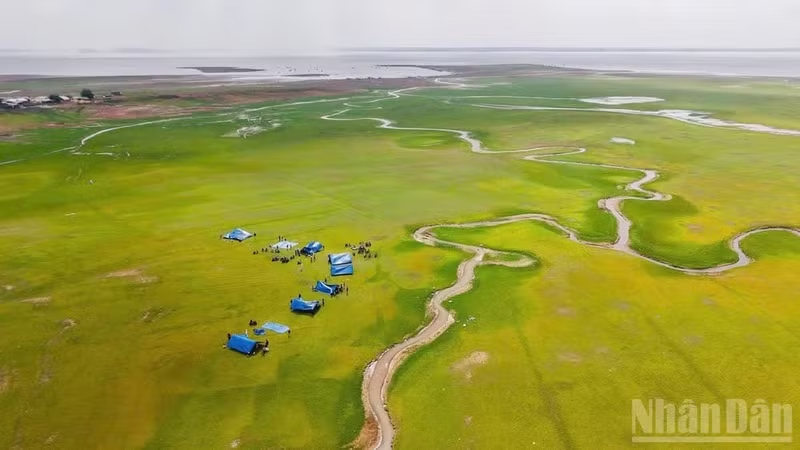
Elevating the rural landscape
Following the merger of administrative units, Thong Nhat Commune has expanded to 12,000 hectares, with a population of over 61,000 from diverse ethnic and religious backgrounds. This expansion presents numerous challenges in implementing the National Target Programme for New-Style Rural Development, particularly in meeting the more rigorous criteria set for the 2026–2030 period.
To stay on track with its initial objectives, Thong Nhat Commune has conducted a thorough assessment across various sectors, proactively identifying obstacles that require focused resolution. The commune has developed a roadmap and solutions tailored to its local conditions. By mobilising the entire political system and the local population, the locality is accelerating decisive action to fulfil each of the established criteria.
Through the concerted efforts of the Party Committee, local authorities, the Fatherland Front, socio-political organisations, and the general public, numerous projects and tasks were fast-tracked and brought to completion during a special 500-day-and-night emulation drive — themed “Solidarity, Discipline, Efficiency, Breakthroughs: Building a Civilised and Modern Dong Nai.” To date, Thong Nhat Commune has fulfilled all 47 criteria for a new-style rural commune, achieving substantive and quantifiable results.
Local authorities requested that the Fatherland Front gather feedback from residents on their satisfaction with the implementation of these criteria. “Thong Nhat Commune has met all the new-style rural criteria, and there have been significant changes — we are truly delighted. When the commune recently sought our input, I expressed my high regard for the improvements in our quality of life and the remarkable transformation of the commune’s overall appearance,” shared Dang Cau, a resident of Bach Lam Hamlet, with great enthusiasm.
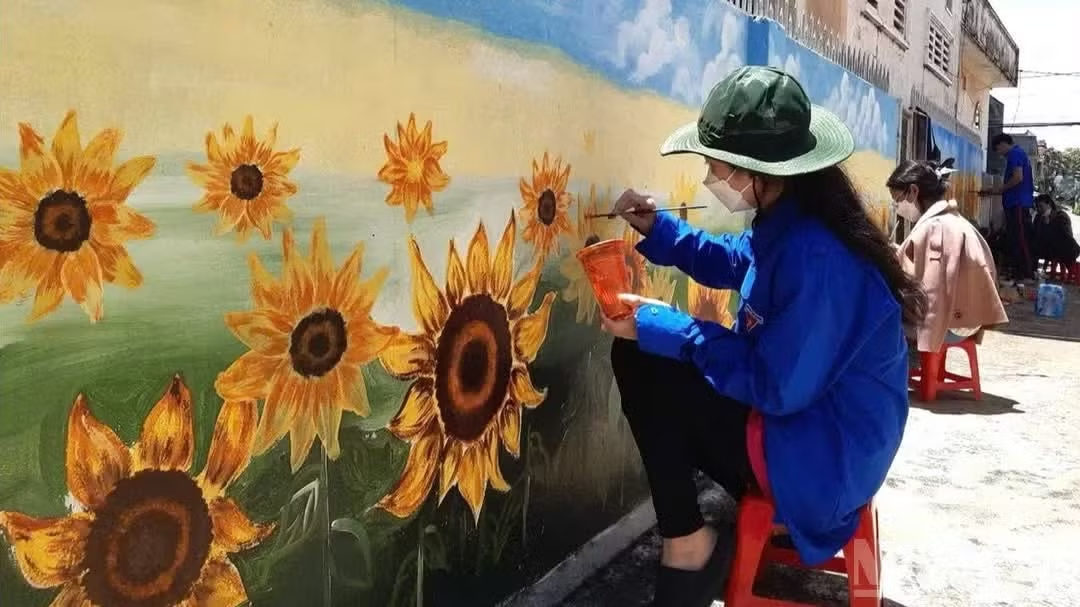
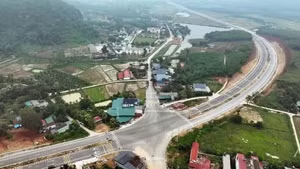
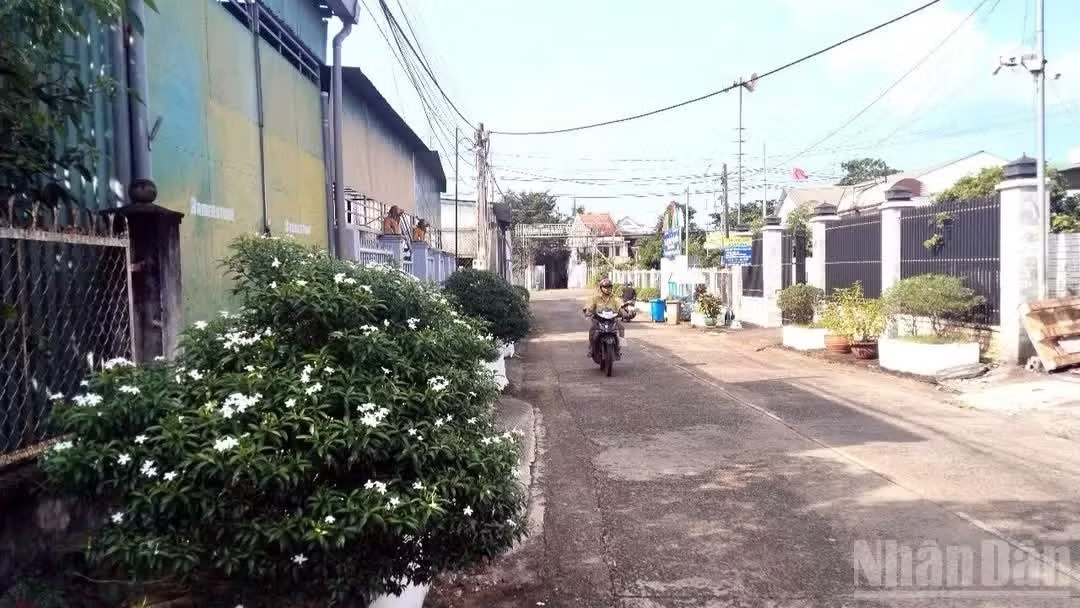
A key factor in the transformation of the rural landscape — one clearly felt by local residents — is the expanding transport network, which facilitates travel and supports sustainable socio-economic development. The commune has implemented a comprehensive plan to construct, expand, renovate, and upgrade numerous inter-commune and inter-hamlet roads, as well as paths within neighbourhoods.
The fact that 100% of the commune’s main roads and inter-commune routes are now paved with asphalt or concrete stems largely from the contributions of local residents, who provided over 11.8 billion VND towards the total 88.5 billion VND in development capital mobilised recently.
A notable example is the “Youth Road” in Duc Long Hamlet. Through previously paved with concrete, it had deteriorated and become too narrow after years of use. As part of the “New-Style Rural Development” initiative, the state provided funding for construction, while local residents voluntarily cleared land and donated portions of their property to widen the route. Many households even proactively dismantled fences and permanent structures, while also contributing other resources.
Vu Viet Thoa, a resident of Doc Mo Hamlet, Thong Nhat Commune, remarked: “The 'New Rural Development' programme brings practical benefits to residents; therefore, when the commune announced its plans, locals were eager to contribute to upgrading their hometown. People’s quality of life has improved significantly — especially with the investment in modern, convenient infrastructure such as roads and schools.”
As both the architects and the beneficiaries of new-style rural development, local residents are heartened that 100% of schools now meet national standards, health insurance coverage has surpassed 95%, and over 75% of households have access to a centralised clean water supply. Each year, the commune mobilises more than 10 billion VND from benefactors to build homes for those in need, provide gifts, and offer free medical check-ups for vulnerable groups — thereby contributing significantly to community well-being.
Regarding the reasons for this remarkable success, Secretary of the Party Committee and Chairman of the People's Council of Thong Nhat Commune Trinh Van Truong explained: Identifying the development of “new style rural areas” as a core, ongoing political task, the commune’s Party Committee, People's Council, and People’s Committee have provided focused leadership and direction, implementing the initiative in a systematic, scientific, and decisive manner.
Each week, the commune’s Steering Committee for New Style Rural Development meets to closely evaluate the progress of specific targets — identifying both those achieved and those yet to be met — and to promptly address challenges arising at the grassroots level.
“In particular, the locality has consistently empowered residents, upholding the principle: The people are informed, the people discuss, the people execute, the people inspect, the people supervise, and the people enjoy the benefits. As a result, the policy to enhance the quality of new style rural areas has truly taken root, fostering strong consensus across the community,” emphasised Trinh Van Truong.
The stature of Thong Nhat Commune today is built upon its greatest strength: the solidarity of its diverse population, which comprises 17 ethnic groups and followers of several major religions. The local Party Committee and authorities maintain close ties with religious leaders and influential community figures, inspiring patriotism among all walks of life in this new era.
This effort to bridge faith and civic life has encouraged residents to enthusiastically contribute their labour and resources towards building rural infrastructure and operating self-management models — ensuring peace within religious communities while maintaining a green, clean, and beautiful environment.
Parish priest of Doc Mo Parish in Thong Nhat Commune Father Hoang Van Doan remarked: “The development of new-style rural areas is a sound policy that resonates deeply with the people. During Holy Mass, we frequently encourage our parishioners to join the local community in contributing land for road expansion and maintaining environmental hygiene, ensuring a living space that remains open, clean, and beautiful. The parishioners here are very supportive; whenever the government launches an initiative, they respond immediately. Visitors are often amazed by the rapid transformation — many roads have even been decorated with vibrant murals, with the parish community providing the paint to help bring these projects to life.”
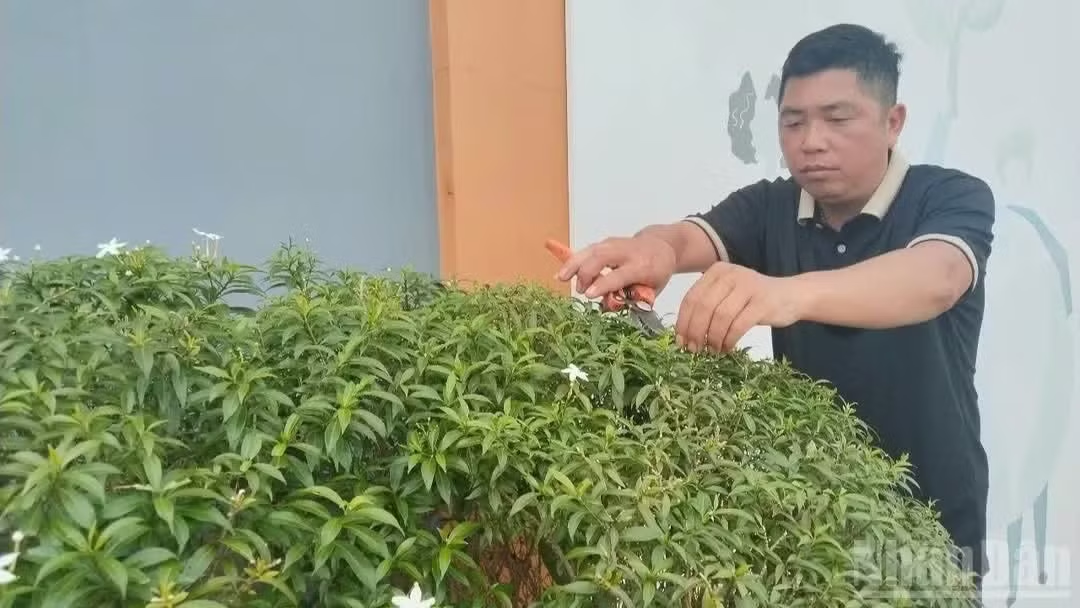
Increasing income is the core objective
Comprehensive socio-economic development has directly driven higher incomes and improved material and spiritual well-being for the local population. The average per capita income in Thong Nhat Commune now exceeds 90 million VND per year — a remarkable shift for a predominantly agricultural locality.
While agricultural production remains the cornerstone of the commune’s economic structure, farming methods are continuously modernised, and advanced scientific and technical practices are widely applied to optimise output. The value of crop and livestock production has now reached over 190 million VND per hectare.
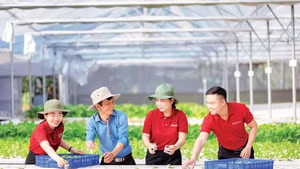
Water-saving irrigation systems, safe production protocols, and supply chain linkages for product distribution are being scaled up across the commune’s agricultural sector. Bui Hanh Can, from Doc Mo 2 Hamlet, operates a 3,000-square-metre hydroponic vegetable farm that integrates high-tech techniques with an IoT management system. By utilising smart sensors to automate microclimatic conditions and nutrient solutions, he has reduced labour requirements by 60%, irrigation water consumption by 80%, and fertiliser usage by 50%.
“This approach delivers exceptional economic efficiency, with a yield of 18 tonnes per hectare per crop cycle, totalling 54 tonnes annually. The vegetables are of consistent quality and meet food safety and hygiene standards. They fetch an average price of 20,000 VND/kg — 25% higher than conventional produce at traditional markets. The operation generates annual revenue of 1.8 billion VND, with a net profit of 466 million VND — 34.5% higher than that of standard, large-scale production models,” says Can.
The local livestock sector is thriving, shifting towards centralised, modern operations focused on pig and poultry farming. The widespread adoption of biogas digesters, biological litter systems, and advanced waste treatment methods is fostering a green, clean, and sustainable agricultural landscape, while facilitating a transition from small-scale, fragmented production to a value-chain-linked model.
Do Cuong Thinh, a resident of Duc Long Hamlet, operates a layer-hen farm utilising an automated, enclosed, climate-controlled housing system. With a capacity of 10,000 laying hens and 20,000 pullets, this facility has reduced the land footprint by 66.7% and cut veterinary medicine costs by 40%.
“The climate-control system has boosted egg production by 11%. They feature thicker shells and are cleaner, allowing them to fetch a market price approximately 8.7% higher than standard eggs,” Thinh explains. “The farm generates annual revenue of 7.4 billion VND, with a net profit of 2.2 billion VND — an impressive 81% increase compared to traditional farming methods. This has enabled a rapid recovery of the initial investment in just 2.5 years of operation.”
To enhance the value of its agricultural produce, Thong Nhat Commune has prioritised the “One Commune, One Product” (OCOP) programme. To date, the commune has developed 14 OCOP-certified products, which benefit from stable market access — effectively solving the recurring problem of “bumper harvests leading to price crashes.” Alongside agriculture, the local industrial, handicraft, trade, and service sectors are gradually adapting to the digital economy, increasingly serving as key drivers for the locality’s continued growth.
Chairman of the People’s Committee of Thong Nhat Commune Pham Hong Dong affirmed that the development of new-style rural areas is an ongoing journey with no final destination. Building upon these achievements, the locality will continue to innovate its mindset — remaining dynamic and creative in applying new approaches — to maximise its potential and advantages. The ultimate goal is to ensure a prosperous, happy life and satisfaction for local residents.
“Thong Nhat Commune aspires to be a pioneer in building a modern, affluent, and sustainably developed new-style rural community by 2030,” stated the head of the commune’s administration.