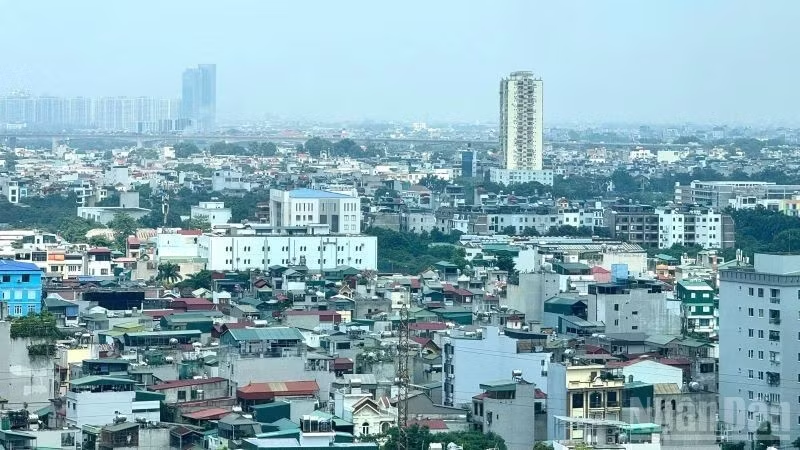
At the same time, the real estate market is operating in a new environment marked by significant changes in macroeconomic conditions, financial policies and consumer behaviour.
Market to become less dependent on short-term price surges
Speaking to Nhan Dan Newspaper, Pham Duc Toan, General Director of EZ Property, said that rapid transport infrastructure development and public investment have been creating new opportunities for localities beyond traditional economic centres.

Notably, the Southeastern region and the Northern Coastal region are emerging as two important growth poles, driven by the rapid expansion of infrastructure.
In the Northern Coastal region, Hai Phong is considered a particularly promising locality, as property prices remain relatively attractive compared with neighbouring provinces. Property prices in Hai Phong are currently around half those in Bac Ninh, while many residential properties are being traded at approximately 3.9 billion VND.
Regarding the Southeastern region, Toan said it will become one of the country's strongest growth poles in the coming period. The development of transport infrastructure, industrial parks and urbanisation is generating significant momentum for the real estate market.
According to Toan, investors are increasingly seeking areas with untapped growth potential, particularly localities where land prices remain relatively low and substantial infrastructure investment is underway. This will provide a foundation for more sustainable market development, beginning with genuine housing demand and infrastructure serving residential communities before progressing to higher stages of growth.
"In the new cycle, the real estate market will become less dependent on short-term price surges and increasingly driven by genuine demand, the pace of infrastructure development, and the ability to attract residents and businesses to live, produce and operate in these areas," Toan said. He added that these factors will determine property values and long-term growth potential.
Market adapts to new conditions

Do Thi Thuy Hang, General Director of Kien Hung Real Estate Company, said the market is now influenced not only by traditional supply-and-demand factors but also significantly by government policies and shifts in capital flows across the economy.
Hang noted that many real estate enterprises and major developers have proactively adjusted their business strategies to become more flexible, particularly by introducing demand-stimulating policies suited to current market conditions.
Drawing on her company's practical experience, Hang explained that while the market previously focused primarily on selling prices, developers' reputations and traditional financing methods, businesses are now adopting more flexible financial solutions to support buyers. Amid fluctuations in bank interest rates, developers have introduced policies such as mortgage interest subsidies, extensions of principal repayment grace periods and longer periods during which buyers are not required to repay loan principal. Some projects offer principal repayment grace periods of five to eight years, helping homebuyers ease short-term financial pressure and gain greater confidence when entering the market.
Hang added that households still hold a relatively large amount of idle capital, creating opportunities for developers to introduce more flexible sales policies to attract funds back into real estate.
Another notable change concerns discount policies and sales incentives. Previously, discounts were generally limited. However, many projects now offer more substantial incentives, typically ranging from 6% to 8%, or even higher, for customers who make early payments or use their own funds. This reflects a clear shift in business thinking, from selling properties at fixed prices towards optimising cash flow and liquidity.
According to Hang, the combination of developers' flexible policies, household capital flows and the State's macroeconomic regulation is creating a more positive foundation for the real estate market. She believes the market is gradually adapting to new conditions, with financial factors, policy measures and investment behaviour becoming increasingly aligned.
These changes are helping reshape market operations, paving the way for greater stability and sustainability in the coming years.