Seizing market opportunities
According to India-based firm Zion Market Research, the global Halal food market was valued at more than 2.3 trillion USD in 2022 and is projected to exceed 4 trillion USD by 2030, with an average annual growth rate of 7.7% during the 2023–2030 period.
Head of the Quality and Conformity Assessment Division under the Department of Quality, Processing and Market Development at the Ministry of Agriculture and Environment Le Anh Ngoc said Viet Nam enjoys several advantages in the Halal food supply chain thanks to its geographical proximity to major consumer markets.
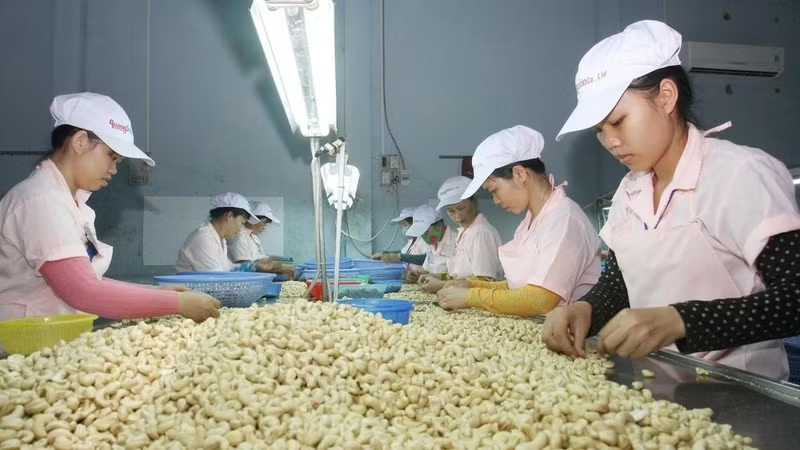
In Southeast Asia alone, Muslims account for approximately 42% of the population. Moreover, Viet Nam ranks among the world’s leading exporters of agricultural products such as rice, tea, cashew nuts, coffee, pepper, shrimp and fish, which are well suited to Muslim consumers’ needs.
Commercial Counsellor at the Viet Nam Trade Office in Indonesia Pham The Cuong said the country is a major consumer of Halal products and services, with spending reaching 330.5 billion USD in 2025.
Indonesia also recorded the world’s highest total expenditure on Halal food and beverages among Muslim markets, at 155.3 billion USD in 2022.
Several Vietnamese food categories have considerable export potential in this market, including dairy products, snacks, confectionery, dried rice noodle sheets, dried rice vermicelli, rice paper for spring rolls and seafood.
Alongside Indonesia, Malaysia ranks among the five largest Halal food importers in the Organisation of Islamic Cooperation (OIC), with annual purchases exceeding 20 billion USD.
CEO of Viet Nam Food Pavilion in the United Arab Emirates (UAE) Tran Tan Sy said the Middle East represents a major market for Halal products.
In the UAE, for example, 80% of agricultural products are purchased. In 2025, the country imported approximately 16 billion USD worth of agricultural and food goods.
Beyond its domestic consumption potential, the UAE also serves as a gateway for Vietnamese agricultural products to enter other Middle Eastern markets. The Viet Nam–UAE Comprehensive Economic Partnership Agreement (CEPA), which came into force in February 2026, has further strengthened the competitiveness of Vietnamese goods in this country.
Strengthening the supply chain
According to statistics from the Department of Quality, Processing and Market Development, approximately 1,000–1,300 Vietnamese enterprises obtained or maintained Halal certification during the 2024–2026 period.
However, Halal-certified businesses account for only around 0.2% of all active enterprises in Viet Nam.
Director of the HalalViet Promotion and Experience Centre Ba Thi Nguyet Thu said certification remains a major obstacle to the development of Vietnamese Halal businesses, as there is currently no universally recognised Halal standard. Instead, individual countries and regions enforce their own accreditation requirements.
Examples include certification systems administered by JAKIM in Malaysia, BPJPH in Indonesia, SFDA in Saudi Arabia, and MoIAT/ESMA in the UAE.
Furthermore, high certification maintenance costs and assessment procedures lasting six to 12 months pose hurdles for most small and medium-sized enterprises.
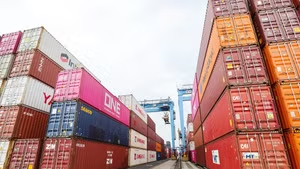
Halal regulations also impose strict requirements to prevent cross-contamination throughout harvesting, storage, packaging, and transportation. Viet Nam’s lack of dedicated Halal logistics infrastructure further increases the risk of shipments being denied customs clearance at destination ports.
“To enhance their access to Halal markets, businesses need to establish integrated Halal value chains covering raw material production areas, manufacturing, processing, logistics and distribution, while strengthening product traceability systems,” said Thu.
“In addition, bilateral and multilateral cooperation with international Halal organisations should be promoted, alongside the establishing mutual recognition agreements on certification and standards,” Thu emphasised.
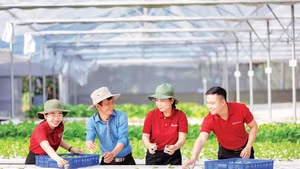
As one of the organisations making comprehensive investments in Halal standards, the Global Green House Cooperative has obtained certification from Halal Viet Nam for its entire range of products derived from chia plants grown domestically.
These include chia seeds, young leaf powder, seed-based nutritional powder, Omega-3 chia oil and chia herbal tea bags.
General Director of the Global Green House Cooperative Vu Thi Thanh Huyen said products must simultaneously comply with several standards to obtain certification from Halal Viet Nam, including Malaysia’s MS 1500:2019 and the GSO requirements applied across the Gulf Cooperation Council (GCC) region.
This demonstrates Viet Nam’s capacity to develop clean, high-quality agricultural products that meet international benchmarks.
From a market perspective, Commercial Counsellor at the Viet Nam Trade Office in Malaysia Phung Van Thanh said Vietnamese agricultural and food exporters seeking deeper penetration into the country’s Halal market must obtain Halal certification recognised by the Department of Islamic Development Malaysia (JAKIM), which imposes stringent requirements.
For example, after applicants submit the necessary documentation, JAKIM officials conduct on-site inspections of their food processing facilities to ensure compliance with Halal requirements.
Following the initial assessment, applicants may be required to modify their facilities or review their production chains to comply with Halal standards and conditions.
Given the stringent and comprehensive requirements of Halal markets, exporting enterprises need to adopt a long-term vision, aligning investment in compliance with their product development strategies to better adapt to individual markets.
This will help Vietnamese products build credibility and establish a stronger, more sustainable position in the global Halal food supply chain.