According to the National Statistics Office under the Ministry of Finance, total registered foreign direct investment (FDI) in Viet Nam reached 50.36 billion USD in the first nine months of 2026, up 76.4% year on year. Thus, after nearly 40 years of attracting foreign investment, Viet Nam’s registered FDI has totalled 570 billion USD.
Vietnamese firms struggle to compete in supply chains
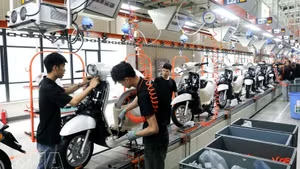
FDI has helped supplement investment resources, promote economic restructuring, expand exports and renew the growth model. However, the effectiveness of attracting and utilising this capital has yet to match the country’s potential and advantages. Linkages between FDI enterprises and domestic businesses remain limited, while technology transfer and research and development (R&D) activities have fallen short of expectations. Meanwhile, the number of Vietnamese enterprises participating deeply in global supply chains remains modest.
According to data from the Ministry of Science and Technology, approximately 600 technology transfer contracts were registered nationwide between 2006 and 2016, accounting for less than 4.3% of total FDI projects. In 2018-2022, around 400 contracts were recorded, most involving internal transfers between parent companies and their subsidiaries in Viet Nam.
Technology transfers mainly focused on technical assistance (77%), training (71%) and production processes (73%), while transfers of intellectual property assets accounted for only 13%. Technology spillovers from the FDI sector to domestic enterprises remain limited.
Bui Thu Thuy, Deputy Director of the Foreign Investment Agency under the Ministry of Finance, said the limited linkages between the two business sectors stem from various factors. When investing in Viet Nam, FDI enterprises often bring their existing supplier ecosystems with them. Their confidence in the supply capabilities of domestic enterprises also remains limited.
Conversely, the capabilities of Vietnamese enterprises, particularly small and medium-sized enterprises (SMEs), still fall considerably short of multinational corporations’ requirements in technology, management and quality standards.
Although policies supporting SMEs and the development of supporting industries have been introduced, their implementation remains limited. The business support system, from central to local levels and through associations, has yet to meet expectations. Support procedures and methods still face numerous obstacles and are not fully aligned with international practices.
In addition, incentive mechanisms designed to strengthen linkages between FDI enterprises and domestic businesses have yet to realise their full effectiveness. Although Decision No. 29/2021 on special investment incentives and Decree No. 182 on the Investment Support Fund have introduced additional policies to support technology transfer, supplier development and high-tech investment attraction, implementation has not progressed as quickly as investors expected.
Notably, the innovation and R&D ecosystem remains fragmented, while the technological capabilities of domestic enterprises are still relatively weak, limiting their ability to absorb technology and establish linkages with FDI enterprises. Physical and institutional infrastructure have yet to develop in a coordinated manner, and the quality of human resources does not fully meet requirements.
Increasing value added and strengthening linkages
Politburo Resolution No. 10, dated June 8, 2026, on developing the foreign-invested economic sector, calls for a shift in focus from primarily attracting capital to improving investment quality and effectiveness. Technology transfer, increased value added and stronger linkages with domestic enterprises are identified as important criteria.
By 2030, the resolution aims to raise the average localisation rate in key industries to 45-50%, while working towards having approximately 10,000 domestic enterprises participate in the value chains and supply chains of FDI enterprises, including around 500-1,000 tier-one suppliers.
To translate this orientation into action, the Government issued Resolution No. 280 on September 22, 2026, setting out an action plan to implement Resolution No. 10. It calls for post-investment inspections and periodic assessments of investment commitments, while prioritising projects that apply advanced technologies, promote R&D, provide human resource training, develop domestic suppliers and advance green and digital transformation.
The approach to FDI management is shifting from primarily assessing projects at the licensing stage to monitoring and evaluating their effectiveness throughout their life cycle.
From the perspective of foreign investors, Cha Ji Ho, Deputy General Director in charge of the Samsung Viet Nam Purchasing Centre, said relations between FDI enterprises and domestic businesses should be built on the principle of mutual benefit. As Vietnamese enterprises improve their production capabilities, quality and ability to meet standards, multinational corporations will also gain more stable and flexible suppliers, helping strengthen supply chain resilience.
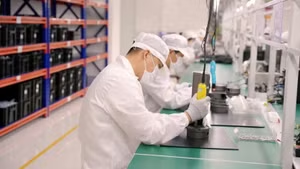
Samsung is expanding its support programmes for Vietnamese enterprises, ranging from basic production improvements to the development of smart factories, smart moulds, automation and expert training. In 2026 alone, the group supported 96 enterprises in smart factory development and trained 241 specialists in the field.
With sufficiently skilled personnel capable of independently identifying problems, analysing data, optimising processes and maintaining productivity, enterprises can proactively improve operational efficiency and reduce their dependence on external experts. In this way, support from FDI corporations can genuinely translate into sustainable development capabilities for Vietnamese businesses.
However, becoming a supplier to a multinational corporation is only the beginning. More importantly, domestic enterprises need to seize the opportunity to gain access to global standards, master technologies, upgrade their management practices and gradually expand their participation in other value chains.
To achieve this goal, Vietnamese enterprises need to proactively invest in improving productivity, quality and management capabilities. Meanwhile, FDI corporations should strengthen connections, share experience and support the development of domestic suppliers.
“This is an important approach to expanding Vietnamese enterprises’ participation in supply chains while building a competitive production ecosystem capable of sustainable development,” the Samsung representative emphasised.
According to the Deputy Director of the Foreign Investment Agency, the urgent priority now is to accelerate the implementation of tasks aimed at attracting high-quality FDI. Most tasks need to be completed in 2026, or by 2027 at the latest, while those relating to institutional reform must be completed this year.
The Foreign Investment Agency has also completed a set of indicators for evaluating the implementation results of the resolution. These indicators have been incorporated into the system for monitoring Central Party resolutions, managed by the Party Central Committee’s Office, with accounts automatically provided to ministries, sectors and localities so they can update monthly and quarterly reports.
Once the mechanisms and policies are issued, the Foreign Investment Agency will coordinate with ministries and sectors to disseminate and provide guidance to localities and associations, promoting coordinated implementation.
“Accelerating institutional reform and linking policies with specific monitoring and evaluation mechanisms will help improve the effectiveness of FDI attraction, strengthen linkages with domestic enterprises and expand opportunities for participation in global value chains,” Thuy expressed her expectation.