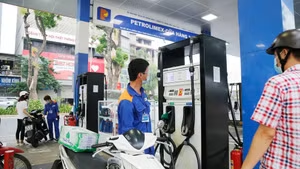
Petrovietnam has gradually developed a relatively comprehensive industry-energy ecosystem through its key member units. In particular, BSR operates the Dung Quat Oil Refinery — the foundation of Viet Nam’s refining and petrochemical industry — and is pioneering the development of biofuels and green energy. PVFCCo and PVCFC are developing large-scale fertiliser, chemical, and industrial raw material ecosystems. PV GAS plays a key role in the gas industry through its national gas gathering, transportation, and processing systems, along with LNG projects, while PVOIL is the second-largest petroleum distributor in Viet Nam.
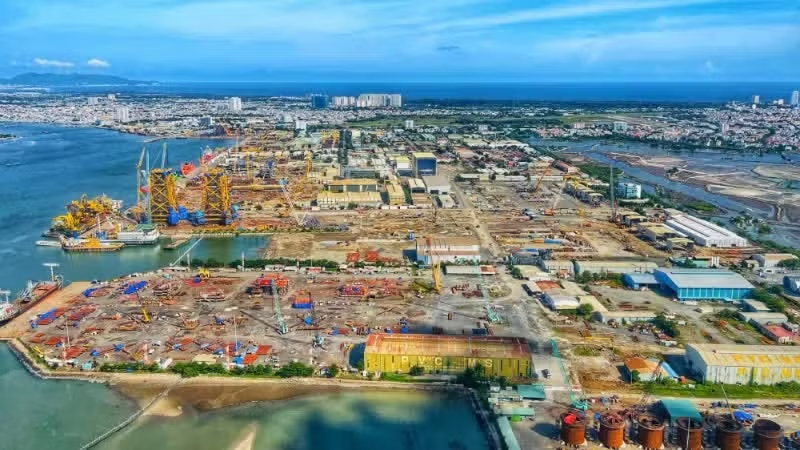
Beyond traditional sectors, Petrovietnam is expanding into petrochemicals, specialised chemicals, new materials, and supporting industries in order to increase added value and competitiveness. In the field of energy engineering, Petro Viet Nam Technical Services Corporation (PTSC) has participated deeply in the offshore wind power supply chain through projects including the fabrication of foundations, offshore substations, and oversized structures for international markets, marking the transition of Viet Nam’s oil and gas engineering industry into the global renewable energy sector.
At the same time, Petrovietnam is promoting research into nuclear energy, green hydrogen, green ammonia, clean fuels, high-tech materials, and energy storage batteries, while also targeting new strategic sectors such as seabed minerals, rare earths, and metals serving high-tech industries.
With its development orientation based on the three pillars of Energy–Industry–Services, Petrovietnam is transforming into a national industry-energy group playing a leading role in Viet Nam’s industrialisation and energy transition.
To support this transformation and expansion into an industry-energy conglomerate, Petrovietnam is focusing management on three main sectors: energy, industry, and high-quality technical services. At the same time, the group has set a target of becoming the first Vietnamese enterprise to enter the list of the world’s 500 largest companies. This goal is considered highly ambitious, requiring strong unity and high determination from all officials, leaders, and employees across Petrovietnam.
Under this new orientation, consolidating the leadership structure to match the larger scale and new tasks has become highly urgent, especially the position of General Director — a key link in Petrovietnam’s operational structure, responsible for implementing the group’s development strategy. This reflects a clear orientation towards developing the group’s industrial pillar.
On its journey towards the Top 500 Fortune Global, Petrovietnam is also expanding its international cooperation network in the industry-energy sector with many of the world’s leading energy corporations. Recently, Petrovietnam signed several new cooperation agreements with KEPCO and KEXIM in the field of nuclear power; promoted oil and gas cooperation documents with Russian partners; expanded LNG value chains, exploration and production, and digital transformation cooperation with Petronas; and strengthened cooperation with US partners on long-term LNG imports and sustainable fuel development. These moves demonstrate the determination to elevate Petrovietnam into a globally positioned industry-energy group.
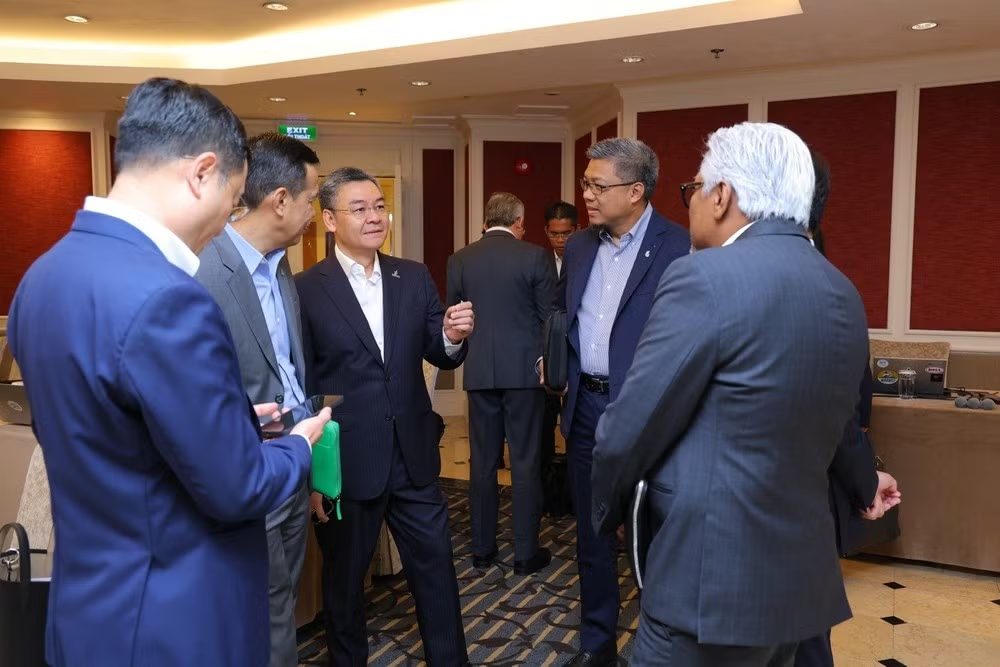
Economic experts believe that Petrovietnam’s industry-energy ecosystem, when integrated into the country’s economic development structure, will shape a new growth pole with global competitiveness. Dr Nguyen Duc Kien, former Vice Chairman of the National Assembly’s Economic Committee, said that Petrovietnam’s industrial pillar could create a new growth driving force for the economy. According to him, Petrovietnam’s strengths lie not only in traditional energy sectors but also in foundational industries and future technologies such as hydrogen, green ammonia, offshore renewable energy, and nuclear power. With self-reliant capabilities from designing and manufacturing to installing offshore structures and offshore wind power projects, Petrovietnam could play a core role in forming a large-scale marine energy industrial chain, encouraging deeper participation by domestic enterprises in the global renewable energy supply chain.
With the foundations of its industrial pillar, Petrovietnam is expected not only to contribute to ensuring national energy security but also to become a driving force for outstanding growth in achieving the country’s strategic goals in the coming period.