Under the adjusted Power Development Plan VIII, Ninh Thuan 1 and Ninh Thuan 2 nuclear power plants are expected to be commissioned during 2030–2035, with a combined capacity of 4,000–6,400MW. At the same time, research into new technologies such as small modular reactors (SMRs) is being advanced to secure additional options for long-term power generation development.
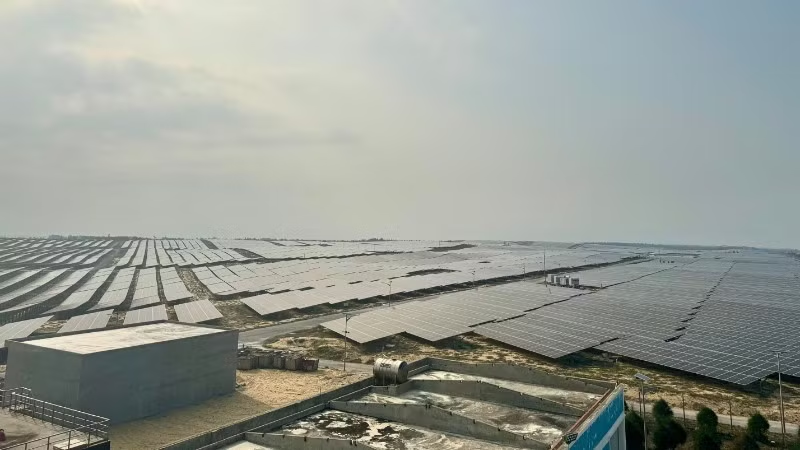
The power generation mix is shifting towards a higher share of renewable energy. This necessitates maintaining a stable and continuous power supply capable of meeting demand over the long term. This is also a primary rationale for reviving nuclear power as part of Viet Nam's energy development strategy.
Preparing all necessary conditions
Dr Nguyen Ngoc Hung, Head of the Energy Economics Division at the Institute of Energy under the Ministry of Industry and Trade, noted that one advantage of nuclear fuel is that it can be stored for many years, enabling long-term fuel supply security and enhancing the energy system's resilience to external fluctuations, particularly as Viet Nam currently lacks robust strategic reserves of petrol, oil, and crude oil.
“The adjusted Power Development Plan VIII sets a target of commissioning the Ninh Thuan 1 and Ninh Thuan 2 nuclear power plants during 2030–2035, with a combined capacity of 4,000–6,400MW.
“Of these, the Ninh Thuan 1 Nuclear Power Plant Project has a total capacity of 2,400MW and is under the investment of Viet Nam Electricity (EVN), while the Ninh Thuan 2 project is being implemented by the Viet Nam National Industry-Energy Group (Petrovietnam). These projects are expected to help meet long-term energy requirements for socio-economic development and contribute to maintaining macroeconomic stability,” Dr Nguyen Ngoc Hung stressed.
EVN has finalised the documentation to adjust the project's investment policy; participated in negotiations on the intergovernmental agreement on cooperation in the construction of the Ninh Thuan 1 Nuclear Power Plant; and coordinated with ministries and sectors in assessing Viet Nam's nuclear power infrastructure.
EVN has also contributed to the development of the legal framework, technical standards and regulations, while designing workforce training programmes for plant operation. These tasks show that preparations for a nuclear power project must be carried out in a coordinated manner, covering institutions, technology, finance, human resources, and infrastructure. The sector also imposes exceptionally stringent requirements for safety, quality, and risk management.
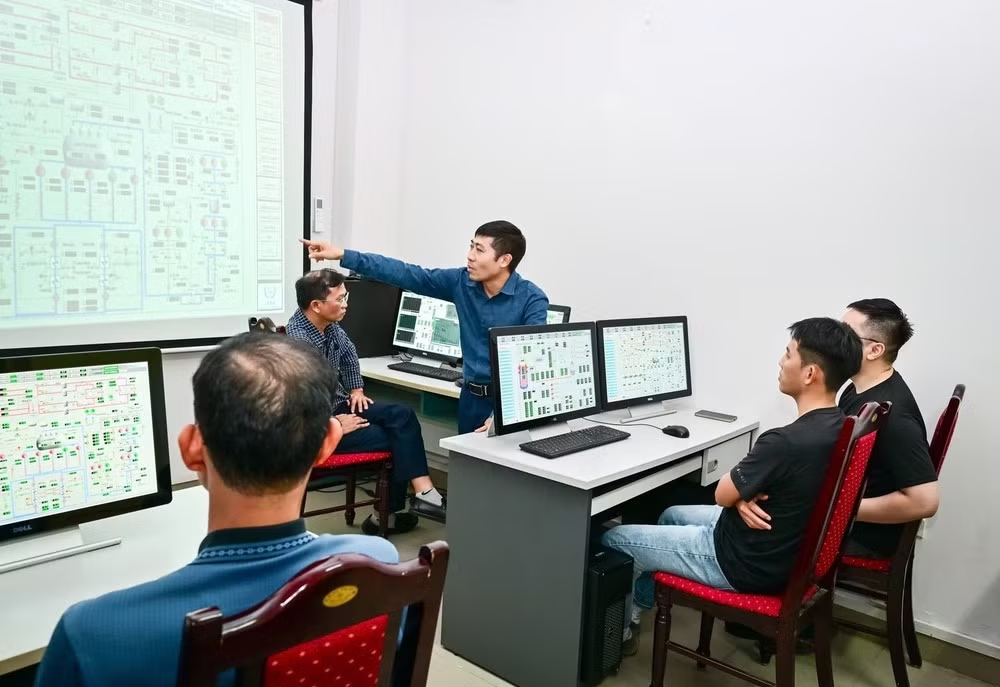
EVN Deputy General Director Nguyen Tai Anh stated that, given the pioneering nature of the project, many aspects have yet to be fully regulated. Therefore, an appropriate mechanism is needed to establish a favourable legal framework while strictly ensuring nuclear safety requirements. Other challenges include investment capital, the financing model, schedule, quality, and risk management.
The two units of the Ninh Thuan 1 project are expected to be commissioned during 2030–2035. This timeline requires EVN to strictly control technological, quality, and safety requirements, and not compromise safety or quality for the sake of schedule. In parallel with project preparations, EVN is developing plans to train a high-quality workforce for all stages, from project management to plant operation. It is also amplifying public outreach and providing transparent information to build consensus among local authorities and residents in the project area.
At a recent meeting on the implementation of the Ninh Thuan 1 Nuclear Power Project, Standing Deputy Prime Minister Pham Gia Tuc stressed that adjusting the investment policy and preparing for the investment in the Ninh Thuan nuclear power project is a formidable and unprecedented task of particular importance. The Deputy Prime Minister requested the urgent completion of mechanisms, policies, dossiers, and procedures to enable the project to be expedited. He also asked ministries and sectors to proactively study and propose breakthrough mechanisms and policies, particularly regarding investment methods, to establish a legal foundation and favourable conditions for accelerating the project’s progress.
Exploring new technologies
Alongside large-scale nuclear power projects, SMR technology is being studied and developed by many countries, providing an alternative pathway to nuclear power development. With smaller capacities, modular construction, and potentially shorter construction times, SMR could offer a more flexible approach than large-scale nuclear power projects. For Viet Nam, research into this technology is being conducted against the backdrop of rapidly rising electricity demand and increasingly stringent emissions reduction requirements.
Sergey Salata, Technical Director of Star Energy Viet Nam, observed that after a prolonged suspension of nuclear power development, Viet Nam needs a flexible and lower-risk pathway to re-enter the sector. While large-scale nuclear projects require high upfront investment, lengthy construction periods, and complex financing structures, SMRs and microreactors could enable a phased approach, easing initial capital pressures while allowing the country to build up experience in regulation, management and operation.
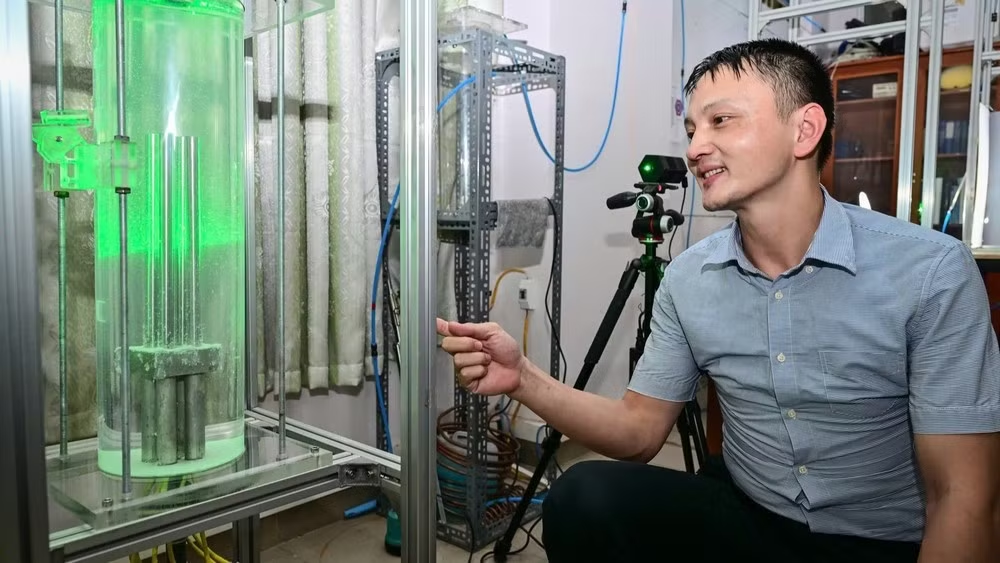
Politburo Resolution No. 70-NQ/TW on ensuring national energy security through 2030, with a vision to 2045, clearly calls for encouraging private-sector investment in SMRs. This opens up further opportunities to mobilise social resources for the development of this technology, while large-scale nuclear power projects continue to have their own specific investment and management requirements.
Research into SMRs could provide an additional option for Viet Nam's nuclear power development strategy alongside the large-scale projects currently being prepared. However, adopting new technologies must be coupled with appropriate management capacity, a suitable legal framework, and human resources. In the long term, as electricity demand continues to rise and energy security and emissions reduction become increasingly pressing objectives, nuclear power could help diversify the power generation mix and enhance the resilience of the system.
For Ninh Thuan 1 and Ninh Thuan 2, the immediate task is to comprehensively prepare the necessary institutional, technological, financial, human-resource, and infrastructure conditions while ensuring the highest standards of safety and quality. At the same time, research into new technologies such as SMRs will provide additional options for the future energy system, while requiring Viet Nam to continue strengthening its technological capabilities, developing high-quality human resources, and enhancing its energy self-reliance.