
Viet Nam Energy Security Report 2026 released
The Ministry of Industry and Trade released the Viet Nam Energy Security Report 2026 on November 10, noting that the energy system suffered its most severe shock in decades this year.
#energy security
The Ministry of Industry and Trade released the Viet Nam Energy Security Report 2026 on November 10, noting that the energy system suffered its most severe shock in decades this year.

Construction of the Van Canh 2 Wind Power Plant project began in Van Canh commune, the central province of Gia Lai, on November 7, in the presence of Standing Deputy Prime Minister Pham Gia Tuc.
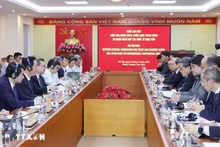
Politburo member, Secretary of the Communist Party of Viet Nam Central Committee and head of its Commission for Policy and Strategy Nguyen Thanh Nghi has called on the Japan Bank for International Cooperation (JBIC), Japanese businesses and partners to continue sharing experience in effective investment cooperation models and support Viet Nam in enhancing the self-reliance and resilience of its economy through high-quality Japanese investment in strategic sectors.
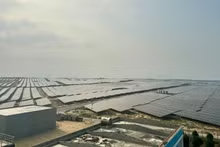
As electricity demand continues to rise and the need to ensure energy security becomes increasingly pressing, Viet Nam is systematically laying the necessary conditions to reinitiate its nuclear power.
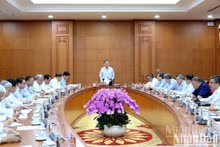
Party General Secretary and State President To Lam has directed that the Viet Nam National Coal and Mineral Industries Corporation (Vinacomin) be repositioned as a modern energy and materials industrial group that lives up to its role as a pillar of national industry and energy security.
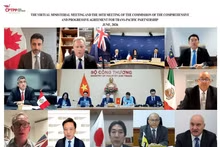
Viet Nam has reaffirmed its role in advancing the Comprehensive and Progressive Agreement for Trans-Pacific Partnership (CPTPP) by chairing key meetings that endorsed the bloc's expansion agenda and initiatives to strengthen cooperation amid an increasingly uncertain global trading environment.
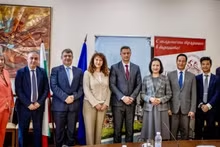
Viet Nam wishes to strengthen nuclear energy cooperation with Bulgaria, particularly in human resources training, scientific research, and the sharing of operational and management expertise, said Vietnamese Ambassador to Bulgaria Nguyen Thi Minh Nguyet.
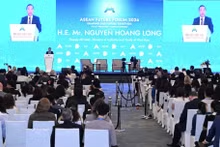
The ASEAN Future Forum (AFF) 2026 continued on June 10 with three discussion sessions focusing on ASEAN–US cooperation, solutions to ensure energy security and accelerate the green transition in the region, and the identification of new development models amid global transformation.
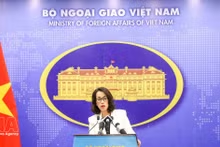
Viet Nam has been actively rolling out a range of coordinated measures to ensure national energy security and prevent fuel shortages for production, business activities, and daily consumption, spokesperson of the Ministry of Foreign Affairs Pham Thu Hang has said.
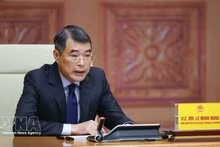
The Vietnamese leader reaffirmed Viet Nam’s commitment to achieving net-zero emissions by 2050, identifying renewable energy development and green transition as strategic priorities. He proposed three key directions for cooperation to deal with energy risks and ensure supply chains.

The PM pushed for stronger collaboration through accelerating negotiations on a free trade agreement between Viet Nam and the Gulf Cooperation Council, enhanced business connectivity between the two countries, as well as tighter coordination on energy security to tackle current challenges and ensure stable production and daily life.
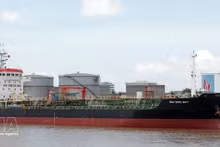
Importers brought in approximately 3.2 million cubic metres of fuel in March. Combined with current inventories of around 1.6–1.8 million cubic metres, this volume is expected to fully meet domestic demand until the end of April.
Ministries, agencies and local authorities were urged to stick firmly to the growth target of at least 10% while maintaining macroeconomic stability, keeping inflation under control and ensuring major economic balances to build momentum for the rest of 2026.
Emphasising that the double-digit growth target remains unchanged, the PM called on participants to work out measures for renewing traditional growth drivers, promoting new ones, properly governing monetary and fiscal policies, stepping up public investment, and diversifying markets, products, and export supply chains.
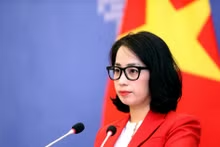
Viet Nam has been stepping up diplomatic efforts to help ensure energy security amid growing global uncertainty, Spokesperson of the Ministry of Foreign Affairs Pham Thu Hang said at the ministry's regular press briefing on April 2.
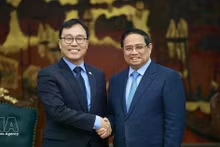
Prime Minister Pham Minh Chinh received Choi Young Sam, Ambassador of the Republic of Korea (RoK) to Viet Nam, in Ha Noi on April 1 to discuss measures to promote the Comprehensive Strategic Partnership and cooperation on energy security between the two countries.
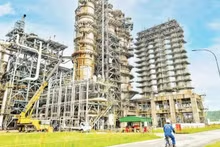
Recent geopolitical developments, particularly the Russia–Ukraine conflict and the Israel–US–Iran confrontation, have clearly demonstrated the trend of “weaponising energy”, where oil and gas supplies are influenced not only by market rules but also by power calculations and regional disputes.
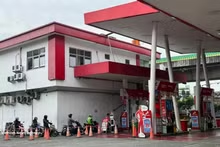
Senior Coordinator at Indonesia’s Institute for Defence and Strategic Studies (LESPERSSI) Beni Sukadis has detailed how Jakarta is responding to energy supply shocks amid geopolitical tensions in the Middle East, and offered policy suggestions to Viet Nam during an interview recently granted to the Viet Nam News Agency.
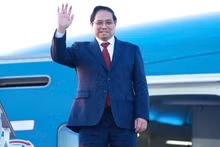
With the outcomes achieved and strong implementation efforts by both sides, the Viet Nam – Russia Comprehensive Strategic Partnership is expected to grow further, contributing to socio-economic development in each country as well as to peace, friendship and cooperation in the region and the world.
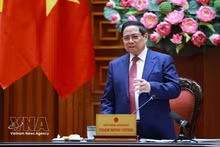
Crude oil supplies for domestic refineries have been maintained, and petrol supplies for the coming months remain secure, Prime Minister Pham Minh Chinh said while chairing a meeting in Ha Noi on March 17 with the task force for energy security.