The Middle East – the region holding the majority of global energy reserves – remains the epicentre of geopolitical flashpoints, heightening risks of supply chain disruption and energy price volatility worldwide. This reality places urgent demands on nations, especially developing countries reliant on energy imports, to restructure their strategies towards greater autonomy, resilience, and flexible adaptation.
Strategic lessons from the Middle East’s energy geopolitics
In the multipolar era, energy has become both a pillar of national power and a tool of strategic competition. The concept of “energy geopolitics” not only reflects the relationship between resources and geography but also encompasses all power interactions surrounding control of the energy value chain – from extraction and transportation to distribution and consumption.
The current trend is a shift from interdependence to competition for control over the entire supply chain. Nations seek not only to secure supplies but also to dominate “strategic chokepoints” such as transport routes, core technologies, and storage infrastructure.
Oil and gas supplies are increasingly used as instruments of political leverage. Production adjustment decisions are no longer purely economic but carry profound geostrategic calculations. Energy has thus become a form of “hybrid power” – both economic and coercive. Russia’s use of gas supplies as strategic leverage in its relations with Europe, particularly after the Russia–Ukraine conflict, is a notable example.
Supply cuts or adjustments have plunged many European countries into severe energy crises, forcing them to restructure their energy strategies. These moves show that energy has become a “combined soft–hard power lever”, both economic and politically coercive.
Escalating conflict in the Middle East, centred on Iran and the Persian Gulf, not only creates short-term supply shocks but exposes structural weaknesses in the global energy system.
Alongside this is the breakdown of global energy supply chains. Conflicts, sanctions, and logistical disruptions increase transport costs, extend delivery times, and destabilise energy flows. The result is sharp price fluctuations, fuelling inflation and constraining global economic growth.
These developments are profoundly reshaping global energy power dynamics while widening the gap between energy-exporting and importing nations. Exporters gain influence, while import-dependent countries become more vulnerable to external shocks.
Practice also shows that countries such as Saudi Arabia, Iran, Iraq, and the United Arab Emirates are not only major exporters but also geopolitical actors with far-reaching influence. Their production regulation capacity directly impacts energy prices and thereby global economics.
Particularly, strategic transport routes like the Strait of Hormuz are vital to global energy security. This is the world’s critical energy chokepoint, as about 20% of global oil consumption passes through this area.
Escalating conflict in the Middle East, centred on Iran and the Persian Gulf, not only creates short-term supply shocks but exposes structural weaknesses in the global energy system. The entire energy supply chain immediately falls into instability, reaffirming that the modern global economy still operates on an energy foundation vulnerable to geopolitical shocks.
The complex, prolonged volatility in the Middle East reflects the fierce nature of power competition in energy while providing universally valuable strategic lessons for nations, especially developing countries dependent on energy imports.
First, controlling strategic resources is foundational. Middle Eastern practice shows energy is both an economic resource and a national power pillar. Mastery from extraction to distribution enhances autonomy and control. Countries such as Saudi Arabia or Iran build development strategies based on resource mastery and tight extraction control.
Second, the Middle East shows supply diversification is a matter of survival. In a geopolitically unstable environment, reliance on a single supply source always harbours risks. Supply structures must be flexible, multi-layered, combining domestic and multi-sourced imports. Thus, expanding markets, establishing multiple import channels, and building strategic reserve systems have become inevitable choices.
Third, energy is linked with national security. In the Middle East, energy does not exist independently but is always tied to geopolitical calculations, alliances, and strategic confrontations. Energy policy needs integration into the overall national strategy, including diplomacy, defence, and security.
Fourth, energy transition must be proactive. Investment in renewables and new technologies is not just an environmental requirement but a long-term development strategy into new fields such as renewable energy, green hydrogen technology, or smart energy infrastructure.
Fifth, enhancing geopolitical risk management capacity is crucial. The Middle East exemplifies an environment where uncertainties are ever-present, from armed conflicts and terrorism to great power competition. Building crisis scenarios, establishing inter-agency coordination mechanisms, and enhancing flexible command capabilities are core elements of modern energy security management.
Viet Nam must build a sustainable, independent, and modern energy security system
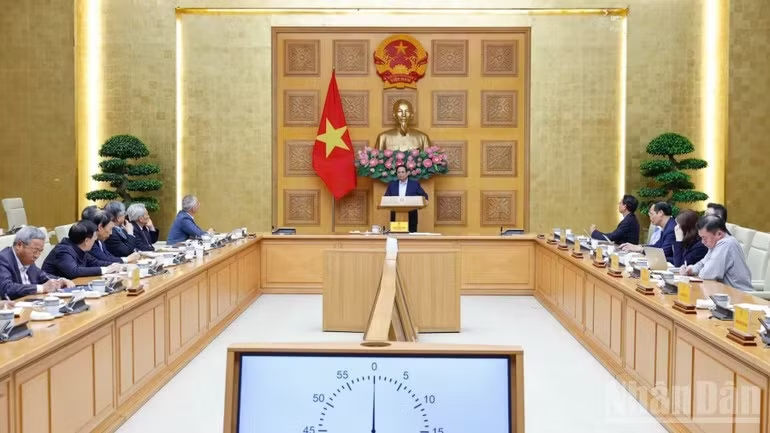
Middle Eastern conflicts once again affirm energy’s strategic importance in national and global economic security. The current crisis has driven fossil fuel prices to high levels while creating opportunities and pressures for nations to accelerate the transition to renewables, towards a more sustainable energy system. Viet Nam’s current energy security reality must be clearly recognised as facing many structural challenges.
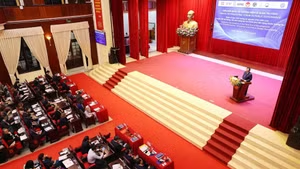
At the meeting of the Policy Advisory Council on March 7, delegates unanimously assessed that strategic competition among major powers alongside supply chain breakdowns poses unprecedented challenges to highly open economies such as Viet Nam. On that basis, Viet Nam needs to implement a coherent and flexible strategic orientation system.
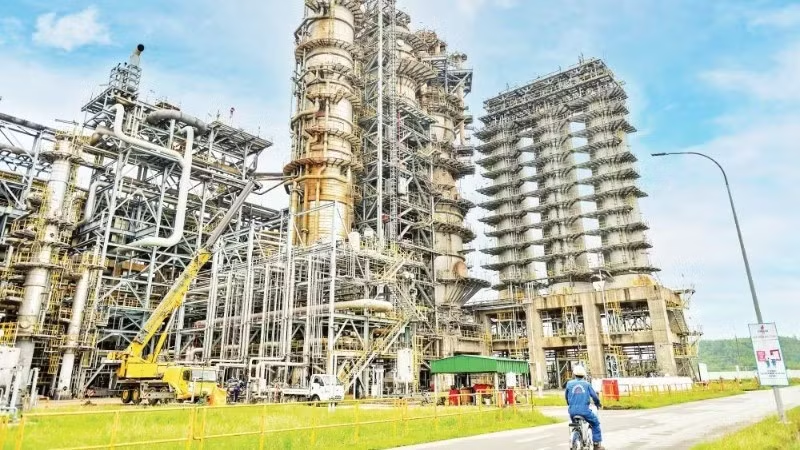
Energy supply diversification is needed to reduce reliance risks on one or few partners. Developing LNG import infrastructure, expanding cross-border electricity trade cooperation, and efficiently exploiting domestic renewable energy sources will contribute to creating a multi-layered, flexible, highly adaptive supply structure.
Developing renewables must also be seen as a long-term strategic pillar. Viet Nam has great potential in wind power, especially offshore wind, as well as solar power in many areas. Effectively exploiting these sources reduces fossil fuel dependence and contributes to fulfilling international climate commitments.
Recent practice also shows the urgent need to build a national-scale strategic energy reserve system. The Prime Minister issued Decision No. 458/QD-TTg approving a major project to boost renewable energy as part of its commitment to the Political Declaration on establishing the Just Energy Transition Partnership (JETP Declaration).
The project is designed to implement the JETP Declaration alongside Resolution No. 70-NQ/TW and the National Power Development Plan for 2021–2030, with a vision to 2050. The initiative aims to ensure national energy security, provide sufficient electricity for socio-economic development, national defence, security and citizens’ needs, promote renewable and new energy sources, enhance energy efficiency, and achieve net-zero emissions.
Energy diplomacy must be strengthened as an important tool in ensuring energy security. Viet Nam needs to proactively participate in multilateral cooperation mechanisms, expand strategic energy partnerships, while leveraging free trade agreements to diversify markets and supplies.
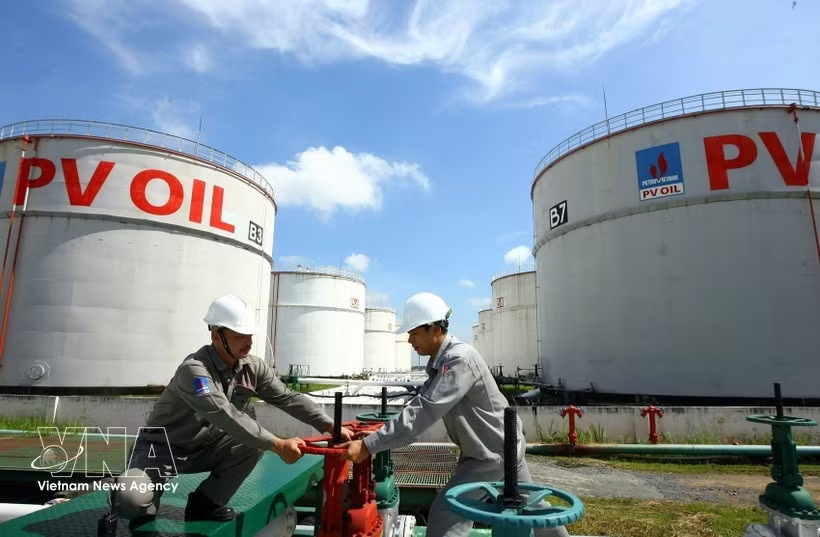
In the context of a volatile global energy market, establishing oil, gas, and essential fuel reserve depots will serve as an “energy security buffer”, mitigating supply shock impacts. This is experience successfully applied by many countries that Viet Nam needs to study and implement appropriately to practical conditions.
In addition, energy diplomacy must be strengthened as an important tool in ensuring energy security. Viet Nam needs to proactively participate in multilateral cooperation mechanisms, expand strategic energy partnerships, while leveraging free trade agreements to diversify markets and supplies. Energy diplomacy aims to ensure stable supplies and enhance national position in the global energy value chain.
Particularly, accelerating technology application and promoting digital transformation in energy is an inevitable trend. Developing smart grids, modern energy management systems, and big data platforms will enhance operational efficiency, reduce losses, and optimise energy use. At the same time, digital transformation also creates conditions for effectively integrating dispersed energy sources, especially renewables, into the overall system.
From a practical perspective, in a rapidly changing world full of uncertainties, building sustainable, independent, and modern energy security is not only an immediate requirement but also a foundational condition for Viet Nam to develop rapidly, sustainably, and elevate its position in the international system.