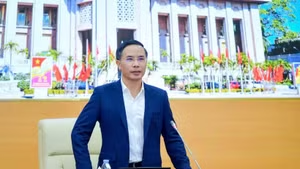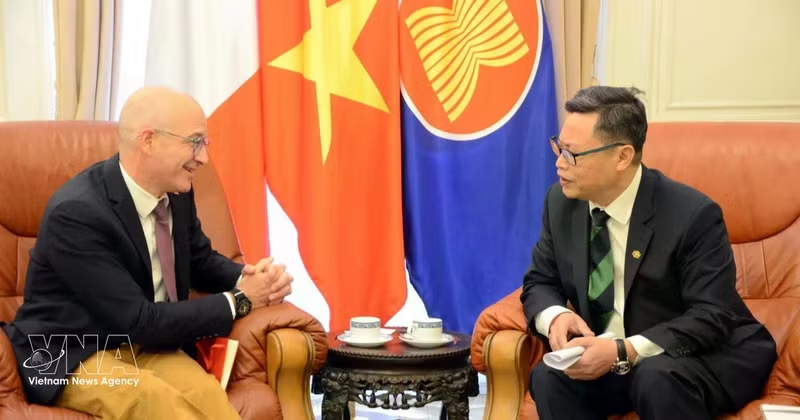
At the meeting, Hai outlined Viet Nam’s energy development orientation, stressing the need to diversify energy sources while ensuring a balance between economic growth, energy security, and sustainable development goals.
He noted that Viet Nam is formulating a long-term energy strategy with a multi-decade vision, in which nuclear power is seen as an important component to provide stable baseload electricity, reduce reliance on fossil fuels, and support the green energy transition.
The ambassador emphasised that Viet Nam places top priority on the highest standards of nuclear safety and security, environmental protection, human resources development, and the establishment of a legal framework aligned with international practices. He underscored that any nuclear power development will be carried out cautiously and transparently, based on social consensus and the country’s long-term interests.
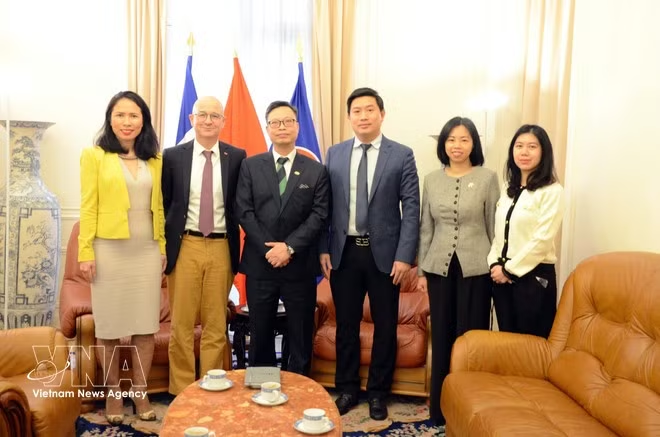
Viet Nam welcomes extensive and intensive international cooperation in the field of civil nuclear energy, particularly with experienced partners possessing advanced technologies, to enhance domestic capacity and ensure independence and self-reliance in energy development, he added.
For his part, Cheneau said Viet Nam is facing long-term strategic decisions, noting that the selection of technology and deployment model for nuclear power will have far-reaching implications on economic development, energy security, and national sovereignty for decades to come. He highlighted that Assystem could assist Viet Nam in negotiating contracts with technology suppliers, ensuring financial, technical, and legal terms align with national interests.
The Assystem executive proposed establishing a France–Viet Nam joint technical organisation based in Viet Nam to support the nuclear power programme over a period of 10–15 years. The initiative would bring together international experts and Vietnamese engineers working on-site, while also focusing on recruitment and training of domestic personnel, including through training programmes in France and participation in international projects.
He also announced plans to visit Viet Nam next week for direct discussions with relevant ministries and agencies.
Both sides expressed their intention to continue in-depth exchanges to explore appropriate cooperation models, contributing to Viet Nam’s long-term goal of building a safe, sustainable, and self-reliant energy strategy.
Assystem is one of leading independent nuclear engineering groups in Europe and the world, providing engineering, project management, and digital transformation solutions to support the energy transition. The company operates in nuclear and renewable energy, power grids, and transport infrastructure, with consulting experience in countries such as Russia, China, the Republic of Korea, Egypt, Kazakhstan, Uzbekistan, and the United Arab Emirates. It currently employs around 8,000 experts and operates in 13 countries across Europe, Asia, and the Middle East.