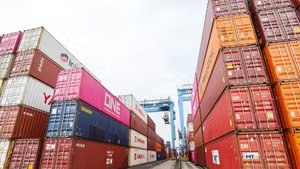
To expand its presence in global markets, the city needs to combine infrastructure investment with digital transformation, green logistics development and stronger regional connectivity, thereby enhancing business competitiveness and creating new momentum for sustainable growth.
Addressing multiple bottlenecks
Following the administrative merger, Ho Chi Minh City covers approximately 6,772 sq.km and has a population of more than 14 million, contributing around one-quarter of Viet Nam's GDP and one-third of total state budget revenue. The city is also a major centre for manufacturing, trade, services, logistics and import-export activities, playing a key role in connecting the south-eastern region and the Mekong Delta with international markets.
Le Van Danh, Deputy Director of the Ho Chi Minh City Department of Industry and Trade, said that in the first eight months of 2026, the city’s industrial production index rose by 10.8%, while total retail sales of goods and consumer service revenue increased by 13.7%. Export turnover reached 65.83 billion USD, up 7.82%, while imports totalled 72.69 billion USD, an increase of 11.86%.
Manufacturing and processing industries continued to play a leading role, with computers, electronic products and components topping the list at 14.5 billion USD in trade turnover. This growth has also driven increasing demand for high-quality logistics services and large-scale freight transport capable of meeting international standards.
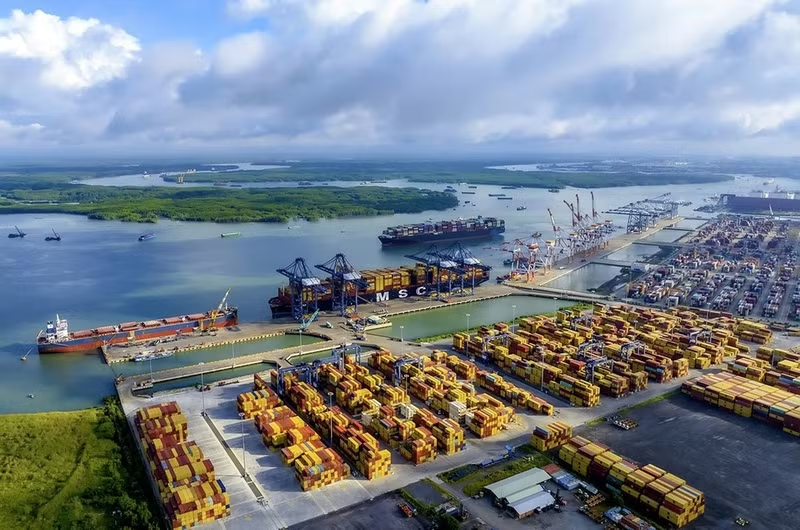
Furthermore, the city’s expanded maritime space, stretching from Can Gio to Vung Tau and the Con Dao Special Zone, presents opportunities to develop an integrated ecosystem of seaports, marine industries and maritime services. With 99 port terminals, including offshore oil and gas terminals, Ho Chi Minh City accounts for nearly one-third of all port terminals nationwide.
Its port complexes currently handle more than 15 million twenty-foot equivalent units (TEUs) annually. Once the Can Gio International Transshipment Port is completed, total container handling capacity is expected to reach 32.7 million TEUs per year. This represents considerable potential for the city to become a logistics gateway for Southeast Asia. In practice, transport infrastructure linking the city’s industrial parks, seaports, airports and logistics centres remains insufficiently coordinated.
Congestion at major gateways prolongs cargo transit times, increases transport costs and affects delivery schedules. Logistics costs in Ho Chi Minh City currently account for approximately 17-18% of its gross regional domestic product (GRDP), compared with around 8% in Singapore and 11% in Malaysia.
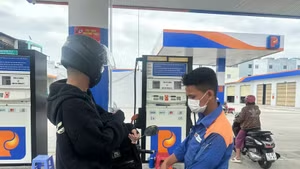
Beyond infrastructure challenges, businesses also face pressures arising from geopolitical developments, fluctuating fuel prices, technology costs and increasingly stringent requirements concerning standards, certification, product origin and emissions.
Illustrating the financial burden facing exporters, Phan Minh Thong, Chairman of Phuc Sinh Joint Stock Company, said his company’s logistics costs had at times reached 17 billion VND per month. Including additional surcharges, total costs amounted to approximately 22 billion VND, accounting for more than half of the company’s monthly operating expenses.
Tran Phu Lu, Deputy Director of the Ho Chi Minh City Investment and Trade Promotion Centre, noted that most exporting businesses are small and medium-sized enterprises with limited resources to invest in technology, keep abreast of market information and meet green standards. In addition, many domestic businesses have yet to make effective use of outsourced logistics services.
While foreign-invested enterprises generally employ professional service providers to optimise costs, some Vietnamese businesses continue to handle multiple stages of transport, warehousing and distribution themselves, resulting in lower efficiency. This highlights the urgent need for businesses to rethink how they organise supply chains and manage their operations.
Connecting infrastructure, digitalising and greening supply chains
To turn its existing advantages into genuine competitiveness, Ho Chi Minh City is pursuing logistics development through coordinated infrastructure investment, modernised management and stronger regional linkages. The municipal People’s Committee has issued an action plan to implement Viet Nam’s Logistics Services Development Strategy for 2025-2035, with a vision to 2050.
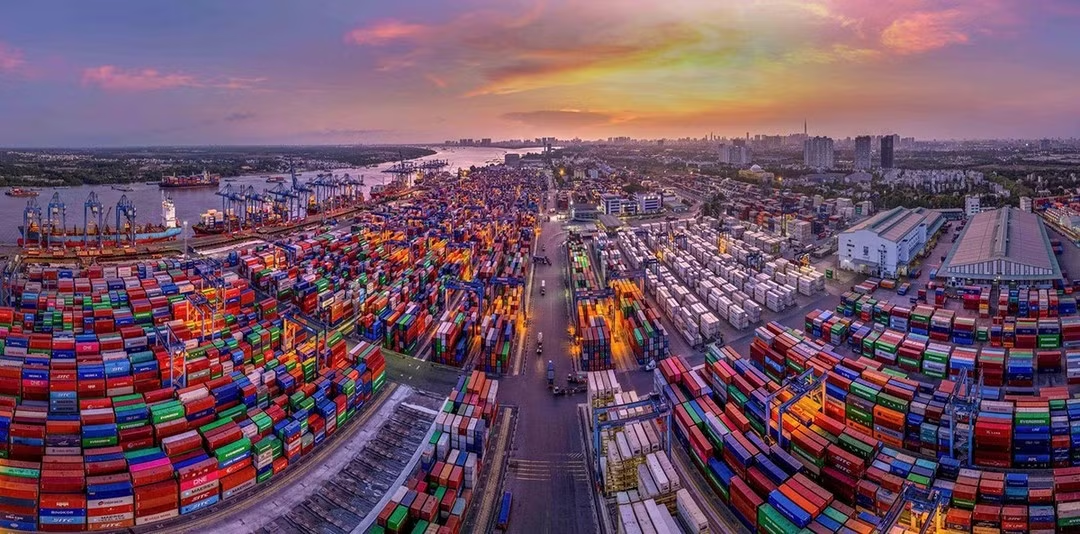
The city aims to become one of Asia's leading international logistics and transshipment port hubs. To achieve this, it is working to complete a multimodal transport network connecting roads, inland waterways, railways, airports and seaports. Ring road and expressway projects linking Ho Chi Minh City with Chon Thanh, Moc Bai and Can Tho are expected to improve goods transportation between localities and production areas.
The city is also planning new railway lines, including one connecting the former Binh Duong area with the Cai Mep-Thi Vai port complex, to ease pressure on roads and reduce container transport times and costs. Alongside transport infrastructure, Ho Chi Minh City plans to develop a free trade zone linked to international seaports and establish a multi-tier logistics system encompassing international and interregional logistics, transshipment, distribution and urban logistics.
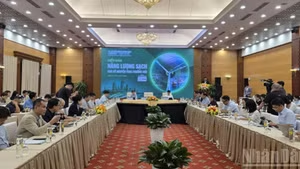
Beyond investment in physical infrastructure, a project to develop digital mega-ports at Cai Mep-Thi Vai and Can Gio is expected to apply digital twin technology, big data and smart management platforms to improve operational efficiency. Nguyen Cong Vinh, Vice Chairman of the Ho Chi Minh City People’s Committee, stressed that strengthening businesses’ capacity to participate in global supply chains is a key priority.
The city will continue improving the investment and business environment, supporting enterprises in technological innovation, enhancing production capabilities, developing brands and meeting international standards. At the same time, trade promotion activities need to become more professional, modern and digitally driven to expand export markets, reduce transaction costs and improve connections between supply and demand.
According to economic experts, green transformation has become an important requirement as export markets impose increasingly stringent standards on the origin of raw materials, production conditions and emissions data.
Therefore, businesses need to proactively adopt clean energy and green transport solutions, improve warehouse management and reduce emissions throughout their supply chains. The city also needs to improve workforce quality and help small and medium-sized enterprises meet international standards, shifting its focus from facilitating business connections to supporting supply chain management, product traceability and compliance with the regulations of individual markets.