Politburo’s Resolution No. 26-NQ/TW, dated August 22, 2026, on developing Viet Nam's tourism into a spearhead economic sector in the new era (Resolution No.26), emphasises the guiding principle of “taking culture as the core foundation, with identity and the quality of experiences serving as competitive advantages”.
This approach reflects a significant shift in tourism development thinking: from exploiting existing resources to creating distinctive value for destinations, with culture identified as the central element in shaping the identity and depth of tourism products and enhancing the quality of visitor experiences.
Turning culture into a competitive advantage
Resolution No.26 also calls for “clearly identifying the distinctive advantages of Vietnamese tourism in culture, heritage, natural landscapes and cuisine, in connection with key markets and flagship products”.
Culture is no longer regarded merely as a supplementary component of tourism products, but as a resource for creating experiences and strengthening destination competitiveness.
According to Dr Vu Van Tuyen, Director of Travelogy Viet Nam and Vice Chairman of the Viet Nam Community Tourism Association, tourism operators previously tended to ask: “How can we attract as many visitors as possible to a destination?”
In the coming period, however, the focus should shift to a different question: “How can we encourage visitors to stay longer, spend more and bring greater benefits to local communities?”
This shift requires businesses to rethink how they develop and deliver tourism products. Rather than designing conventional tours by simply combining services such as accommodation, transport, restaurants and admission tickets, businesses need to become designers of travel experiences.
This means investing more in market research, analysing visitor behaviour, developing products and crafting a distinctive story for each destination.
Sharing this view, Nguyen Quoc Ky, Chairman of Vietravel's Board of Directors, said that creating differentiation requires making the most of the unique cultural values and characteristics of Vietnamese people that other destinations cannot easily replicate. The challenge is to develop products and experiences memorable enough to become defining features of a destination, giving tourists compelling reasons to visit and return.
Creating experiences rooted in cultural resources
The reality is that Viet Nam does not lack tourism resources. However, its tourism products have long suffered from monotony and duplication. As Resolution 26 points out, “tourism products still lack depth and creativity and have yet to generate substantial added value”.
To change this situation, destinations must find new ways to tell their stories based on local resources. Only the distinctive identity of each destination can create truly differentiated experiences.
If identity gives a destination its unique value, designing appropriate experiences enables visitors to discover, appreciate and remember that value.
According to Dr Trinh Le Anh, Head of the Event Management Division at the Faculty of Tourism Studies, University of Social Sciences and Humanities under Viet Nam National University, Ha Noi, culture is the “identity card” of a destination, defining the character of a community, a locality or a nation.
However, if tourism merely involves taking visitors to observe historical sites or listen to traditional folk songs, it only scratches the surface of cultural resources.
For culture to genuinely become the core foundation of tourism development, Dr Trinh Le Anh believes that three interconnected steps must be implemented.
The first is to interpret and present cultural stories in a language that resonates with contemporary audiences, allowing heritage to “speak for itself” and connect with visitors.
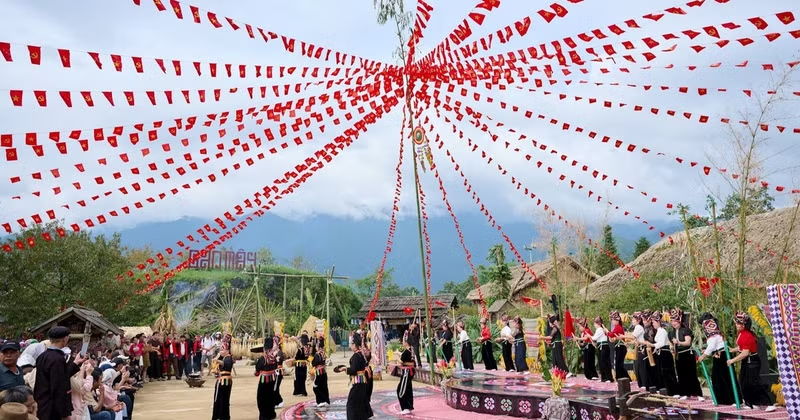
Storytelling, combined with sound, lighting, interactive performances and technology, can open up new ways of engaging with heritage, making seemingly familiar cultural values more appealing. When culture is revitalised through creative thinking, tourists are willing to pay more for the experience.
The second step is to strengthen connections between tourism and other cultural industries, including cinema, music, cuisine, fashion, festivals and international events, turning them into gateways through which destinations can reach wider audiences.
“We need major music concerts, large-scale heritage fashion weeks and international films shot in Viet Nam to generate tourism booms, as many other countries have successfully done in recent years,” Dr Trinh Le Anh suggested.
The third step involves promoting the role of local residents, who are both the custodians of heritage and those who directly harness it to create value.
When local people can earn a good living from their heritage and take pride in it, preserving cultural values ceases to be merely a responsibility placed on communities and becomes an intrinsic need.
It is also at this point that stories about local customs, traditions and ways of life can be told authentically, vividly and with emotional depth.
From a business perspective, Dr Pham Ha, Founding Chairman and CEO of LuxGroup, noted that diversifying tourism products does not mean every locality should develop identical pedestrian streets, night markets, light festivals or photo opportunities. Such imitation dilutes local identity and ultimately forces destinations to compete primarily on price.
Viet Nam needs to establish a three-tier national tourism product structure: iconic products that position the country in international markets; distinctive products representing individual regions; and community-based products that generate direct income for local residents. “We do not export heritage. We invite the world to Viet Nam to experience our heritage and take Vietnamese stories home with them,” Dr Pham Ha emphasised.