Turning local landscapes into enriching tourism products
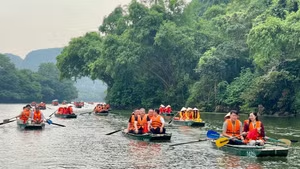
The Can Gio mangrove forest, the nipa palm groves of An Thoi Dong and Binh Khanh, the green hills of Xuan Son, and fruit orchards and farms in Kim Long are opening up distinctive tourism spaces in Ho Chi Minh City. Here, OCOP products are not merely souvenirs for visitors to take home; they are also a link connecting tourists with the nature, culture, and livelihoods of local communities.
In Binh Khanh Commune, Viet Nam Nipa Palm Joint Stock Company is tapping into the value of the local nipa palm tree, processing it into nipa palm nectar and organic seasoning products for the market. Tran Thanh Lieu, Deputy General Director of Viet Nam Nipa Palm Joint Stock Company, said the company currently offers fresh nipa palm nectar and organic seasonings made from nipa palm, including a product certified as a four-star OCOP product.
Through the OCOP tourism connectivity programme, the company hopes to promote its products more widely, bringing local specialities closer to visitors and consumers nationwide.
The story of nipa palm shows that, rather than simply placing OCOP products on shop shelves, OCOP producers are now turning production sites, product stories, and ecological settings themselves into part of the tourism experience. As a result, the value of a product no longer rests solely on its quality or packaging, but is enhanced by the experience and emotions it evokes in buyers.
Meanwhile, Xuan Son Commune is home to a number of models that are choosing to develop tourism linked to nature, offering visitors more options for relaxation and experiences. For example, Suoi Rao Ecolodge has developed a tourism model geared towards Net Zero, with an emphasis on ecological considerations and reducing environmental impacts. Nha Lua Retreat offers nature-based wellness tourism, while Orchard Home Forest connects visitors with local forest and hill landscapes as well as fruit orchards.
Each model has its own approach, but all share a common foundation: making use of local landscapes and resources. Visitors coming here are not simply looking for accommodation or a scenic spot for photographs. They are also seeking time to slow down, immerse themselves in nature, and discover the distinctive values of the area.
Vice Chairman of the Xuan Son Commune People's Committee Vo Dong Giang said the commune was established following the merger of three communes. It covers an area of approximately 76 square kilometres and has a population of 27,300, with agriculture remaining the mainstay of its economy. Tourism development, including the gradual establishment of destinations and tourism villages, has been identified as one of the commune’s breakthrough tasks for the current term.
With its forests, lakes, hills, and mountains, together with existing service facilities, Xuan Son has favourable conditions for developing ecotourism and agricultural experiences linked to OCOP products.

Making OCOP a bridge to livelihoods and sustainable development
According to Head of the Faculty of Tourism at Nguyen Tat Thanh University in Ho Chi Minh City Phan Thi Ngan, rural tourism models are currently fragmented and small-scale. Therefore, local authorities need to provide support to connect business households and production facilities into cooperative groups, develop product chains, and promote regional linkages. When destinations complement one another rather than operating separately, their appeal to visitors will increase.
This assessment pinpoints one of the current bottlenecks in rural tourism. Visitors need a seamless itinerary featuring activities, dining, accommodation, shopping, and stories memorable enough to stay with them. Therefore, rural tourism development is not simply a matter of opening more attractions; it requires existing values to be reorganised into complete tourism products. Within this chain, travel companies bring visitors to the destinations; tourism establishments provide experiences; and farmers supply agricultural products, local specialities, and stories rooted in the area. Local authorities serve as coordinators, providing support and guidance to ensure that all links in the chain develop together.
Head of the Sub-Department of Rural Development under the Ho Chi Minh City Department of Agriculture and Environment Vu Ngoc Dang said the city had considerable potential for rural tourism development thanks to its favourable geographical location and diverse resources. In recent years, the agricultural sector has conducted surveys and provided guidance on the implementation of OCOP criteria, while promoting links between travel companies and producers to develop experiential tourism models.
This direction aims not only to increase the sales of agricultural products but also to meet the requirements of protecting the ecological environment, preserving cultural identity, and creating sustainable livelihoods for local people. In the coming period, the Sub-Department of Rural Development will support several communes in standardising the criteria for rural tourism destinations linked to OCOP.
Specialised training programmes in community-based tourism, digital transformation, and guest reception skills will also be provided for farmers, households contracted to protect forests, and cooperatives.
These are necessary steps to ensure that rural tourism does not remain merely a movement or a collection of spontaneous models, but develops the capacity to organise services, tell the stories behind products, apply technology in promotion, and establish professional business practices.