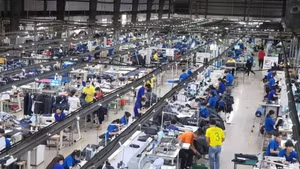
Under the plan, the provincial People's Committee aims to ensure that by 2030 between 250 and 300 enterprises maintain stable export activities, while 80 to 90 businesses successfully expand into new export markets.
In addition, at least 20 enterprises will receive comprehensive, in-depth support covering research, design, production, distribution, and brand development, enabling them to gradually integrate into regional and global value chains.
The province also aims for 100% of participating enterprises to receive training in digital exports, cross-border e-commerce, and new-generation free trade agreements. It aims to secure National Brand status for five to ten products, while promoting between 30 and 50 OCOP (One Commune One Product) products and the province's key products on international platforms.
Nghe An is currently home to 449 OCOP producers, with a total of 743 products rated three stars or above.
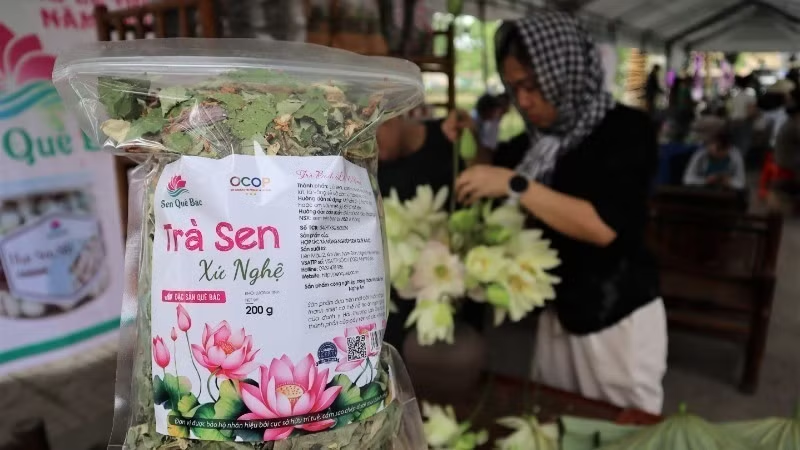
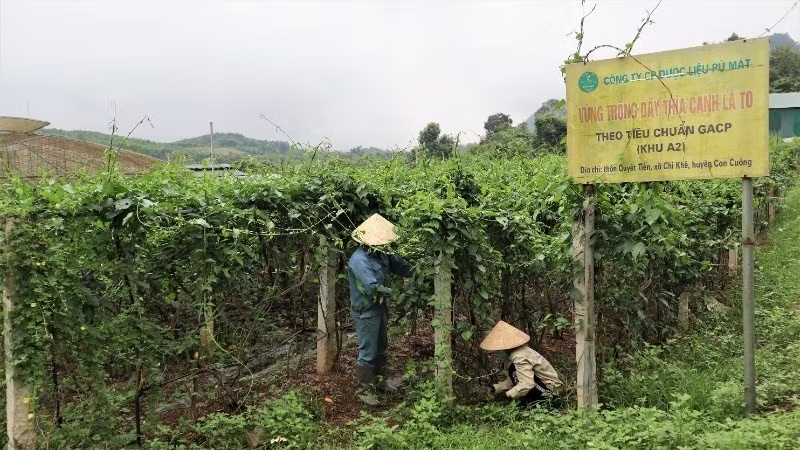
According to the provincial Sub-department of Cooperative Economy and Rural Development, many OCOP products have established a strong market presence through the application of science and technology across their entire value chains. Notable examples include Nghe An spirulina produced by Vastcom Company, lotus tea, Pu Mat medicinal herbs, and bamboo and rattan handicrafts manufactured by Duc Phong Company Limited.
Modernising traditional products, boldly applying scientific and technological advances, and standardising production processes have become effective strategies adopted by many OCOP producers in the province. At the same time, by taking advantage of social media and digital commerce platforms, Nghe An's OCOP products have significantly expanded their market reach.
To date, more than 300 OCOP products have been listed on Nghe An Province's e-commerce trading platform (http://37nghean.com). Products are also marketed through the Postmart e-commerce platform and major online marketplaces such as Shopee, Lazada, Tiki, and TikTok Shop, while promotion and sales have been further strengthened through social media channels including Facebook and Zalo.
In addition, 100% of OCOP products are equipped with barcodes and QR codes for traceability, enabling consumers to verify the origin of products as well as their production and processing processes.