In this context, meeting import standards is a prerequisite for goods to enter the market; it also serves as a foundation for Vietnamese enterprises to enhance their competitiveness, increase value, and integrate more deeply into international supply chains.
Going beyond basic import requirements
Providing guidance to businesses, Nguyen Thi Hoang Thuy, Trade Counselor of Viet Nam in Sweden, noted that new European Union (EU) regulations—covering packaging (PPWR), deforestation-free supply chains (EUDR), forced labour, and ESG (Environmental, Social, and Governance) sustainability reporting—are imposing new demands on exporters. These are mandatory legal requirements that necessitate changes in how businesses organise production, manage operations, and approach the market.
Consequently, compliance with the legal regulations of a target market is merely a necessary condition for product entry. To secure orders and maintain long-term partnerships, enterprises must also meet specific standards regarding the environment, sustainability, and social responsibility as defined by individual corporations and buyers.
In the Nordic market—where consumers possess high purchasing power and prioritise consistent quality, convenience, health, and the authentic story behind each product—Vietnamese goods must offer more than just competitive pricing. Businesses need to shift from exporting raw materials to deep processing, thereby increasing value-added, while ensuring that all information regarding product origin and characteristics can be verified.
In particular, companies must avoid “greenwashing”—making misleading claims about environmental friendliness without credible evidence. Commitments to the environment and sustainable development must be substantiated through production processes, data, and relevant certifications, rather than remaining mere communication messaging.
To proactively adapt, Nguyen Thi Hoang Thuy recommended that businesses prepare two sets of documentation when engaging with buyers: a commercial profile and a compliance profile. Furthermore, companies should establish a robust traceability data system, clearly define compliance responsibilities within their governance structure, and diversify their raw material sourcing if existing partners fail to meet origin requirements.
Businesses should also leverage tariff advantages under the EU-Viet Nam Free Trade Agreement (EVFTA), actively research the market, and utilise information channels and promotional support provided by the Viet Nam Trade Office in Sweden. These recommendations underscored that competitiveness in the European market is increasingly determined by the ability to oversee the entire supply chain, rather than solely by the quality of the final product.
Building a value chain starting from raw material sourcing
Elaborating on this, Tran Van Hieu, Founder and CEO of DACE Joint Stock Company, shared insights from his experience in building an organic spice value chain for export to Europe. DACE’s experience demonstrates that to meet the stringent standards of this market, a business must begin by controlling its raw material sources and organising production according to a unified, standardised process.
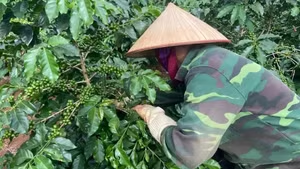
DACE has developed a 2,300-hectare integrated raw material sourcing area in Cao Bang, partnering with over 3,000 households from ethnic minority communities. This model is built upon international certifications for organic production, social equity, and fair trade—including EU Organic, Naturland, BioSuisse, and Fair for Life.
Establishing a raw material sourcing area not only enables businesses to exercise greater control over quality but also provides a foundation for verifying the origin and production methods of their products. This is particularly crucial, as European buyers are placing an increasing emphasis on transparency and accountability throughout the entire supply chain.
According to Tran Van Hieu, businesses must strictly monitor technical parameters—such as the presence of heavy metals (e.g., lead and mercury), pesticide residues, and microorganisms—while also ensuring the safety of packaging materials. Particular attention should be paid to requirements regarding printing inks, which must be free from MOAH (mineral oil aromatic hydrocarbons) and BPA (bisphenol A).
DACE has digitised its management processes through a mobile application and an Internal Control System (ICS), integrated with QR codes and product batch numbers. This allowed customers to trace information down to the individual farming household and the specific date of harvest. Such digitisation not only helps the company oversee its production processes but also ensures transparency, thereby strengthening trust with partners.
Another insight shared by Hieu is that increasing productivity does not necessarily require heavy investment in expensive machinery. Instead, businesses should focus on accurately identifying bottlenecks in their production processes, selecting solutions that align with their available resources, and improving operational efficiency step by step.
He also noted a growing trend among European buyers to shift certain deep-processing stages to Viet Nam, a move aimed at reducing fixed costs and risks. This presents an opportunity for domestic enterprises to elevate their role within the value chain, moving beyond the simple supply of raw materials.
Insights from the Viet Nam Trade Office in Sweden, combined with DACE’s experience in developing an organic spice supply chain, demonstrate that successfully penetrating the European market requires a comprehensive transformation—encompassing raw material sourcing, production processes, data management, and social responsibility.
When traceability becomes a genuine operational capability, sustainability standards are translated into concrete actions, and product value is enhanced through processing, Vietnamese goods will be better positioned to forge long-term partnerships with international buyers.
Meeting standards should not be the ultimate goal; rather, it should serve as a starting point for enhancing production capabilities, increasing value, and solidifying the position of Vietnamese enterprises within the European supply chain.