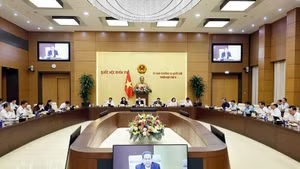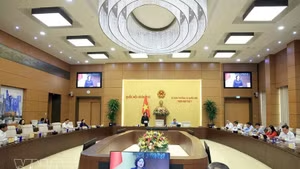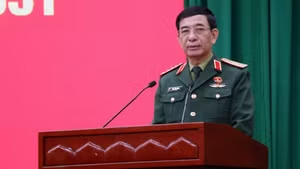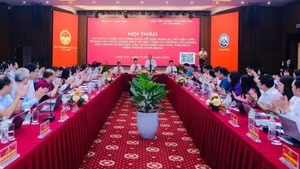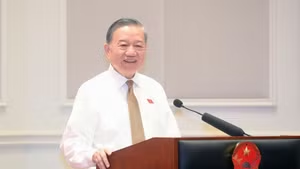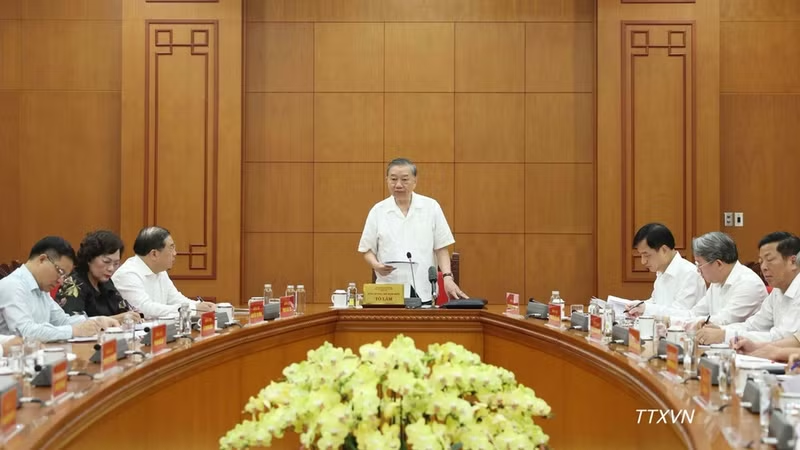
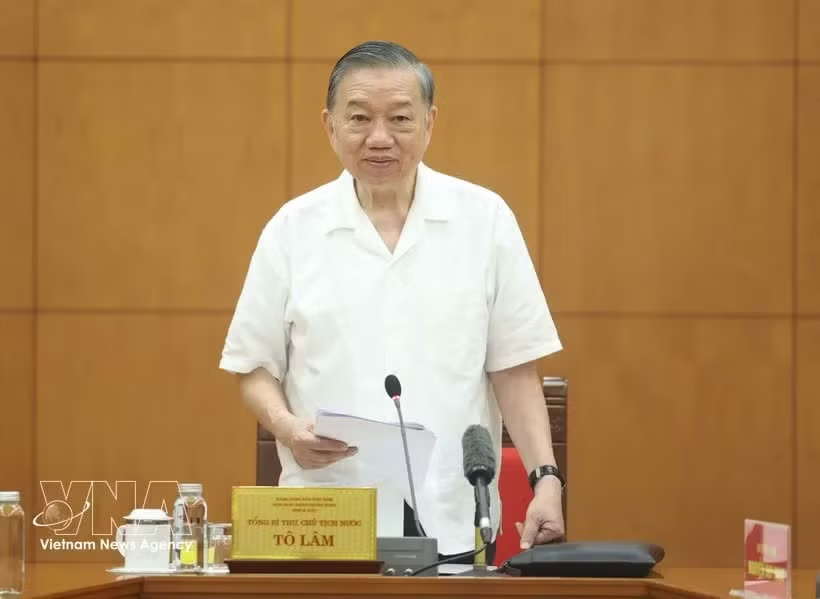
He made the statement while chairing a working session with the Government's Party Committee and relevant agencies to discuss orientations for developing national logistics and infrastructure.
General Secretary and President Lam stressed that logistics is not merely a sectoral economic issue, but concerns the entire economy's capacity to organise, connect and operate. It is directly linked to national competitiveness, economic self-reliance, resilience and national defence and security.
Amid the country's ambition to achieve double-digit growth, logistics must become a genuine growth driver by improving productivity, reducing costs, expanding development space and generating new sources of growth, he said.
The top leader emphasised that logistics development must be integrated into the country's overall development strategy, under unified Government-level direction and coordination, rather than being assigned separately to individual ministries, sectors or localities.
He stressed the need for the ambition to make Viet Nam an important regional and global logistics, transit and goods distribution hub. The country should proactively attract international cargo flows for transit, storage, distribution and value-added services; gradually deepen its participation in organising and coordinating regional and global supply chains; and turn its geographical advantages into competitive strengths, development resources and greater international economic standing. This vision must be translated into competitive logistics hubs, trade gateways and international transport corridors with clear roadmaps.
The General Secretary and President also highlighted the need to establish a unified, synchronised and modern national logistics network aligned with economic spatial planning and international connectivity. Investment should overcome fragmentation and administrative-boundary-based planning while maximising the strengths of individual regions and localities.
Science and technology, innovation, digital transformation and green development must serve as breakthroughs in modernising the sector, with digital and green logistics becoming new competitive advantages for Viet Nam.
He stressed the importance of developing strong Vietnamese logistics enterprises capable of mastering high-value segments of international supply chains. Policies should encourage the emergence of large domestic companies with the capacity to organise supply chains, international transport, transit and distribution; and strengthen links between logistics firms, manufacturers, exporters, trading companies and international logistics groups.
Regarding key tasks, the top leader called for improvements to institutions and national coordination mechanisms, alongside a review of logistics network planning based on a multi-centre and multimodal model. Logistics hubs must be planned according to cargo sources, connectivity, production areas, markets, land availability and investment efficiency, avoiding development driven by movements without clearly identified demand.
He urged better infrastructure connectivity along economic corridors, particularly between seaports, airports, freight stations and border gates and industrial parks, production areas and consumption centres.
Digital transformation should be accelerated through standardised data, electronic documents and interconnected systems linking businesses with customs authorities, ports, warehouses and transport operators. Green transport, energy-efficient warehouses and low-emission vehicles should be encouraged to strengthen supply-chain resilience and economic security.
As immediate priorities, General Secretary and President Lam requested an urgent review and upgrading of Viet Nam's logistics development strategy, the establishment of a national coordination mechanism, identification of major bottlenecks requiring resolution before 2027, and a programme to develop key international logistics gateways and hubs.
He also urged ministries, sectors and localities to assign clear responsibilities and deadlines, prioritising infrastructure connectivity, specialised inspections, logistics hub planning and data sharing.
The goal is to gradually bring Viet Nam's logistics costs closer to regional and global averages, improve service quality, increase domestic value added and enhance the country's role in regional logistics networks, he added.