Momentum from industrial hubs
Import and export activities have been a bright spot of the national economy over the past nine months, with export turnover surging 24.5%. In September alone, the figure rose 39.1%, reaching its highest level since the beginning of the year.
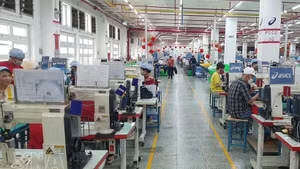
Export turnover in Bac Ninh City was estimated at 88.3 billion USD, up 31.7% year on year, ranking first nationwide. Processing and manufacturing industry continued to be the main driving force promoting export. According to Nguyen Minh Hieu, Director of the Bac Ninh City Department of Industry and Trade, businesses have continuously expanded their production capacity, while the shift in global investment flows towards high-tech sectors has created growth momentum for key export products such as mobile phones, computers, electronic products, and components.
Import and export activities have been a bright spot of the national economy over the past nine months, with export turnover surging 24.5%. In September alone, the figure rose 39.1%, reaching its highest level since the beginning of the year.
Samsung Electronics Viet Nam Co., Ltd., located in Yen Phong I Industrial Park, is one of the major export manufacturers in Bac Ninh. Kim Yong Sup, the company's Deputy General Director in charge of external relations, said that it continued to expand production and modernise its equipment and production lines, helping drive the local economic restructuring towards modern industry and creating opportunities for domestic businesses to participate more deeply in global supply chains. The company's revenue in the first nine months of 2026 was estimated to have increased by 16% compared with the same period in 2025.
With a full-year GRDP growth target of 12.5%, while 11.81% growth in the first nine months, Bac Ninh City has set a target of 14.57% growth for the fourth quarter. This requires sectors and industries to further increase capacity, maintain orders, and turn investment attraction advantages into actual production capabilities. Bac Ninh plans to diversify its markets and attract high-quality investment into the electronics, semiconductors, artificial intelligence, and high-tech sectors. It will also make effective use of free trade agreements (FTAs) and support domestic businesses in joining the supply chains of foreign-invested enterprises. The city's total import and export turnover is expected to reach 200 billion USD in 2026.
Hai Phong has an advantage in industrial production, supported by its seaport system and international transport network. According to Tang Ba Phuc, Head of the Hai Phong Statistics Office, the city's export turnover in the first nine months of 2026 was estimated at 43.72 billion USD, up 12.3% year on year, equivalent to 84.1% of its annual target and 1.82 billion USD above the growth scenario. Key export products include electronics and electronic components, machinery, equipment and spare parts, textiles and garments, and footwear. Production capacity has been strengthened alongside foreign investment inflows. As of September 20, Hai Phong had attracted more than 3.63 billion USD in foreign investment, up 64.4% compared with the same period in 2025, with 90.8% of the total directed towards industrial parks and economic zones. The development of large-scale industries linked to international production chains has provided a stable source of export goods.
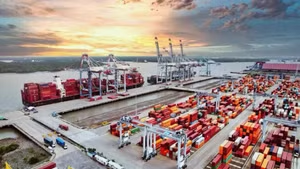
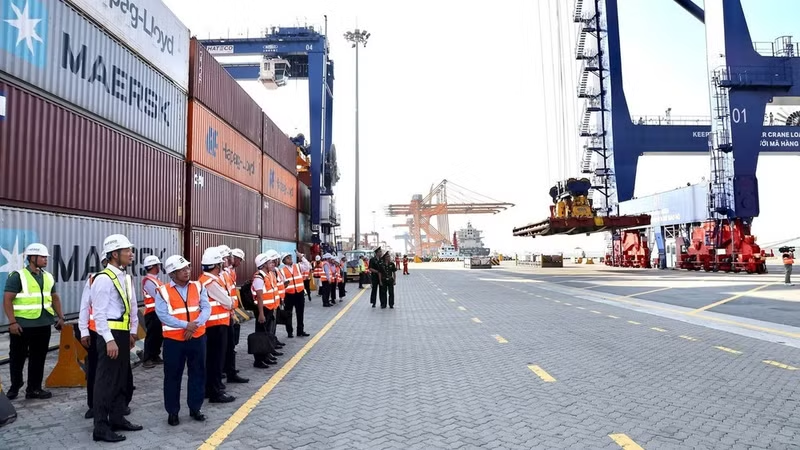
Compared with other localities, Hai Phong has an export advantage thanks to its ability to connect production with international markets. Lach Huyen deep-water port, together with the expressway system and inter-regional transport links, enables businesses to access international shipping routes, reduce transshipment, and shorten delivery times. In the first nine months of 2026, cargo throughput at the city's ports reached 156.3 million tonnes, up 11.8%.
Hai Phong has also identified support for businesses in taking advantage of FTAs as a means to enhance competitiveness. In 2025, the city ranked first nationwide in the FTA Index, scoring 35.62 out of 40 points. According to Hoang Minh Cuong, Vice Chairman of the Hai Phong People's Committee, the city regards this index as a tool for governance and administrative reform. It is focusing on helping businesses access market information, digitalising procedures, and issuing electronic certificates of origin under the "five-on-the-spot" model. These measures help businesses meet rules of origin, benefit from tariff preferences, and minimise trade risks.
The city is implementing various measures to support exports, including strengthening trade and logistics connectivity, promoting e-commerce, and improving businesses' ability to participate in regional production networks. It is also helping businesses diversify markets, products, and supply chains, while strengthening links between domestic enterprises and the FDI enterprises, thereby increasing localisation rates and added value.
According to Nguyen Anh Son, Head of the Import-Export Department under the Ministry of Industry and Trade, the sharp increase in export turnover over the past nine months reflects an expansion in production demand and a rise in orders. However, import turnover also grew by 36.7%, outpacing exports, indicating that domestic production remains dependent on imported raw materials, components, and equipment. He emphasised the need to develop supporting industries, strengthen domestic production capacity, and improve links between Vietnamese businesses and the foreign-invested sector in order to gradually increase localisation rates and the domestically retained values.
Expanding markets and improving export quality
In Ho Chi Minh City, the total import and export turnover of businesses in the first nine months of 2026 was estimated at more than 158 billion USD, up 11.6% compared with the same period in 2025. Exports accounted for approximately 76 billion USD, an increase of 10.6%. Processed and manufactured industrial products made up 76.7% of the export structure and maintained their growth momentum thanks to stable orders. Agricultural, forestry, and fishery products accounted for 15.9%. Processed food products recorded growth, supported by compliance with food safety requirements and formal export channels.
To expand their markets, businesses are making use of new-generation FTAs such as the Comprehensive and Progressive Agreement for Trans-Pacific Partnership (CPTPP), European Union -Viet Nam Free Trade Agreement (EVFTA), United Kingdom - Viet Nam Free Trade Agreement (UKVFTA), and Regional Comprehensive Economic Partnership (RCEP), thereby benefiting from tariff preferences and enhancing the competitiveness of their goods. The city's trade promotion activities are targeting potential markets such as the Middle East, Latin America, and South Asia, helping businesses find additional partners and reduce their dependence on certain traditional markets. In addition, the city has directed relevant sectors to optimise customs procedures, apply digital transformation in seaport management, and improve transport links to key hubs such as Cat Lai, Cai Mep, and Can Gio, helping reduce transport costs and shorten customs clearance times.
Nguyen Loc Ha, Standing Vice Chairman of the Ho Chi Minh City People's Committee, said that during the 2026-2030 period, the city aimed to achieve average export turnover growth of 10-11%/year, increase the share of processed and manufactured industrial products to more than 90%, and raise the proportion of exports to FTA partner markets to over 75%.
During the 2026-2030 period, the city aims to achieve average export turnover growth of 10-11%/year,During the 2026-2030 period, the city aims to achieve average export turnover growth of 10-11%/year, increase the share of processed and manufactured industrial products to more than 90%, and raise the proportion of exports to FTA partner markets to over 75%. increase the share of processed and manufactured industrial products to more than 90%, and raise the proportion of exports to FTA partner markets to over 75%.
Nguyen Loc Ha
Standing Vice Chairman of the Ho Chi Minh City People's Committee
In Phu Tho, the province's export turnover in the first nine months of 2026 was estimated at more than 39.3 billion USD, up 48.9% year on year and equivalent to 99.6% of its annual target. During the same period, Phu Tho attracted more than 2.4 billion USD in foreign direct investment (FDI). Projects to expand and modernise production, particularly in the electronics sector, have helped increase export capacity. The Industrial Production Index (IIP) rose by 21.5%, reflecting the growing role of processing and manufacturing industries and major export-oriented businesses. Exports of electronics, computers, and optical products increased by 30.02%, thanks to sustained orders from major technology groups such as Apple, Dell, Samsung, and Google.
AMY GRUPO is one of the province's notable exporters. The business has expanded its markets to more than 30 countries, with the US as its principal market. In the first nine months of 2026, export revenue reached approximately 3,575 billion VND, equivalent to 18.85 million square metres of SPC flooring and 4.36 million square metres of ceramic tiles.
Tran Tuan Dai, Deputy General Director of AMY GRUPO, said the company was facing increasingly stringent requirements regarding quality standards, product certification, logistics costs, trade policies, and competitive pressure. In the coming period, it will continue investing in technology, improving product quality, diversifying markets, and strengthening supply chain management capabilities.
According to Tran Duy Dong, Chairman of the Phu Tho People's Committee, the province will closely monitor production and business activities in the fourth quarter of 2026, while promptly addressing difficulties to help businesses stabilise production, particularly manufacturers of key export products. It will also accelerate site clearance, complete industrial park infrastructure, and attract high-quality projects in order to sustain export momentum and lay the foundations for sustainable growth.