At the same time, inflows to hydropower reservoirs are showing a downward trend, while the global fuel market remains subject to unpredictable fluctuations.
In response to these challenges, the power sector is implementing a range of coordinated measures, from system operation management to power source preparation, in order to ensure a stable electricity supply for socio-economic development and people’s daily lives.
Proactive operational planning
The national power system recorded relatively strong load growth in the first months of 2026. According to the National Electricity System and Market Operation Company Limited (NSMO), total electricity production and imports across the system were estimated at 48.3 billion kWh in the first two months of the year, up 7.1% year-on-year from 2025, while the average daily output reached approximately 818 million kWh.
The system’s peak capacity had reached 48,645 MW by February 28, 2026, an increase of 7.01% compared with the same period last year. Against the backdrop of rising electricity demand, ensuring power supply has been identified by regulatory authorities and power enterprises as a key priority for 2026, particularly during the dry season peak.
Under Directive No. 04/CT-BCT, the Ministry of Industry and Trade has requested Viet Nam Electricity (EVN) to continue promoting its leading role in the national power system and to closely coordinate with NSMO in effectively implementing tasks to ensure electricity supply in accordance with Directive No. 01/CT-TTg issued by the Prime Minister.
Accordingly, EVN is required to focus on resolving difficulties and obstacles in the implementation of key power generation and grid projects; accelerate site clearance, equipment supply, and construction progress in order to bring projects into operation on or ahead of schedule.
Alongside the development of power sources and grids, electricity units are required to proactively develop response plans for extreme scenarios within the power system, particularly in cases of peak capacity shortages during the dry season. They are also tasked with working with large electricity consumers to develop load adjustment and shifting plans to ease pressure on the system.
In addition, the Ministry of Industry and Trade has instructed the power sector to strengthen demand-side management, promote electricity-saving programmes and efficient energy use, and assess the impact of the development of distributed energy sources such as self-produced, self-consumed rooftop solar power.
For NSMO, the unit is required to develop appropriate system operation plans to ensure safe, continuous operation with adequate reserves. According to Chief Executive Officer of NSMO, Nguyen Duc Ninh, given the relatively favourable water inflows to hydropower reservoirs at the beginning of the year, the company has coordinated with hydropower plants to implement economical dispatch plans, prioritising maximum water storage until the end of March to prepare reserves for the dry season peak.
During the water discharge period for the winter-spring crop in the midland and Northern Delta region, the volume of water saved from Hoa Binh, Thac Ba, and Tuyen Quang reservoirs reached approximately 738 million cubic metres, equivalent to nearly 200 million kWh of electricity. Efficient use of water resources not only contributes to energy security but also supports stable power supply during periods of high demand.
Proactive preparation of power sources
In implementing directives from the Ministry of Industry and Trade and EVN, power generation units across the system are actively deploying various measures to ensure the availability of power sources during the 2026 dry season. These measures are being carried out comprehensively, from fuel preparation for thermal power plants and reviewing hydropower reservoir operation plans to enhancing equipment inspections.
Many large thermal power plants in the system have proactively implemented technical solutions, prepared fuel supplies, and improved equipment reliability to be ready to meet the dispatch requirements of the national power system.
Within the coal-fired power segment, Hai Phong Thermal Power Joint Stock Company currently manages and operates Hai Phong 1 and 2 Thermal Power Plants with a total capacity of 1,200 MW. Over the years, the company has consistently met, and in some years exceeded, its assigned electricity output, meeting the mobilisation requirements of the national power system.
Since commencing operations in 2009, the company’s plants have generated more than 93.92 billion kWh of electricity for the grid, making a significant contribution to ensuring energy security and supporting the country’s socio-economic development.
Deputy General Director of Hai Phong Thermal Power Joint Stock Company, Tran Xuan Truong, stated that to prepare for the 2026 dry season peak, the company proactively carried out maintenance and repair of generating units from the end of 2025; each unit underwent minor overhauls lasting approximately 10 days, which have now been completed.
At the same time, the company has tightened technical discipline and ensured adequate fuel preparation for production. Currently, coal reserves for dry season power generation stand at approximately 1.314 million tonnes.
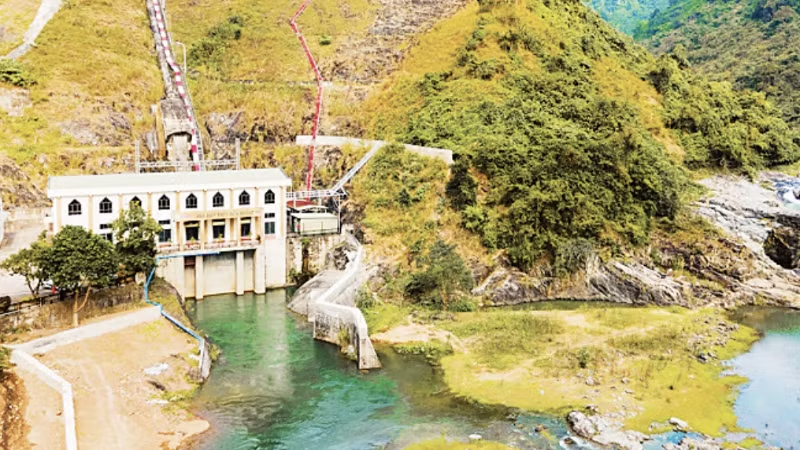
In addition to thermal power plants, hydropower units have also proactively stored water, reviewed equipment, and developed flexible operation plans to efficiently utilise water resources, thereby contributing additional supply to the system during the dry season peak.
According to the 2026 production plan, Quang Tri Hydropower Company has been assigned a target of generating 275 million kWh. Since the end of 2025, the company has proactively raised reservoir water levels close to the normal full supply level, while reviewing reservoir operation plans, disaster prevention measures, and incident response scenarios.
Director of the company, Nguyen Thanh Hung, stated that the unit has fully prepared operational plans, resources, and backup materials to ensure that generating units are always ready for safe and stable power generation, while also fulfilling the task of supplying water for residential and production needs.
With comprehensive preparations from system operation management to plant-level operations, the power sector is striving to ensure that the national power system operates safely and stably during the 2026 dry season, ready to meet electricity demand for socio-economic development and people’s daily lives, thereby contributing to the effective implementation of national energy security goals and broader development objectives.