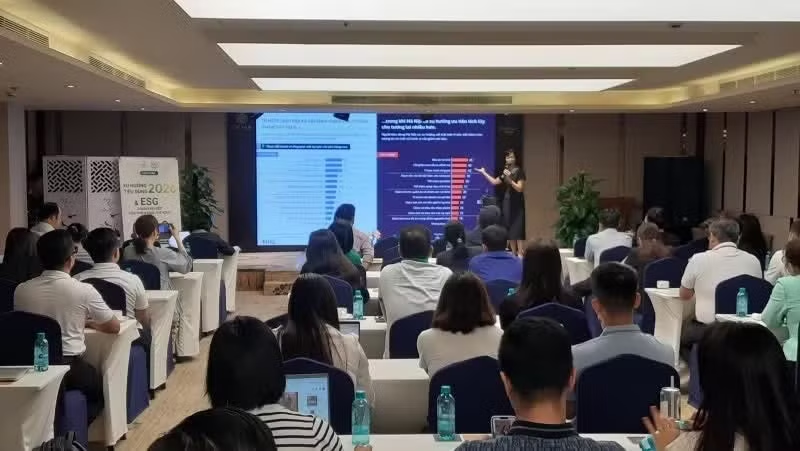
At the event, experts noted that major markets such as the EU, the US and Japan are steadily tightening ESG requirements through regulations such as the carbon border adjustment mechanism, as well as standards on supply chain transparency and social responsibility.
At the same time, consumer trends in 2026 indicate that consumers are increasingly prioritising brands that demonstrate responsibility for the environment and communities.
As a result, ESG is no longer merely an export standard, but is becoming a key factor determining competitiveness, market access and long-term customer loyalty.
Vietnamese businesses must therefore seize this moment to proactively adapt, turning sustainable development requirements into a driver of innovation, enhancing brand value and integrating more actively into global supply chains.
Nguyen Cam Chi, Director of the Sustainable Development Consulting Division at MCG Management Consulting, said that many businesses still misunderstand what sustainable development entails.
Many small businesses remain reluctant to begin ESG implementation because they believe it requires expensive formal certifications.
However, surveys of small and medium-sized enterprises show that most start with simple, low-cost measures: reducing electricity and water consumption, switching to different packaging, and similar initiatives.
According to experts, when implementing ESG, businesses need to identify what consumers actually value rather than chasing green certifications and sustainability labels.
According to Chi, a study of supplier selection policies at 135 multinational corporations shows that expensive sustainability certifications are rarely mandatory requirements.
Most international companies are far more focused on fundamentals such as labour standards, anti-bribery compliance, waste management and operational transparency.
Addressing consumer trends, Nguyen Cao Ngoc Dung, Head of Market Development for Viet Nam and the Philippines at NielsenIQ, said that the fast-moving consumer goods (FMCG) sector recorded subdued growth in 2025 as sales volumes continued to decline, extending the stagnation trend seen since the second quarter of 2025.
Viet Nam’s FMCG sector recorded growth of around 1.7% in 2025, although sales volume fell by 1.1%, indicating that the gain was driven largely by price increases rather than stronger consumer demand.
In 2026, the sector’s growth momentum has slowed further compared with 2025, as declining sales volumes make overall growth increasingly dependent on price movements rather than demand.
Viet Nam remains a consumer market characterised by a cautious mindset: the sense of financial security is weakening, most consumers remain wary, and households are increasingly tightening control over spending.
A growing number of consumers are holding food and grocery spending flat, reflecting a more proactive approach in managing purchases and household budgets amid rising fuel prices.