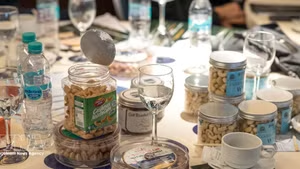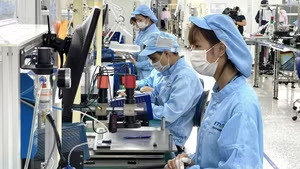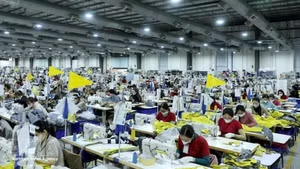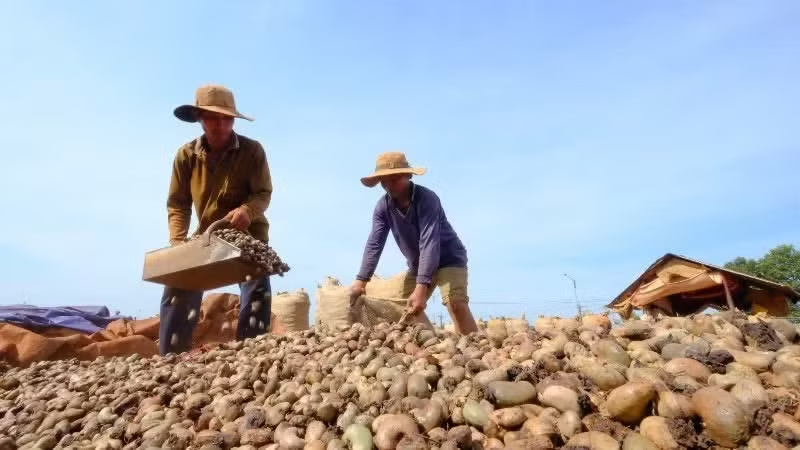
In the first four months of 2026 alone, Viet Nam exported 217,000 tonnes of cashew kernels, earning nearly 1.5 billion USD, up nearly 9% in volume and approximately 10% in value compared with the same period in 2025. The cashew industry’s export turnover in 2026 is projected to reach 5 billion USD.
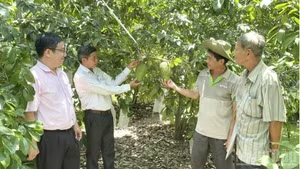
Dong Nai is considered Viet Nam’s cashew capital, with a total cultivation area of around 176,000 hectares and output of raw cashew nuts of about 300,000 tonnes/year.
In addition, Dong Nai City is also known as one of the world’s cashew processing hubs, with 2,793 enterprises and facilities engaged in purchasing, preliminary processing, and processing of cashew nuts.
Several enterprises have invested in modern technology and developed deep-processed products. With total export turnover of around 8.05 billion USD and import turnover of about 5.9 billion USD, Dong Nai City continues to maintain its position as one of the country’s major export centres. In the export structure, processed agricultural products continue to play an important role, especially cashew nuts.
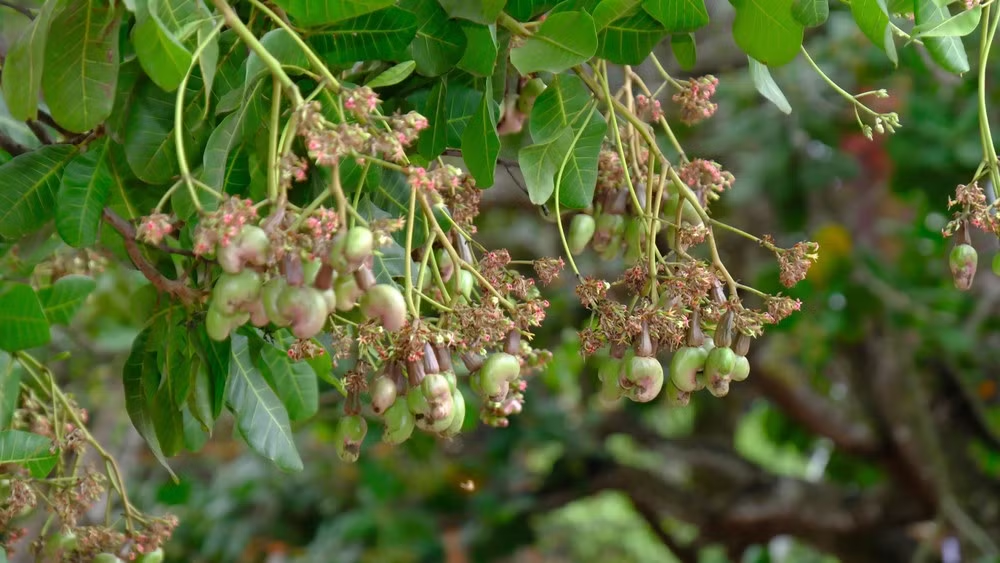
Currently, Viet Nam’s cashew industry still faces several difficulties, including fluctuating market prices, a low proportion of deep processing, a lack of internationally recognised strong brands, and trade promotion activities that remain below potential.
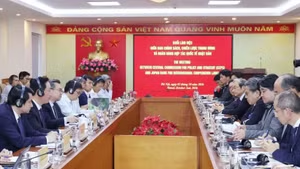
At the scientific workshop on sustainable building and development for Dong Nai City’s cashew industry during the 2026–2030 period, held on May 23, many experts, enterprises, and cooperatives proposed solutions to promote sustainable development of the cashew industry in terms of seed varieties, cultivation processes, investment in deep processing, development of a cultural space for the cashew sector, and production and processing technologies.

Le Thi Anh Tuyet, Deputy Director of the Dong Nai Provincial Department of Agriculture and Environment, said that Viet Nam’s cashew industry in general, and Dong Nai City’s cashew sector in particular, still have significant room and potential for development. In the context of increasingly deep competition and integration, it is necessary to have closer links among the State, enterprises, cooperatives, and farmers, while promoting the application of science and technology, digital transformation, improved product quality, and the development of a modern, green, and sustainable cashew industry brand.