Nearly eight years after the adoption of Resolution No. 36-NQ/TW on Viet Nam's strategy for the sustainable development of the marine economy, the northern coastal province is expanding its development model while placing greater emphasis on green growth, heritage conservation and value creation.
Where heritage meets modern tourism
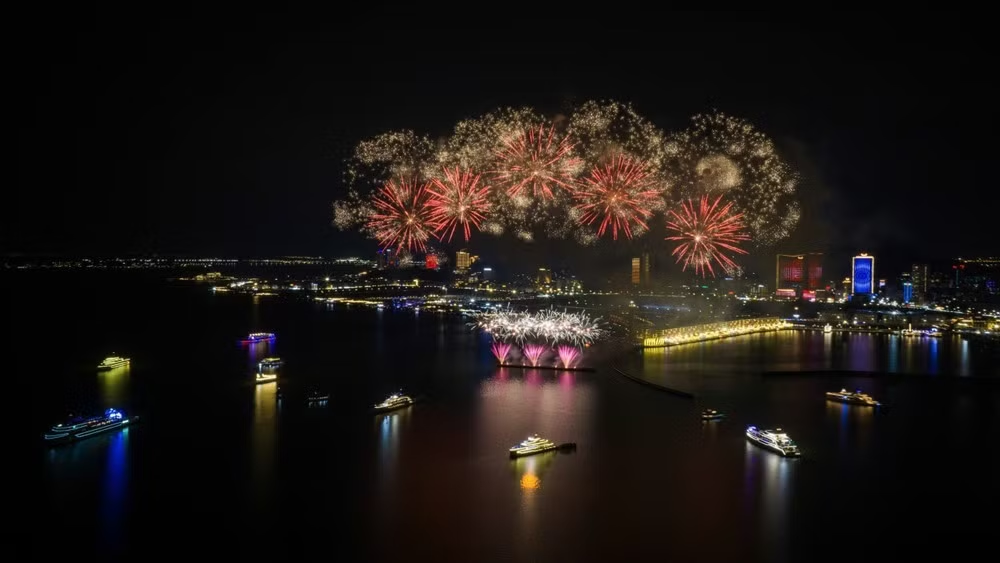
As dusk falls over Ha Long Bay, crowds gather along the Bai Chay waterfront, where illuminated food stalls, live music and outdoor performances create a lively atmosphere. At VUI-Fest Ha Long, visitors experience the province's history and culture through a new medium. A 3D mapping light show, combining projection technology, lasers and music on Viet Nam's tallest lighthouse overlooking the bay, brings local legends, cultural heritage and the rhythm of modern Ha Long to life. Fireworks over the bay further enhance the evening experience.
Many visitors say the attraction lies not only in the advanced technology but also in seeing familiar stories about Ha Long presented in an engaging new way. For younger families, an evening by the bay has evolved into an immersive experience combining cuisine, entertainment, cultural performances and fireworks. Older visitors, meanwhile, appreciate the restoration of traditional three-panel sailing boats, which help preserve local heritage amid rapid urban development.
These initiatives reflect Quang Ninh's shift from conventional sightseeing towards a more diverse tourism model encompassing resorts, night-time tourism, marine sports, cultural performances and community-based experiences.
The transformation forms part of the province's long-term transition from a resource-dependent "brown" economy to a greener growth model. In 2025, Quang Ninh welcomed 21.28 million visitors, including 4.5 million international arrivals. Tourism revenue rose 22% year-on-year to over 57 trillion VND (about 2.1 billion USD), contributing 10.46% of the province's GRDP.
During the first six months, the province received more than 12.4 million visitors, including 2.6 million international tourists, while tourism revenue increased 21% year-on-year to nearly 35.2 trillion VND (about 1.3 billion USD). Revenue growth has outpaced visitor growth, reflecting an increasing share of international and higher-spending travellers.
Expanding the blue economy
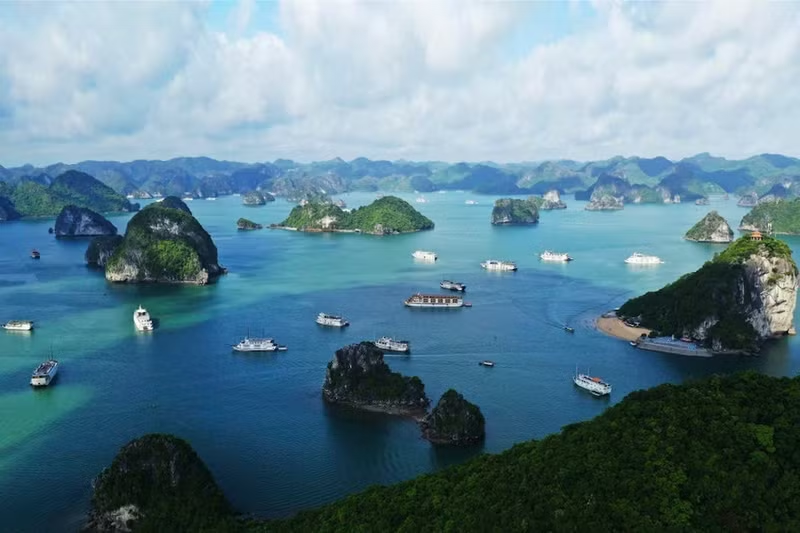
According to Nguyen Minh Son, Director of the provincial Department of Agriculture and Environment, Quang Ninh enjoys exceptional geographical advantages. Often described as "a miniature Viet Nam", the province boasts more than 6,000 sq km of sea area, over 250 km of coastline, more than 190 km of maritime boundary in the Gulf of Tonkin, and 2,077 islands. Located at the gateway linking the Red River Delta and northern mountainous region with the Gulf of Tonkin, Quang Ninh is well positioned to develop tourism, seaports, logistics, coastal industries, aquaculture and emerging marine industries.
Quang Ninh enjoys exceptional geographical advantages. Often described as "a miniature Viet Nam", the province boasts more than 6,000 sq km of sea area, over 250 km of coastline, more than 190 km of maritime boundary in the Gulf of Tonkin, and 2,077 islands. Located at the gateway linking the Red River Delta and northern mountainous region with the Gulf of Tonkin, Quang Ninh is well positioned to develop tourism, seaports, logistics, coastal industries, aquaculture and emerging marine industries.
Nguyen Minh Son, Director of the provincial Department of Agriculture and Environment
Quang Ninh was among the first in Viet Nam to translate Resolution No. 36-NQ/TW on the sustainable development of the marine economy into a comprehensive set of local policies and action plans.
The province has introduced coordinated measures covering port development, marine resource management, environmental protection, climate change adaptation, sustainable aquaculture, ecosystem conservation and coastal spatial planning. These policies have provided a clear roadmap for developing the marine economy while ensuring effective resource management and environmental safeguards.
Under the Quang Ninh Provincial Master Plan for the 2021-2030 period, with a vision to 2050, the province aims to become one of Viet Nam's leading centres for the sustainable marine economy. Development is centred on tourism and services with regional and international connectivity, deep-water ports, coastal urban areas, economic zones and logistics hubs. The province's coastal development corridor stretches from Ha Long and Bai Tu Long to Van Don and Co To, balancing economic development with biodiversity conservation and the livelihoods of coastal communities.
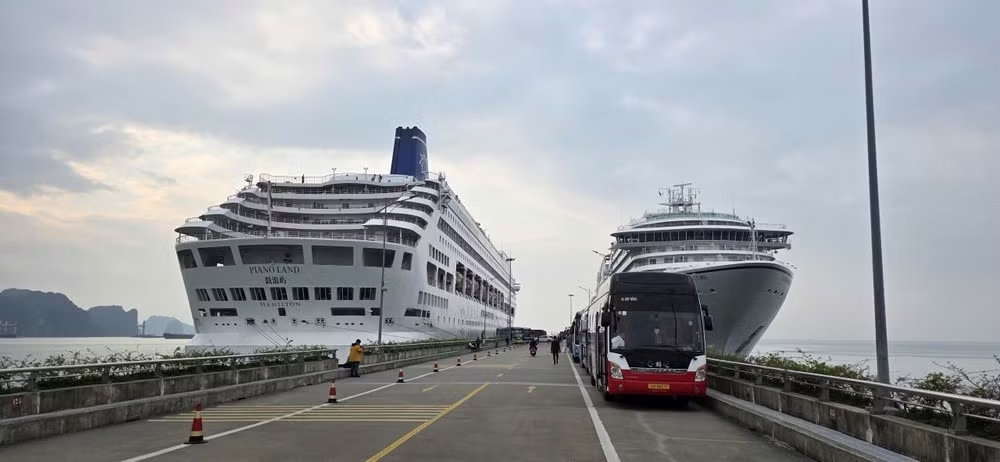
Transport infrastructure has been a key catalyst. Expressways, Van Don International Airport, Ha Long International Cruise Port and new coastal roads have significantly improved connectivity with Ha Noi, Hai Phong and international markets, supporting not only tourism but also the expansion of industrial parks, coastal economic zones, seaports and logistics services.
Tourism has also expanded beyond Ha Long Bay to destinations including Bai Tu Long, Van Don, Co To, Quan Lan, Ngoc Vung, Cai Chien and Vinh Thuc. Between 2019 and 2025, Quang Ninh welcomed around 94.62 million visitors, including 61.5 million coastal and island tourists, while international arrivals exceeded 17 million.
Beyond tourism, the province is developing new industrial clusters in coastal economic zones, focusing on shipbuilding, processing industries, automobile manufacturing and electronics assembly. During the 2021-2025 period, manufacturing output grew by more than 21% annually, while total investment exceeded 213 trillion VND (about 8 billion USD), including more than 6.6 billion USD in foreign direct investment.
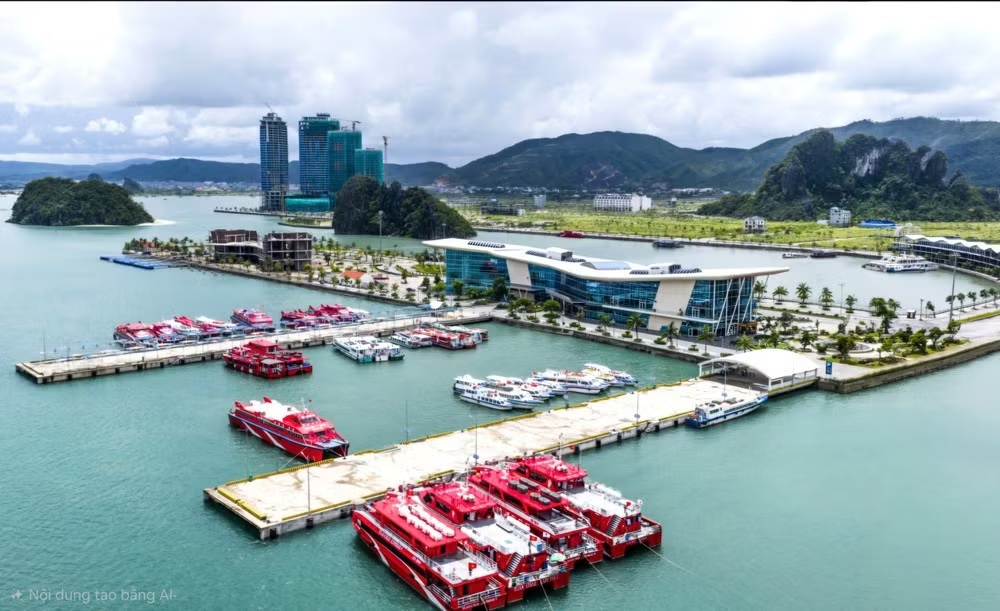
Quang Ninh's fisheries sector is also shifting from capture fishing to sustainable aquaculture. Total seafood production reached an estimated 830,000 tonnes between 2021 and 2025, with aquaculture accounting for around 56.5% of output by 2025, up from 49.4% in 2020. The province has expanded environmentally friendly offshore farming using high-density polyethylene cages, integrated multi-species systems and shellfish cultivation.
Measures such as introducing eco-friendly floating materials, establishing the Co To–Dao Tran Marine Protected Area, protecting spawning grounds and restoring fishery resources reflect a broader shift towards treating the sea not merely as an economic asset but as an ecosystem to be preserved for future generations.
However, despite these positive achievements, significant challenges remain. Quang Ninh must strike a careful balance between economic growth, the carrying capacity of its natural environment and its long-term sustainable development goals.
When growth puts pressure on marine ecosystems
During peak holiday periods, tens of thousands of visitors flock to the province's coastline each day. Cruise boats depart one after another, while hotels and restaurants operate at full capacity. Behind this vibrant tourism scene lies a growing volume of solid waste, wastewater and mounting pressure on coastal landscapes and the marine environment. The sea—tourism's most valuable asset—risks becoming the first casualty of rapid growth.
This is one of the most pressing challenges facing Quang Ninh as it develops its marine economy. Expanding tourism areas, building new urban developments, resorts and coastal infrastructure can generate fresh momentum for economic growth, but they also increase the risk of shrinking mangrove forests, tidal flats and the habitats of many marine species.
In environmentally sensitive areas such as Ha Long Bay, the rapid rise in visitor numbers and tourist vessels has placed increasing pressure on the World Heritage site, raising the risk of coastal pollution and deterioration of its natural landscape.
")
Environmental pressures in Quang Ninh extend beyond tourism and urbanisation. Coal mining, cement production, thermal power generation and the extraction of non-coal minerals continue to pose complex environmental challenges. Meanwhile, waste collection and wastewater treatment systems in some areas remain underdeveloped, and many environmental infrastructure projects have yet to be upgraded due to limited resources and the pace of development.
Over the long term, pollution not only increases remediation costs and affects residents' quality of life, but also undermines the province's competitiveness as a tourism destination, reduces its ability to attract high-quality investment and hampers its ambition for green growth.
"Every coastal development project should be assessed not only by the size of its investment or its revenue-generating potential, but also by its impact on the ecosystem. Development must be rapid, but it must remain within nature's carrying capacity. A construction project may take only a few years to complete, but a damaged tidal flat, mangrove forest or marine ecosystem could take decades to recover," said Mai Vu Tuan, Head of the Ha Long Bay–Yen Tu World Heritage Management Board.
From exploiting natural advantages to creating maritime value
According to Nguyen Thuy Yen, Deputy Director of the Quang Ninh Department of Culture, Sports and Tourism, the province will focus on improving service quality, increasing value-added offerings and encouraging higher visitor spending, rather than simply attracting more tourists. She noted that increasingly integrated transport and tourism infrastructure, together with new tourism products, services and events, are creating fresh opportunities for sustainable growth.
The province aims to develop a portfolio of competitive tourism products, including premium island and coastal resorts, yacht tourism, marine sports, night-time tourism, cultural and spiritual tourism, and heritage experiences centred on Ha Long Bay, Bai Tu Long Bay, Van Don and Co To. The goal is to encourage visitors to stay longer and spend more.
The province aims to develop a portfolio of competitive tourism products, including premium island and coastal resorts, yacht tourism, marine sports, night-time tourism, cultural and spiritual tourism, and heritage experiences centred on Ha Long Bay, Bai Tu Long Bay, Van Don and Co To. The goal is to encourage visitors to stay longer and spend more.
Alongside product diversification, Quang Ninh is working to raise standards across the entire tourism supply chain—from hotels, sightseeing vessels and overnight cruise boats to ports, piers, beaches and coastal service facilities. Operators are being encouraged to adopt more professional and environmentally friendly business models under the Green Sail certification scheme, improving service quality while reducing pressure on marine ecosystems.
The province also plans to expand the use of digital technology in destination management, including visitor flow monitoring, online booking systems, cashless payments and service quality monitoring. These measures are expected not only to improve the visitor experience but also to help authorities manage tourist flows more effectively and prevent overcrowding in environmentally sensitive areas, particularly the core zone of the Ha Long Bay World Natural Heritage Site.
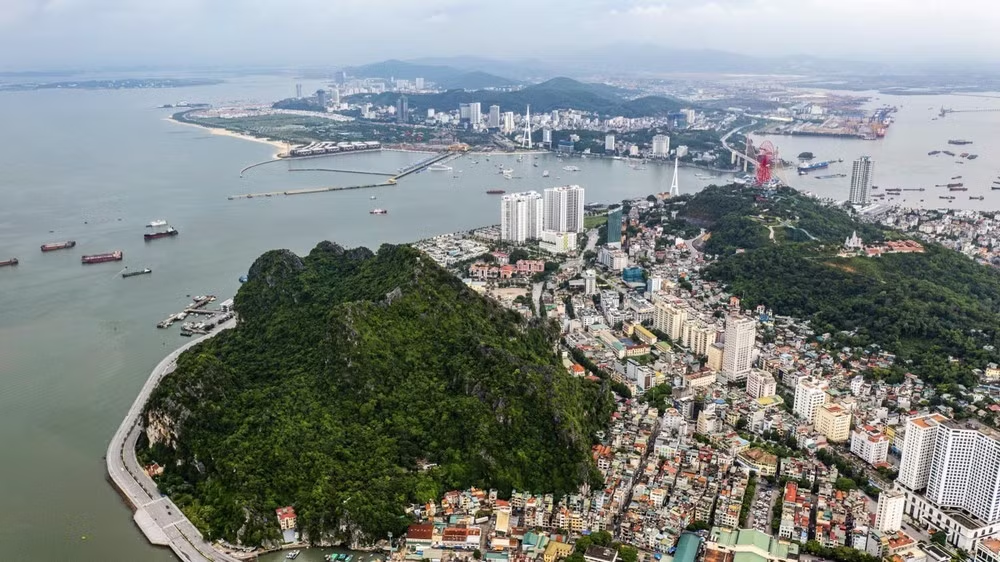
To address these challenges, the province is implementing a range of initiatives, including a programme for the protection and sustainable use of the Ha Long Bay–Yen Tu World Heritage Site in conjunction with Bai Tu Long Bay, a proposal to establish the Bai Tu Long Marine Park, and a comprehensive review of tourism resources and tourism products across both the core and buffer zones of Ha Long Bay. At the same time, authorities are updating the conservation, restoration and management plan for Ha Long Bay to ensure that economic development remains within the site's environmental carrying capacity.
This vision is also reflected in a broader strategy to develop Hai Phong and Quang Ninh into a modern international marine economic centre and one of the leading maritime hubs in Southeast Asia. Under the plan, Quang Ninh will strengthen its role as a regional and global tourism hub, while Hai Phong will develop into a modern international logistics centre. The two localities will complement each other through interconnected coastal cities, economic zones, industrial parks and free trade zones built on green, smart and sustainable principles.
Quang Ninh's future development will also be driven by three key growth poles: Van Don, focusing on the marine economy and high-end services; Mong Cai, serving as a centre for cross-border trade and international integration; and Quang Yen, specialising in industry and logistics. Building on this foundation, the province is pursuing four major transformations—in its economic structure, science and technology, spatial development, and governance—while unlocking five key growth drivers: special policy mechanisms, strategic infrastructure, investment resources, innovation and digital transformation, and a dynamic development ecosystem.
Ultimately, Quang Ninh's ambition is not simply to extract more value from the sea, but to create greater value from the same marine space. It seeks to move beyond relying on natural endowments towards building lasting competitiveness, shifting from a resource-based growth model to a sustainable blue economy in which natural heritage is protected, local identity is preserved, regional disparities are reduced, and local communities become the primary beneficiaries of development.