As international markets impose increasingly stringent requirements on green standards, food safety and traceability, the city is focusing on strengthening the capacity of farmers and businesses while tightening links between production and consumption. The aim is to turn potential into competitive advantages and help local agricultural products reach wider markets.
Following the merger, Can Tho has gained a vast agricultural economic space, with more than 530,000 hectares of farmland, accounting for over 83% of its total natural area. Its extensive land resources and diverse ecological sub-regions provide a foundation for developing large-scale specialised production areas, ranging from high-quality rice and speciality fruit to aquaculture, supplying abundant commodities for both domestic consumption and export.
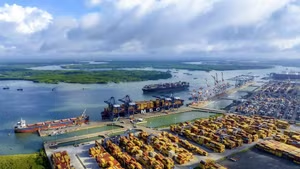
Beyond harnessing its own resources, Can Tho is also demonstrating its role as a regional hub by connecting the procurement, processing and export of agricultural products from across the Mekong Delta to international markets. Many major businesses in the city have proactively established partnerships with neighbouring provinces to source agricultural produce for further processing and export.
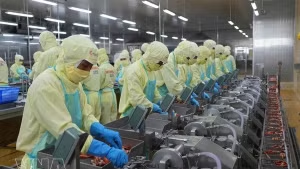
According to the Sub-Department of Quality, Processing and Market Development under the Can Tho Department of Agriculture and Environment, the city has a solid foundation, with 266 import-export businesses. Its agricultural products have successfully entered some of the world’s most demanding markets, including the EU, Japan, the US, Australia, China and the Middle East.
The city currently has 185 production establishments meeting stringent international certification standards, including HACCP, ISO and FSSC, as well as more than 140 safe food supply chains covering 337 certified products. These achievements provide a strong basis for expanding market access and enhancing the international competitiveness of local agricultural produce.
As part of its strategy to shift towards high-quality, low-emission production and increase added value, Can Tho has made notable progress in rice and fruit production.
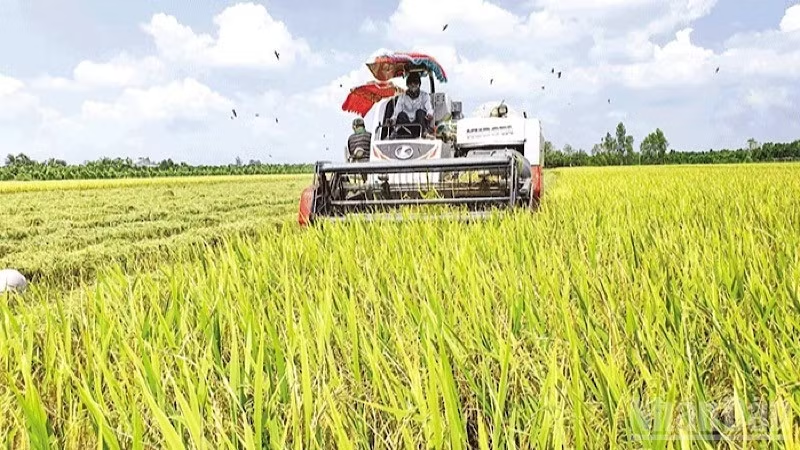
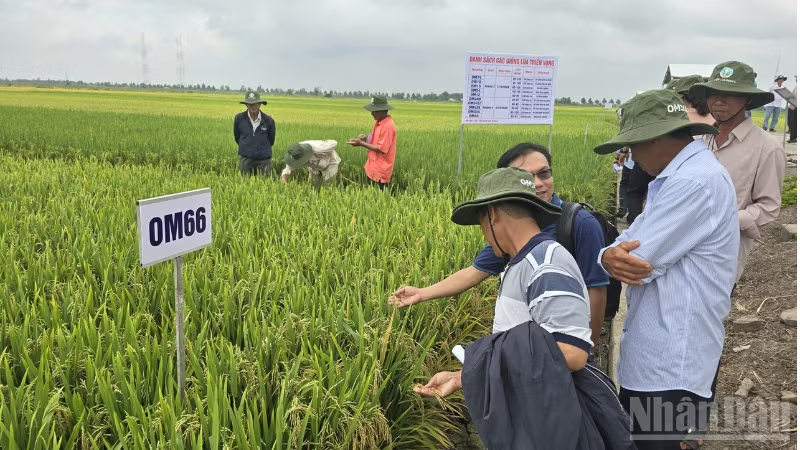
With 319,000 hectares of rice-growing land, a total cultivated area of nearly 700,000 hectares and annual output exceeding 4.6 million tonnes, Can Tho leads in the proportion of fragrant and high-quality rice varieties, which account for more than 92% of production. The city has 34 businesses eligible to export rice directly, supported by a modern system of warehouses and processing plants.
Can Tho is accelerating the implementation of a scheme to develop high-quality, low-emission rice production, targeting more than 170,000 hectares by 2030. Through close cooperation with cooperatives, many businesses have developed certified “green rice” products that have successfully entered export markets at premium prices.
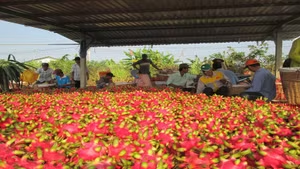
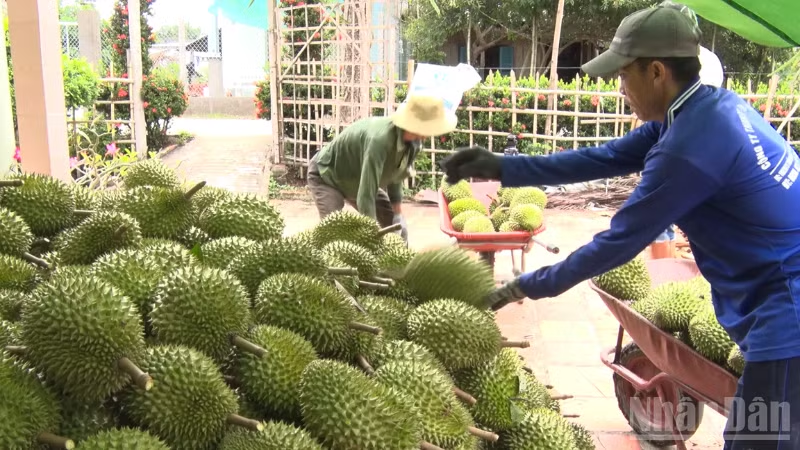
The city also has more than 1 million hectares of fruit crops, with annual output exceeding 1.7 million tonnes. More than 190 cooperatives and cooperative groups have established close links with businesses and ecotourism garden models. Notably, over 40 businesses have partnered with cooperatives to produce durian for export to China across 6,000 hectares, with 477 registered growing-area codes.
Supply-chain partnerships for jackfruit, longan, pomelo, mango, star apple and other fruits have also been strengthened. To date, the city has issued 547 growing-area codes covering a total of 11,212 hectares, meeting export requirements for markets such as the US, Australia, China and the Republic of Korea.
Many cooperatives and cooperative groups are applying science and technology to cultivation and partnering with businesses to secure stable outlets and higher prices for their produce.
Tran Van Chien, Director of Truong Khuong A Cooperative in Truong Long Commune, said the cooperative had introduced drones for spraying pesticides. The use of modern technology has not only transformed traditional farming practices but also optimised production, particularly across its 30 hectares of durian orchards, where trees are more than 10 years old, with broad canopies and dense planting.
The solution effectively addresses labour shortages, ensures more even coverage and reduces farmers’ direct exposure to chemicals. Through partnerships and VietGAP-compliant cultivation, the cooperative consistently sells its durian and star apples at higher prices than conventionally grown produce, particularly during peak harvest periods.
Despite these impressive economic results, Can Tho’s agricultural sector continues to face considerable challenges. Production of many local agricultural products remains fragmented and small-scale, while large areas of farmland have yet to establish stable market-linkage arrangements.
To address these bottlenecks, Quach Thi Thanh Binh, Deputy Director of the Can Tho Department of Agriculture and Environment, said the city’s agricultural sector would promote production in line with VietGAP and GlobalGAP standards, while moving towards organic farming. The consistent application of safe technical procedures would help protect the ecological environment and ensure uniform product quality. At the same time, the city would expand the issuance of growing-area and farming-area codes and introduce QR-code traceability labels. These are regarded as “passports” enabling local agricultural products to enter major supermarket chains and demanding export markets.
In addition, Can Tho is strengthening value-chain partnerships in agricultural production and attracting investment in logistics infrastructure, preservation technologies and post-harvest processing. Developing deep-processing centres will help diversify products through drying, canning and extraction, reduce post-harvest losses and tackle the persistent problem of bumper harvests driving down prices. It will also support the operational capacity of modern cooperatives, enabling them to serve as sustainable links between farmers and businesses that purchase their produce.
Closer value-chain integration will help shape production-area planning and ensure that supply meets market demand in both quantity and quality, allowing Can Tho’s agricultural products to reach wider markets.