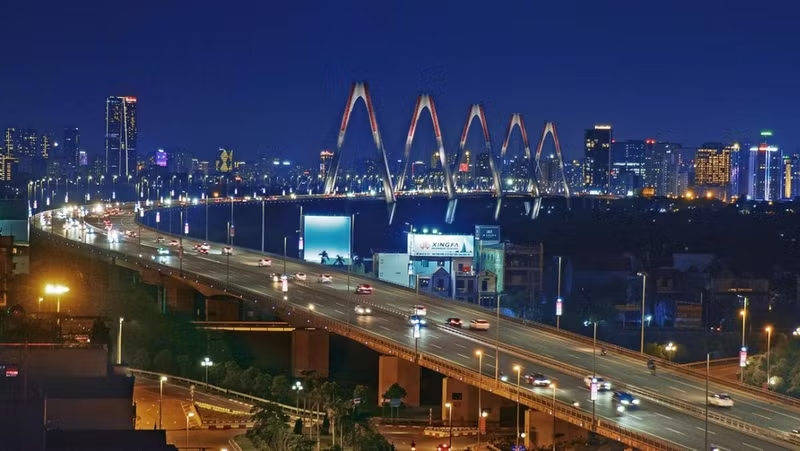
Under the plan, Ha Noi will adopt a multi-polar, multi-centre development model, bolstering connectivity between its core areas and emerging development zones while easing population pressure and the strain on transport and infrastructure in the inner city.
Expanding development space through strategic transport links
Construction is under way around the clock on the Ngoc Hoi Bridge, which will span the Red River to link Ha Noi with Hung Yen Province. Contractors are accelerating work on various components to complete the bridge in time for the APEC Summit in 2027.
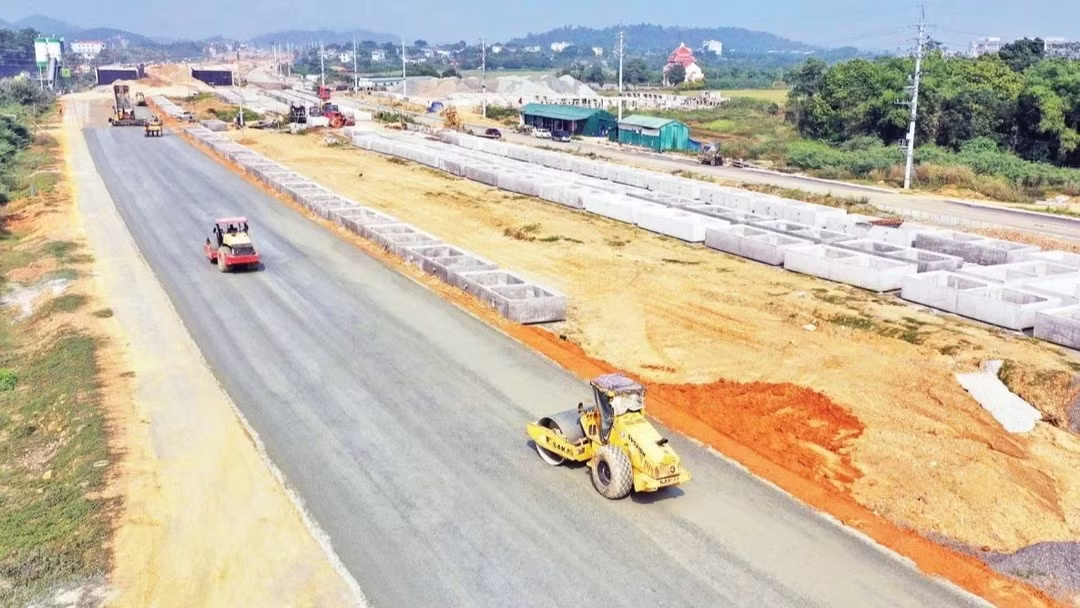
At the city’s western gateway, contractors are stepping up construction of parallel roads for the Thang Long Boulevard project, on the section between National Highway 21 and the Ha Noi–Hoa Binh Expressway.
Work is also gathering pace on the Van Phuc Bridge, which will connect Ha Noi with Phu Tho Province. The bridge is scheduled to open to traffic by the middle of the third quarter of 2027, with full completion in the fourth quarter that year.
These are three of dozens of major transport projects Ha Noi is undertaking to upgrade its network, open up room for growth and strengthen links between the capital and neighbouring provinces and cities.
The Standing Board of the Ha Noi Party Committee has issued an action programme to implement the Politburo’s Resolution 27 adopted in August on regional development and the spatial organisation of national development in the new period. The programme sets the goal of turning Ha Noi into a green, smart and modern city by 2030 and making it the core of the Red River Delta’s expansion.
Ha Noi aims to consolidate its leading role in science and technology, innovation, digital transformation, culture, education, healthcare, finance and high-quality services, while building a modern, integrated infrastructure network that links it seamlessly with the region, the rest of the country and the world.
To achieve these objectives, the programme sets out 10 major groups of measures, covering 41 priority tasks and projects. It places particular emphasis on reviewing and refining the Capital Master Plan to ensure consistency with national and regional planning, and on identifying key development areas, growth poles, economic corridors, economic and urban centres, science and technology hubs and specialised development zones.
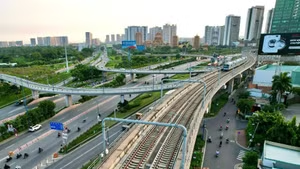
Transport infrastructure is crucial to opening up new spaces for development. Ring roads, bridges across the Red River, urban railway lines and inter-regional transport corridors do more than meet travel demand: they improve market access and link industrial parks, service centres and new urban areas.
When developed in step with land-use planning, logistics and production organisation, these projects can create new economic corridors, enabling localities to capitalise on their complementary strengths.
Linking resources to spread growth across the region
Alongside infrastructure investment, Ha Noi is developing science, technology and innovation centres. Hoa Lac Hi-Tech Park is being managed and operated more effectively to maximise its potential, serving as a test bed for science and technology policies for both the capital and the country.
FPT Corporation on October 15 broke ground on a digital technology building in Phu Dien and Tay Tuu Wards, part of the 194.3-hectare FPT Digital Technology Park Urban Area project.
Once completed, the building will provide workspace, research facilities and testing environments for about 6,000 technology specialists and support staff while meeting green operating standards.
FPT Corporation CEO Nguyen Van Khoa said the group plans to use the project to connect international technology giants such as NVIDIA, Samsung and Microsoft with universities, research institutes, technology enterprises, start-ups and Vietnamese experts at home and abroad.
The initiative is intended to foster cooperation among the state, scientists, and businesses, and to promote research, training and the commercialisation of technology products.
Infrastructure and science and technology capabilities will boost competitiveness only if they match the production needs of localities. That requires reorganising how development is distributed across the region, with a clear division of roles among localities, effective use of their complementary advantages and the building of inter-regional value chains.
As a major centre of research, education, finance and services, and a large consumer market, Ha Noi is well placed to take on the high-value-added stages of production chains.
Neighbouring localities, meanwhile, can build on their strengths in manufacturing, high-tech production, logistics and high-value agriculture.
A rational division of roles would help form inter-provincial value chains, instead of leaving each locality to develop on its own and compete for resources and markets.
Connectivity along the Ha Noi–Bac Ninh–Hai Phong–Quang Ninh, Ha Noi–Phu Tho, and Ha Noi–Thai Nguyen corridors needs to be enhanced through transport infrastructure, planning, data sharing and business networks.
When production, logistics and service centres are seamlessly connected, Ha Noi’s strengths in research, skilled labour and market access can help neighbouring localities raise productivity, expand output and become more closely integrated into supply chains.
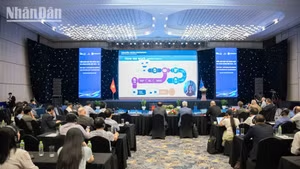
Speaking at the 2026 Investment Promotion Conference, Chairman of the Ha Noi People’s Committee Vu Dai Thang said the capital is moving towards a development model based on connectivity, cooperation and spillover effects rather than growth in isolation.
As competition among cities and economic regions increasingly depends on connectivity and coordination, Ha Noi’s drive to attract strategic investment aims not only to generate fresh momentum for the capital but also to create new growth poles and make the whole region more competitive.
Building on its historical role and new strategic directions, Ha Noi is gradually shifting from an “economic locomotive” to a “hub for shaping and driving development.”