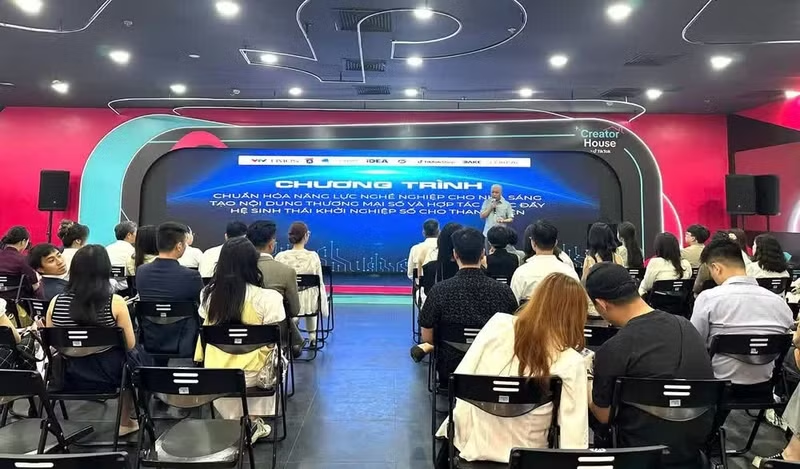
The Viet Nam Youth Entrepreneurship Support Centre (SYS Viet Nam), the Centre for E-commerce and Digital Technology Development — Department of E-commerce and Digital Economy — Ministry of Industry and Trade, the University of Social Sciences and Humanities – Viet Nam National University, Ha Noi, and TikTok Viet Nam have officially announced the ongoing training programme on standardising professional competencies for digital commerce content creators.
The programme is part of the project on enhancing digital economic capacity for 20 million Vietnamese youth, aiming to build a force of content creators with sufficient knowledge, skills, and legal understanding to participate in the e-commerce market and the digital economy in a systematic and sustainable manner.
Opening up new career opportunities for young people
According to Nguyen Lam Thanh, TikTok’s representative in Viet Nam, the strong development of e-commerce, livestream commerce, and the creator economy in recent years is opening up many new career opportunities for young people. Viet Nam is currently considered one of the countries with favourable conditions for developing the digital economy thanks to its high internet user rate, rapidly developing digital platform ecosystem, and dynamic youth force with strong adaptability to new technologies. The digital economy is becoming one of Viet Nam’s important growth drivers, especially in the context of strong global digital transformation.
In particular, the e-commerce and digital content creation sectors are creating a “low barrier to entry” for young people, as all they need is a smartphone, an internet connection, and the right skills to participate in the digital labour market. This is considered highly significant not only for young people in urban areas but also opens up opportunities for income generation for young people in rural and remote areas.
Many economic experts believe that e-commerce and the digital economy not only create new jobs but also contribute to promoting digital transformation in social life, supporting the promotion of local products, geographical indications, and indigenous culture, and creating momentum for the development of the private economy in the new context.
Speaking at the event, Lai Viet Anh, Deputy Director of the Department of E-commerce and Digital Economy under the Ministry of Industry and Trade, said that in recent times, State management agencies have been strengthening coordination with youth support organisations, technology businesses, and digital platforms to promote the development of the e-commerce ecosystem in a more sustainable and comprehensive direction.
According to Lai Viet Anh, supporting young people in accessing digital business skills, content creation skills, and new business models on digital platforms is crucial in the development of the national digital workforce. This is also one of the solutions contributing to promoting digital transformation and creating new growth drivers for the economy.
Promoting digital transformation in social life
Meanwhile, Professor Hoang Anh Tuan, Rector of the University of Social Sciences and Humanities, Viet Nam National University, Ha Noi, believed that higher education today needs to be more closely linked to social needs and the trends of the digital age. According to him, the rapid development of the digital economy is giving rise to many new professions that previously did not exist in the traditional training system.
“Universities should not only train academic knowledge but also participate in building highly practical programmes, helping learners adapt to the very rapid changes in society and the labour market,” Professor Hoang Anh Tuan shared.
According to Nguyen Huu Tuan, Director of the Centre for E-commerce and Digital Technology Development, Department of E-commerce and Digital Economy (Ministry of Industry and Trade), the training programme on standardising professional competencies for digital commerce content creators is designed to combine theory and practice.
Trainees will be equipped with a foundation of knowledge in e-commerce, sales skills, channel building skills, and e-commerce livestreaming, and will regularly update their knowledge of legal regulations, tax policies, and regulations on advertising and selling online.
Notably, the programme goes beyond short-term training and aims for a “lifelong learning” model for content creators. “After completing the training, trainees will continue to receive support in updating new policies from State management agencies as well as the latest operating regulations from the TikTok platform to facilitate their digital economy startups,” said Tuan.
Also at the programme, Nguyen Phan Huy Khoi, Director of the Viet Nam Youth Entrepreneurship Support Centre, shared that in the coming time, under the direction of the Viet Nam Youth Union, the Viet Nam Youth Entrepreneurship Support Centre will continue to promote research and organise the implementation of vocational training activities for young people, and support youth entrepreneurship, with the digital economy being one of the key areas to promote the pioneering spirit of the youth force in digital transformation, applying science and technology to life in accordance with Resolution 57 and promoting the development of the private economy in accordance with Resolution 68 of the Politburo.
Nguyen Lam Thanh, representative of TikTok Viet Nam, said that TikTok will continue to cooperate with State management agencies, universities, and youth organisations in supporting young people to access digital skills, develop e-commerce, and build sustainable business models on digital platforms.
“Developing a workforce of young content creators and entrepreneurs in the digital economy not only creates job opportunities for young people but also contributes to promoting Viet Nam’s double-digit economic growth target in the 2026–2030 period,” Thanh emphasised.
According to the coordinating units, the “Standardising Professional Competency for Digital Commercial Content Creators” programme is expected to gradually contribute to the formation of a systematic digital human resource training and development ecosystem in Viet Nam, thereby promoting innovation, developing the private economy, and enhancing the competitiveness of the young workforce in the digital age.