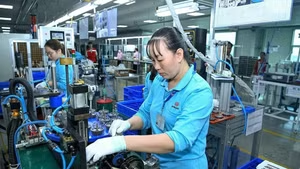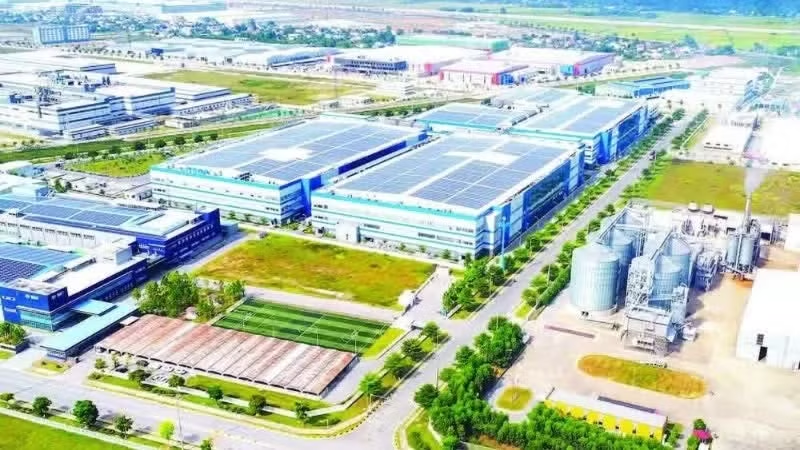
According to the article, Viet Nam possesses a strategic position along important maritime routes, making it an international trade gateway. With more than 3,200 km of coastline and numerous seaports, Viet Nam enjoys major advantages in logistics and import-export activities. Many factories in Viet Nam are owned by Chinese and Korean enterprises, helping strengthen connections with existing supply chains.
The article also highlighted factors that create an ideal investment environment. First, despite global challenges and natural disasters in 2025, Viet Nam’s economy still recorded strong growth. This has become a driving force to attract foreign direct investment (FDI), as Viet Nam has emerged as an attractive destination for businesses, which want to diversify their presence in Asia, access the Vietnamese and South Asian markets, complement operations in China, and take advantage of Viet Nam’s free trade agreements (FTAs).
The article further noted that Viet Nam is entering a key stage in its development process, pursuing ambitious growth targets. The Government is prioritising high-value growth through policies aimed at improving productivity, promoting innovation, and accelerating industrial upgrading. Priority is being given to strategic and high-tech sectors such as electronics, digital technology, automobiles, railways, and shipbuilding, while also developing new sectors including semiconductors, robotics, automation, and AI.
The article particularly emphasised that Viet Nam is regarded as having a stable government, a solid economic vision, a reasonable policy management mechanism, low investment barriers, and strong incentive programmes.