On October 15, the Customs Department reported that the situation regarding drug-related crimes along the Viet Nam-Cambodia border remains complex. Criminals may exploit import-export activities, cross-border travel, the transport of goods and luggage, and general border trade to traffic illicit drugs. Consequently, raising vigilance among those who frequently handle goods or operate vehicles at border crossings is essential for preventing such exploitation.
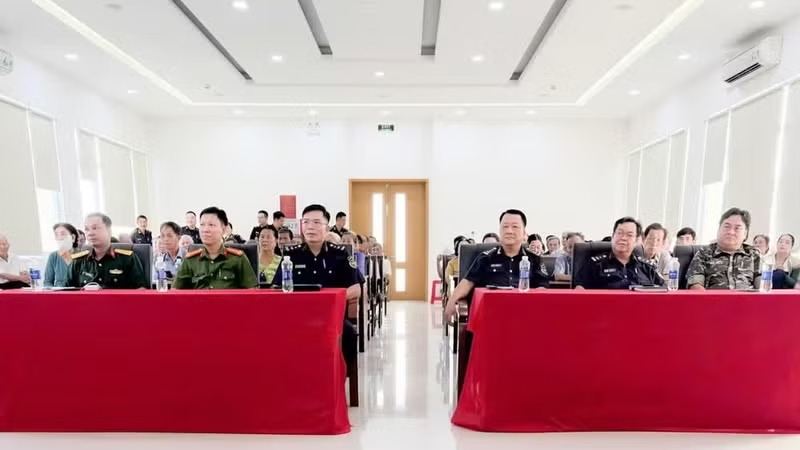
To deliver warnings and preventive guidance directly to the public and businesses, the Customs Department — specifically the Anti-Drug Smuggling Control Team No. 3 (Team 7) under the Anti-Smuggling Investigation Division — collaborated with the Customs Branch of Region XX, local authorities, and other relevant units to conduct an awareness campaign on anti-drug laws at the Khanh Binh International Border Gate and the Vinh Xuong Border Gate in An Giang Province.
The programme drew nearly 150 participants, including representatives from law enforcement agencies, local government, import-export and transport companies, drivers, workers, travellers, and residents in the border area. The sessions were held in the morning at the Khanh Binh International Border Gate and in the afternoon at the Vinh Xuong Border Gate.
This initiative is part of the efforts to disseminate legal information and raise public awareness under Sub-project 2, “Improving the Effectiveness of Drug Prevention Communication and Education at the Grassroots Level” — a component of Project 7 within the National Target Programme on Drug Prevention and Control through 2030. At the same time, awareness-raising and preventive efforts are integrated with the drug-control mandates of the customs authorities across key routes and high-risk areas.
To ensure that the outreach content remains relevant to real-world conditions, the Anti-Smuggling Investigation Division — specifically Team 7 — has proactively developed plans and prepared materials. In coordination with the relevant regional Customs Branch, frontline customs units at border crossings, and local authorities, they have organised programmes tailored to the specific characteristics of each locality and the target audience.
The information is presented in a direct, accessible manner, linking legal knowledge to practical scenarios encountered in import-export operations, transportation, and daily life in border regions. This approach is designed to help participants identify potential risks within their own work and everyday activities.
During these sessions, Nguyen Hong Quang, Deputy Head of Team 7 (Anti-Smuggling Investigation Division), personally outlined key information regarding the status and risks of drug-related crime along the Viet Nam-Cambodia border, as well as the legal regulations and the responsibilities of organisations and individuals in drug prevention and control.
Participants were briefed on the methods and tactics used by criminals to exploit import-export processes, cross-border travel, and the transport of goods and luggage for the illicit trafficking of narcotics. Furthermore, warnings were issued regarding the harmful effects and risks associated with synthetic drugs and new psychoactive substances.
A core focus of the program is to guide residents, businesses, drivers, and workers in recognising situations where they might be exploited by criminal elements. This initiative aims to foster a greater sense of self-protection and underscore the responsibility to inspect goods, luggage, and vehicles when engaging in cross-border activities.
Through discussions and Q&A sessions, participants received guidance on how to appropriately handle suspicious signs and promptly report information to the relevant authorities. This approach integrates the dissemination of legal knowledge with the proactive responsibility of preventing and detecting drug-related crimes within the local area.
In addition to direct outreach, the Anti-Smuggling Investigation Department — specifically Team 7 — collaborated with customs forces at border checkpoints to distribute leaflets and informational materials to passengers, drivers, businesses, and local border residents.
The message “Do not accept, keep, carry, or transport goods of unknown origin” was emphasised to heighten vigilance and prevent individuals from inadvertently facilitating the illegal transport of narcotics.
Through these initiatives, the Customs Department continues to direct its subordinate units to strengthen coordination with local authorities, the business community, and the general public. This encourages every organisation and individual to take an active role in preventing and detecting drug-related crimes, as well as providing relevant information, within border and checkpoint areas.
The outreach activities in Khanh Binh and Vinh Xuong demonstrate the Customs Department’s proactive approach to fulfilling its assigned tasks under the National Target Program on Drug Prevention and Control through 2030. The communication methods have been innovated to be highly relevant to the specific locality and target audience, effectively linking legal education with the practical realities of drug prevention and control efforts by customs authorities.
This initiative contributes to raising awareness and fostering compliance with the law, while strengthening the bond between authorities, businesses, and the general public. In doing so, it mobilises community participation in drug prevention and control, with the ultimate goal of building a safe, stable, and prosperous Viet Nam-Cambodia border region.