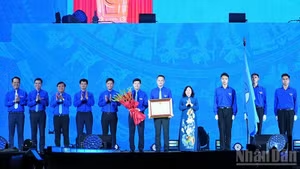
Ho Chi Minh City has solemnly held a memorial service and burial ceremony for the remains of 731 fallen soldiers who fought bravely and sacrificed their lives during the 1968 Tet General Offensive and Uprising at Ho Chi Minh City Martyrs’ Cemetery.
White flowers along the farewell route
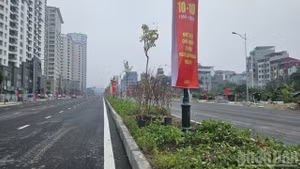
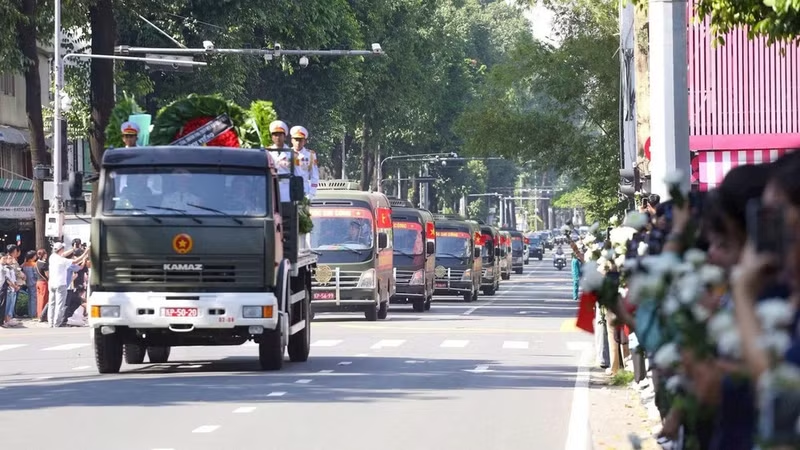
White chrysanthemums lined the route taken by the 731 fallen soldiers from Le Thi Rieng Park to Ho Chi Minh City Martyrs’ Cemetery. Large numbers of residents had gathered along the roads from early in the morning. As the convoy moved slowly past, many bowed their heads in silence and raised flowers as a farewell, expressing their gratitude to those who had bravely sacrificed their lives for the country’s independence and freedom. Among the crowds were war veterans who had lived through the war and fathers who had brought their children to witness this special homecoming. Some had asked for time off work and set aside their daily duties to stand by the roadside and bid farewell to soldiers whose faces they had never seen.
At 6.30am, Mai Hoa, from Go Vap Ward, and a group of friends had already gathered at Dien Bien Phu Roundabout. Having learnt that the city was holding a memorial service and burial ceremony for the fallen soldiers found at Le Thi Rieng Park, she had arranged to change her working hours so she could see them off. Watching the convoy pass between lines of people holding white flowers, she was moved: “After several decades, the fallen soldiers have finally been found and welcomed home amid the hearts and memories of the Vietnamese people.”
At Binh Thai intersection, Nguyen Duc Hoang, a student at Phuoc Long High School, and his classmates were taken by their teacher to Vo Nguyen Giap Street to bid farewell to the fallen soldiers. Born after the country had achieved peace, Hoang learned about the war through books, documentary footage, and accounts from older generations. Hearing about the search for and recovery of the remains of fallen soldiers helped him better understand the losses that many families had carried for decades. The farewell made him reflect more deeply on his generation’s responsibility to study, contribute to society, and serve the city and the country.
Earlier, at Le Thi Rieng Park, Nguyen Thanh Ha, from Tan Son Ward, had brought his daughter, who is in Year 9, to pay tribute to the fallen soldiers. He said his father, who came from Hung Yen Province, had served in the military and been assigned to the southern battlefield in 1967, but he was wounded on the way. Since childhood, Ha had heard his father speak of comrades of the same generation, many of whom had died during the 1968 Tet Offensive. He wanted his daughter to witness the farewell in person so that she could understand that today’s peace came at the cost of enormous sacrifices.
Along the route taken by the fallen heroes to their final resting place, some people prepared flowers to give away free of charge, while others brought drinking water for those waiting by the roadside. Ho Chi Minh City’s affection for the fallen soldiers was reflected in these simple acts, the white flowers, and the silent bows of respect.
A promise to those whose names remain unknown
In the eulogy delivered at the memorial service, Nguyen Manh Cuong, Vice Chairman of the Ho Chi Minh City People’s Committee and head of the city’s Steering Committee for the Search for, Recovery and Identification of Fallen Soldiers’ Remains, recalled the image of soldiers from every corner of the country making their way to the Saigon–Gia Dinh battlefield.
Some had left their villages in the quan ho folk-song region; others had grown up in areas known for their vong co (traditional Vietnamese lyrical singing style from southern Viet Nam) singing, while some carried with them the folk songs of impoverished rural communities.
They were farmers, workers, craftspeople, teachers, students, and young people in the prime of their lives. Coming from different regions, they had met on the battlefield in the struggle for national independence and reunification. Many had fallen and never returned to fulfil their promises to their families, nor lived to see the day the country achieved peace.
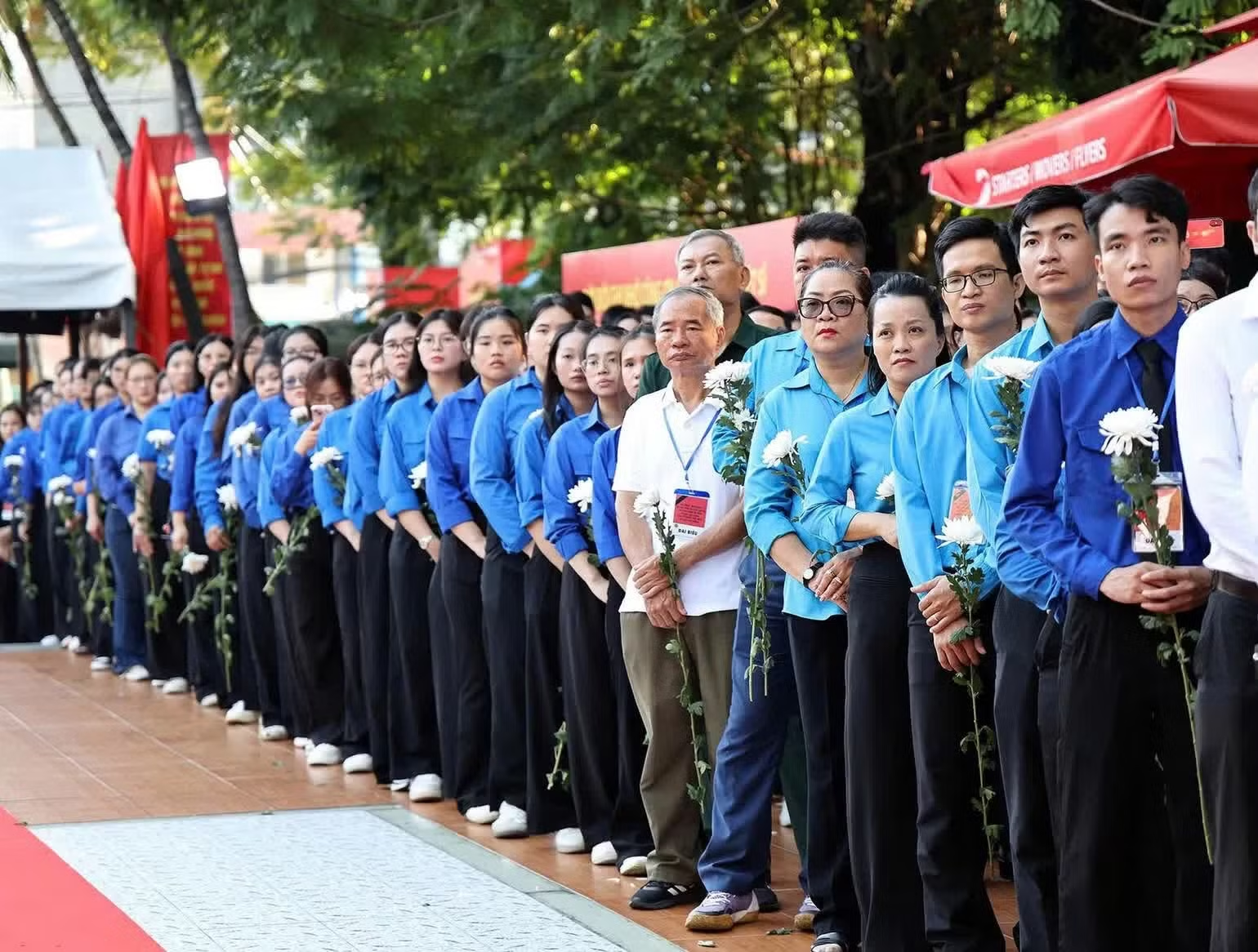
Nearly 60 years have passed, yet those soldiers remained beneath the ground in the area that was once Do Thanh Cemetery and is now Le Thi Rieng Park. From June 23 to October 5, Team K74 under the Ho Chi Minh City Command, together with other forces, searched for and recovered the remains of 731 fallen soldiers. Of these, 698 sets of remains were found buried individually, while 33 sets were recovered from eight mass grave sites. Personal effects were found alongside 307 sets of remains.
After decades, what remained sometimes amounted to little more than a faded photograph, a small bottle of medicated oil, a comb, a ring, a necklace, a canteen, or a pair of rubber sandals. These everyday objects, once part of the soldiers’ lives, have now become among the few surviving clues available to search teams as they gather evidence, cross-check records, and verify information.
The identities of most of the recovered remains have yet to be established. Behind each unidentified case is a family that may have waited for generations and a hometown that still does not know where its son lies.
During the memorial service, Nguyen Manh Cuong expressed his emotion: “Due to the brutal conditions of war and the passage of time, we have yet to identify the names, ages, and hometowns of most of the fallen soldiers whose remains were recovered in this operation.” On behalf of the Ho Chi Minh City Party Committee, authorities, and people, he addressed the deceased with a heartfelt plea: “Regardless of where you came from, we respectfully ask the souls of the fallen soldiers to regard Ho Chi Minh City as a land of peace where you can rest.”
The plea was made as the soldiers had been found, yet the journey home to their families remained unfinished for many. The city has welcomed them to their final resting place, while their names, hometowns, and the relatives still waiting for them remain to be identified and traced. The city is determined to continue implementing the “500-day-and-night campaign to step up the search for, recovery and identification of fallen soldiers’ remains”. The forces involved will expand surveys of locations where remains may still be buried, particularly areas where fierce battles once took place.
Alongside the search, the city will continue collecting biological samples from the remains of fallen soldiers and DNA samples from their relatives for analysis, comparison, and storage in the national gene bank. Although the passage of time has altered the terrain and erased many traces, every piece of verified information may open a further opportunity to restore the identity of someone who has died.
Nguyen Manh Cuong affirmed that, despite the many challenges ahead, the city and the forces involved would not overlook any opportunity or method in continuing the search for soldiers who sacrificed their lives for the independence and freedom of the Fatherland, and in bringing them home to their families and native places.