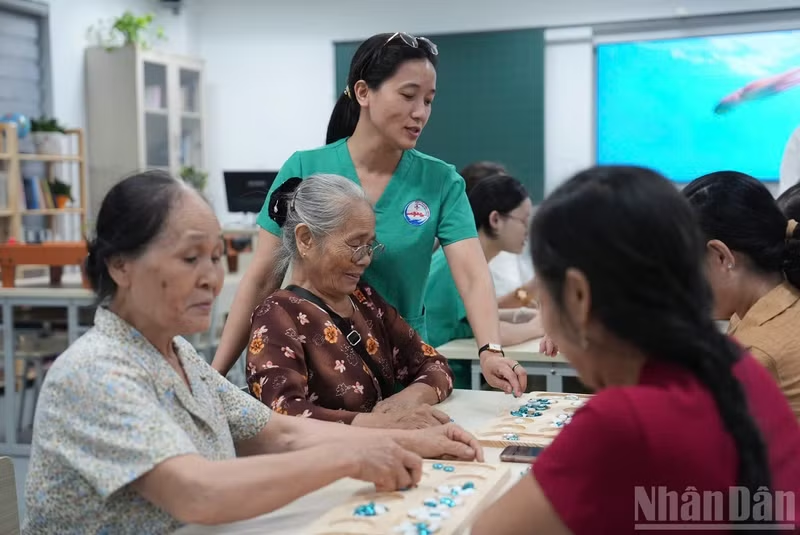
Ageing faster than resources can be accumulated
According to the National Statistics Office (NSO), Viet Nam entered the population ageing phase in 2011.
A report released by NSO in late 2025 forecasts that Viet Nam will become an aged society by 2034 and a super-aged society by 2050, when the proportion of people aged 65 and over exceeds 21%.
Results from a population and housing census in 2024 show that the country had approximately 14.2 million people aged 60 and over, an increase of 2.8 million compared with 2019. This figure is projected to reach nearly 18 million by 2030.
According to Associate Professor Catherine Earl, a researcher at RMIT University Viet Nam, population ageing is not merely an issue affecting older people. It will also have implications for the labour market, healthcare system, retirement incomes, housing, and the allocation of public resources.
Unlike developed countries such as Australia, the United Kingdom, and Japan, which had decades to accumulate resources before their populations aged significantly, Southeast Asian countries, including Viet Nam, are undergoing this demographic transition at a much faster pace.
This means these countries must address two challenges simultaneously: sustaining economic growth and preparing resources for a society in which older people account for an increasingly large share of the population.
Those who have worked in the informal sector, rural residents, and vulnerable groups face a heightened risk of financial hardship in old age. Some may have no pension at all and therefore have to continue working well into their later years.
According to the UNFPA, life expectancy in Viet Nam stands at 74.7 years, while healthy life expectancy is just 65.4 years. This gap highlights the need to take account of healthcare, medical treatment, and daily living support in later life when developing policies to adapt to population ageing.
Viet Nam’s challenge lies not only in the growing number of older people but also in its ability to ensure an adequate workforce, income security, and care services amid rapid demographic change.
Preparing resources for the ageing wave
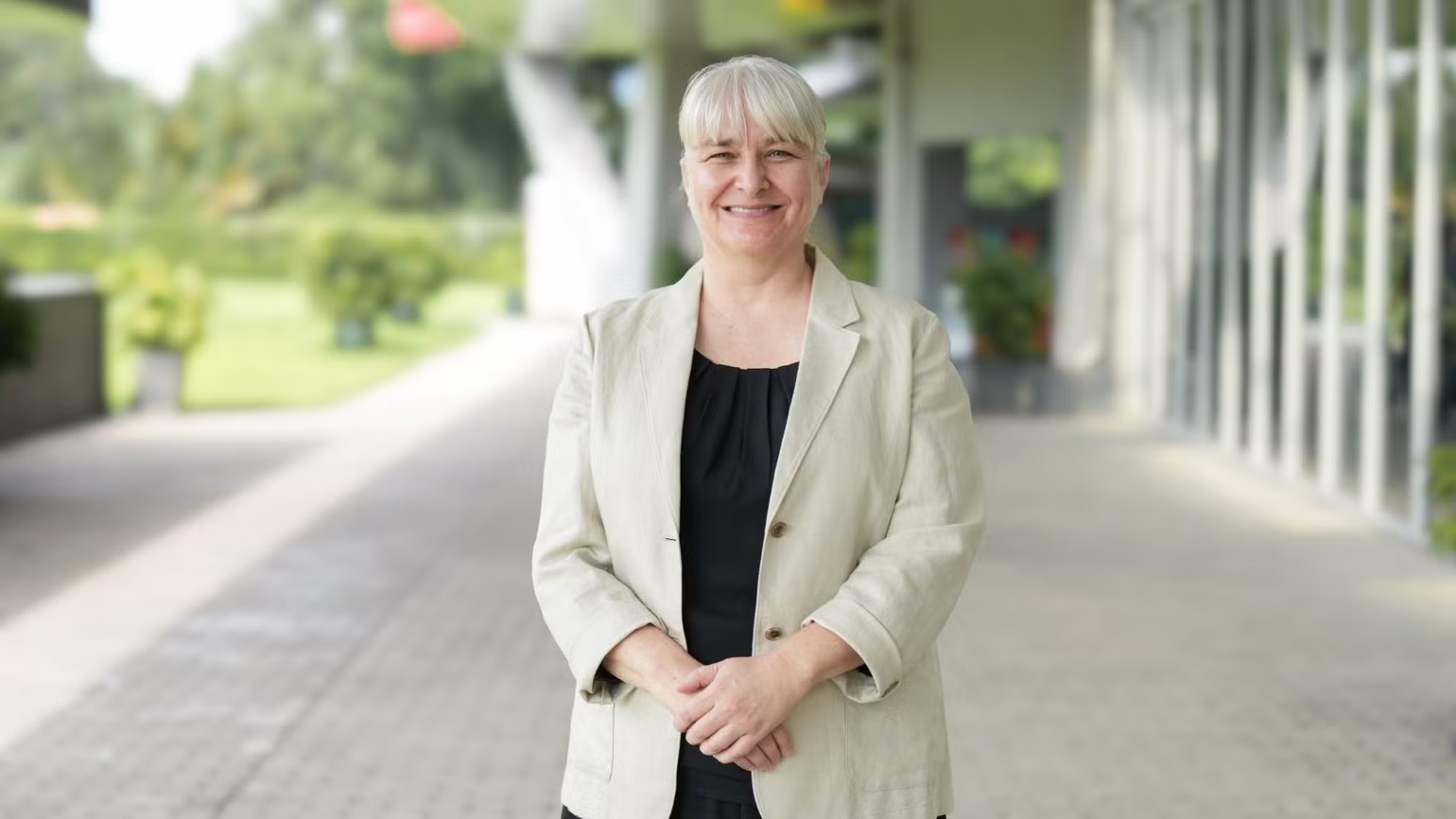
In response to these demographic shifts, Associate Professor Catherine Earl believes Viet Nam needs an integrated approach that encompassing employment, pensions, healthcare, housing, transport, technology, and financial services, given the mutually supportive relationship of these sectors.
Maintaining labour force participation is essential as the proportion of older people increases. Older people’s ability to continue working and contributing must therefore be taken into account in policymaking.
At the same time, the expert stressed the importance of strengthening the pension system, particularly for self-employed and informal workers.
Another approach is to develop the care economy, including daily living assistance and services for older people. This is not only a social welfare necessity but could also create opportunities for service sector development and job creation.
According to UNFPA research on the care economy for older people in Viet Nam, developing an appropriate care system could help ease the burden on families while generating additional employment and income opportunities.
Notably, the expert argued that older people should not be viewed merely as beneficiaries of policies. They should also be involved in developing solutions that directly affect their lives.
From a research perspective, Viet Nam needs to make the most of its existing resources and favourable demographic structure to improve labour productivity, expand income security, strengthen the social protection system, and develop care services.
The goal should be not only to extend life expectancy but also to ensure that people can enjoy healthy, fulfilling lives in their old age.














![[Video] Renewal and growth milestones of Ha Noi through the lens](https://en-cdn.nhandan.vn/images/1XgBTSIw0KyfD4abQsg-hd4ly6fBUHXC7_OAKyN4YwPfAhBw0Xs6rVX3rF0up9Tr6rLNn30Muc4bzp90E7yOqg/10-10-hanoi-cover.jpg.avif)