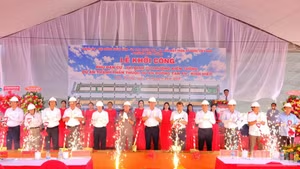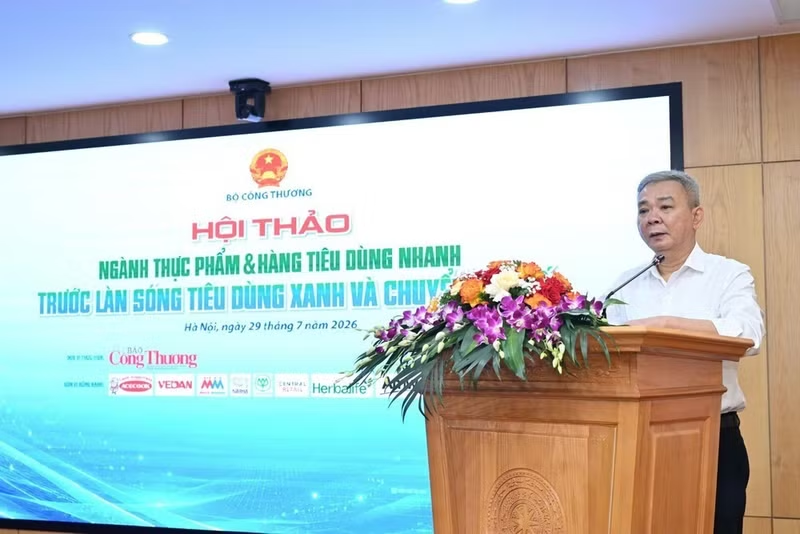
On July 29, a workshop titled “Food and FMCG Sectors Face the Wave of Green Consumption and Digital Transformation” was held in Ha Noi by Cong Thuong Newspaper.
The workshop was attended by representatives of leaders of the Ministry of Industry and Trade, along with ministries, sectors, localities, associations, and the business community, aiming to discuss new market trends, identify opportunities and challenges, and propose solutions to promote the development of the food and FMCG sectors in a modern, green, and sustainable direction.
According to Nguyen Tien Cuong, Deputy Editor-in-Chief of Cong Thuong Newspaper, the food and FMCG sectors play an important role in the economy as they meet people’s essential needs. They also help to promote production and the circulation of goods, create jobs, and sustain domestic consumption growth. With a population of more than 100 million, a young demographic structure, and an expanding middle class, Viet Nam continues to be regarded as a consumer market with great potential in the region.
In 2025, Viet Nam’s GDP grew by 8.02%, with domestic consumption continuing to be one of the key pillars of economic growth.
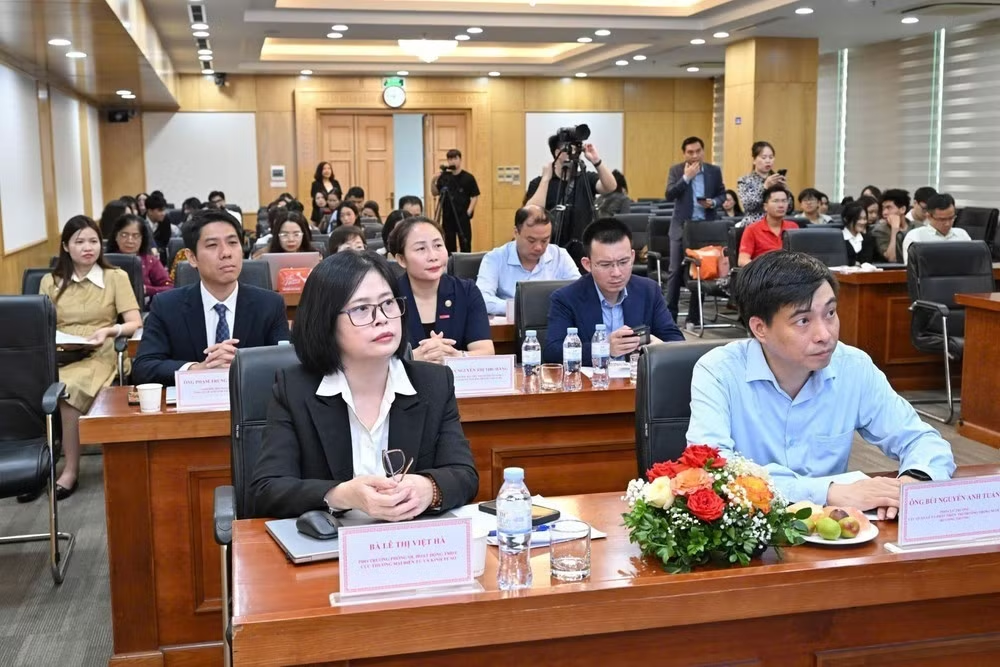
According to presentations at the workshop, businesses in the food and FMCG sectors are also facing the risk of falling behind if they fail to adapt in time to the two major trends of green consumption and digital transformation. Enhancing competitiveness is therefore not only a requirement for each enterprise but also linked to the sustainable development goal of the entire sector.
Assessing changes in the green consumption trend and Central Retail’s practical actions, Nguyen Thi Thu Hang, Director of GO! Thang Long Supermarket, said that in recent years, green consumption in Viet Nam had shifted from awareness to practical action. Customers are no longer concerned only with quality and price, but also pay particular attention to the green origin, environmental friendliness of products, and corporate social responsibility.
Pham Trung Thanh, External Relations Director of Acecook Viet Nam Joint Stock Company, also said the company is synchronously installing solar power systems at its factories, gradually replacing coal-fired boilers with biomass boilers and using liquefied petroleum gas to significantly reduce greenhouse gas emissions. The solar power system at the corporation’s office and Ho Chi Minh City factory alone generates about 900MWh of electricity each year, while the Vinh Long factory is expected to produce 6,885MWh per year, helping cut CO2 emissions by nearly 5,000 tonnes.
The organisers expects the workshop to become a forum for management agencies, experts, industry associations, and the business community to share experiences and practical models, better identify market opportunities and challenges, and thereby propose solutions to promote digital transformation, develop green production, enhance competitiveness, and build a sustainable consumption ecosystem for the food and FMCG sectors in the coming time.