Q: Offshore wind power is considered capable of creating a large value chain beyond electricity generation. In your opinion, what are the key policies for Viet Nam to develop domestic supply chains and supporting industries?
A: In the context of Viet Nam setting a target of double-digit GDP growth, electricity supply needs to stay ahead. Offshore wind power, as highlighted in numerous studies and reports and, in particular, mentioned in resolutions of the Politburo, has been identified as an important energy source in the coming period. However, offshore wind power does not merely generate electricity; it also opens opportunities to develop a strategic industrial and service sector, thereby helping Viet Nam participate more deeply in global value chains. Each offshore wind power project creates substantial demand for equipment manufacturing, mechanical engineering and manufacturing, seaports, logistics, installation, operation, and technical services.
Viet Nam has many conditions for participating in this value chain, first and foremost is market size. Viet Nam is targeting the development of approximately 17GW of offshore wind power by 2035 under the revised Power Development Plan VIII. Such market capacity provides room for investors to develop equipment manufacturing and conduct technology research and development.
However, more important than market size is the stability and long-term nature of the market. Investors need to see a clear development roadmap, with sufficiently large and stable demand and orders from year to year. This is a factor that will give them confidence to invest in domestic manufacturing facilities, research and development (R&D), and supply chains.
In addition, policies are needed to encourage the development of domestic industry, services, and supply chains. Investment in this sector requires large amounts of capital, so domestic enterprises need support in terms of land and taxation as well as market-facilitating mechanisms. Many investors believe that what they need is not necessarily direct financial support but first and foremost a favourable and stable policy system with sufficient incentives to encourage them to make long-term investment decisions.
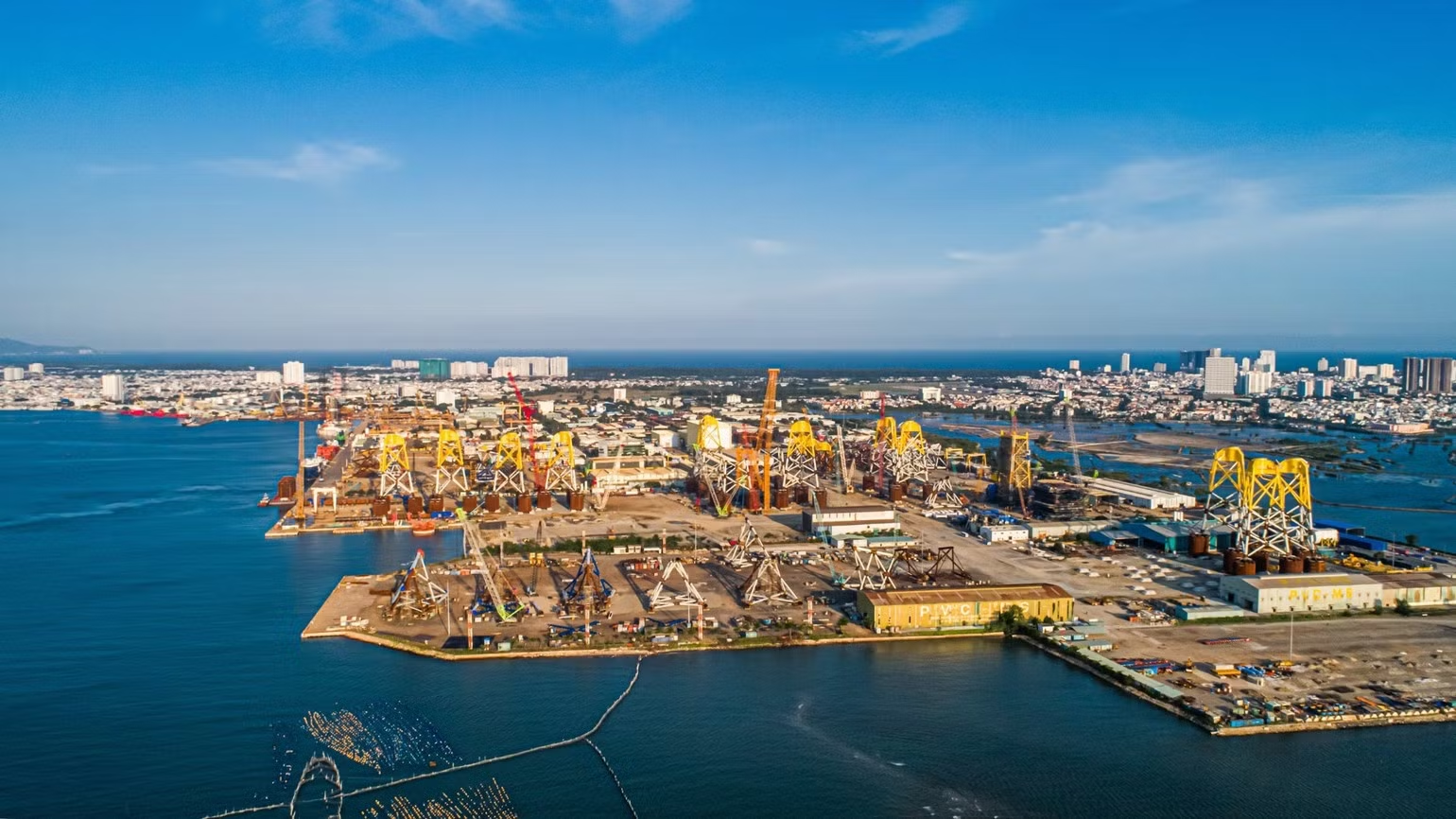
These are key factors for promoting the offshore wind power industry and services in Viet Nam. In fact, the domestic supply chain has already begun to take shape. PetroVietnam Technical Services Corporation (PTSC) is playing a pioneering role and driving the development of many supporting businesses and services. The issue now is how to make this chain stronger, more comprehensive, and capable of participating more deeply in different stages of the industry. In this process, the state’s role in providing direction, formulating policies, and creating the market is very important.
Q: Seaports are considered one of the important links in renewable energy hubs, particularly for offshore wind power. In order to establish offshore wind power industrial and service hubs, how should power source planning be connected with seaport planning and logistics infrastructure?
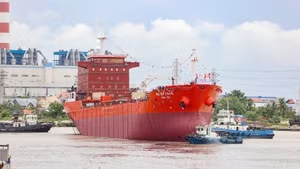
A: International experience shows that offshore wind power industrial and service hubs need to be established in association with seaports. Locating ports close to areas where wind farms are developed will facilitate transportation and installation while helping optimise costs.
Ports serving offshore wind power need to have suitable water depths for large vessels to enter and leave, sufficient land and long-term planning horizons of around 20-30 years or longer. Therefore, planning for offshore wind power development areas needs to be carried out in coordination with seaport planning, as well as industrial and logistics hubs.
When these plans are integrated, Viet Nam will have better conditions for establishing a more efficient offshore wind power industrial and service ecosystem, shortening implementation time, optimising costs for investors, and creating additional value for the economy.
Q: The development of renewable energy at sea is also raising issues concerning the use of marine space. From your perspective as an expert, how can a balance be struck between offshore wind power and maritime transport, fisheries, tourism, and ecosystem conservation, as well as requirements related to national defence and security?
A: International experience shows that offshore wind power and marine economic activities can coexist if they are properly planned. For example, in some countries, areas around turbine foundations can become shelters for marine organisms after construction. Countries such as China, the United Kingdom, and Denmark are also researching and developing models combining offshore wind power with marine aquaculture, including fish farming in suitable areas around wind farms.
Regarding maritime transport, experience from the North Sea region shows that many countries, such as Germany, Denmark, Norway, and the United Kingdom, use marine space for a variety of purposes while maintaining well-developed maritime activities. The important thing is to have sufficiently good marine spatial planning, clearly identifying areas designated for wind power, maritime transport, tourism, and other activities.
In particular, national defence and security must be regarded as key factors in all activities at sea. Therefore, the role of the Ministry of National Defence in the process of marine spatial planning and offshore wind power development is very important.
To address this issue, there needs to be coordinated cooperation among ministries, sectors, localities, businesses, and relevant agencies, together with unified planning and a long-term orientation. With good coordination, Viet Nam can fully develop offshore wind power while ensuring requirements relating to the marine economy, the environment, and national defence and security.
Q: Resolution No. 20-NQ/TW of the third Plenum of the 14th Party Central Committee, dated July 28, 2026, is focused on building and developing Viet Nam into a strong maritime nation. In your opinion, what needs to be done to turn this goal into not only power generation projects but also a driving force for establishing an offshore wind power industry and contributing to the goal of building Viet Nam into a strong maritime nation?
A: I believe Resolution No. 20-NQ/TW has opened a very important direction by placing offshore wind power within the broader strategy of building Viet Nam into a strong maritime nation. The target of 6-10GW by 2030 is not merely a target for power generation capacity but can also create a sufficiently large market to establish new industries and services at sea.
To turn this direction into reality, it is first necessary to quickly concretise the Resolution through a system of clear, stable and long-term policies and mechanisms. Investors need to know how the market will develop, what roadmap projects will follow, and how conditions concerning surveys, investment, grid connection, and infrastructure will be addressed.
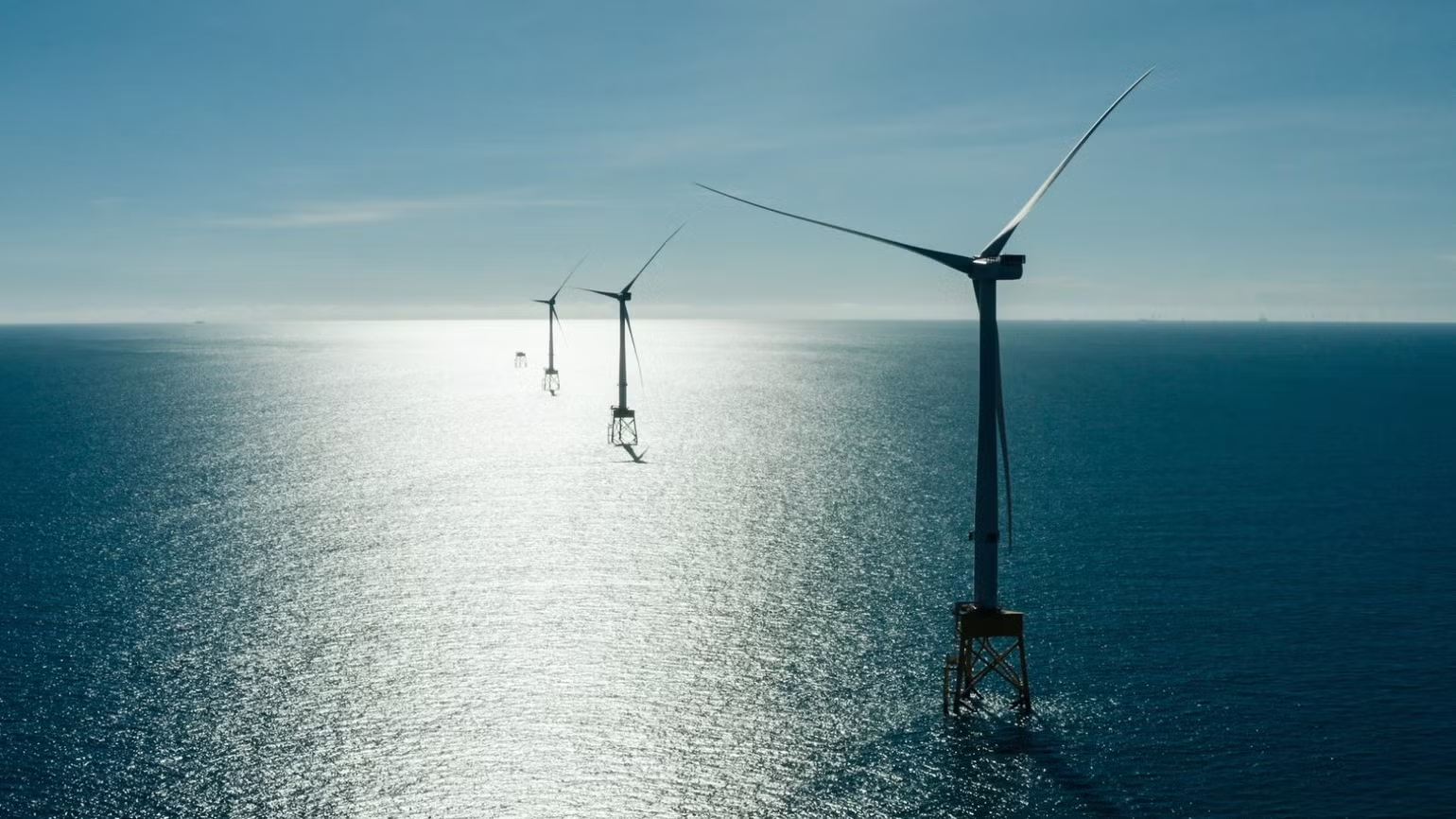
Second, offshore wind power needs to be viewed as an industry rather than merely a source of electricity. Therefore, electricity and energy policies, industrial policies, and science and technology development policies must be brought together into a single policy framework. Alongside project development, Viet Nam needs to create conditions for domestic enterprises to participate more deeply in the supply chain, from mechanical engineering and manufacturing, steel structures, power cables, service vessels, seaports, and logistics to operation, maintenance, and technical services. At the same time, major projects need to be linked to requirements for technology transfer; human resources training; and enhancement of domestic research, design, and manufacturing capabilities. This is also in line with the spirit of Resolution No. 20 on developing new marine industries and sectors and strengthening technological capacity.
Third, infrastructure for the development of the industry needs to be prepared in a coordinated manner, particularly seaports, logistics, and the power transmission system. If there are projects without supporting infrastructure, it will be very difficult to optimise costs and implementation schedules. Therefore, offshore wind power needs to be considered in relation to marine spatial planning and overall marine economic development planning.
I believe this is precisely an opportunity for Viet Nam not only to harness offshore wind resources but also to build its own industrial and scientific and technological capabilities.
If the institutional, market, infrastructure, technology, and human resources factors are implemented in a coordinated manner, offshore wind power will not only contribute additional clean electricity to the economy, but it could also become one of the drivers for establishing a new marine industrial ecosystem in Viet Nam, thereby making a practical contribution to the goal of building a strong maritime nation.
Q: Thank you very much!