Q: Viet Nam’s economy posted growth of 9.01% in the first nine months of the year, with third-quarter growth at 9.95%. What were the key drivers behind this performance?
A: Viet Nam’s economy grew strongly in the third quarter of 2026, with GDP estimated to have expanded by 9.95%, up 1.82 percentage points from 8.13% in the same period of 2025. GDP growth for the first nine months was estimated at 9.01%, up from 7.80% in the same period last year.
Growth momentum continued to strengthen, supported by robust expansion in industry and construction, solid growth in services and steady performance in agriculture, forestry and fisheries.
Key growth drivers included manufacturing, investment, construction, trade, finance, transport and several other service industries. This reflects the economy’s continued recovery and resilience, as well as the results of considerable efforts in economic management.
Growth in the third quarter and the first nine months was underpinned by three interconnected drivers: public investment, which generated additional output; industrial production and exports, which expanded market opportunities; and domestic consumption, which sustained growth in trade and services.
First, public investment emerged as a key driver in the third quarter, with disbursement faster than in the same period last year, particularly for large-scale infrastructure projects with significant spillover effects.
Faster disbursement in the third quarter not only contributed directly to growth in construction and related industries but also helped stimulate private investment, improving production capacity and infrastructure connectivity in the medium to long term.
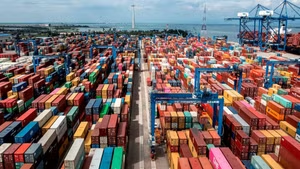
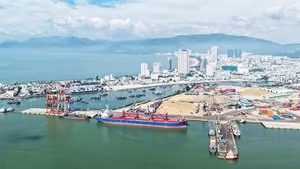
Second, industrial production and exports remained pillars of growth, reflecting the economy’s resilience and adaptability amid a sluggish recovery in global demand and persistent risks.
Manufacturing maintained solid growth momentum from the first quarter onwards, signalling a recovery in production activity and domestic supply capacity. Exports remained buoyant, providing firm support for domestic production.
Third, household consumption showed signs of improvement, helping to stabilise aggregate demand and cushion the economy against external shocks.
Domestic demand improved in the second quarter, driven by seasonal factors and rising demand for services, particularly tourism, accommodation and entertainment.
At the same time, consumption has been shifting towards services and higher value-added products, reflecting changes in consumer behaviour and contributing to deeper economic restructuring.
In addition to traditional drivers, new sources of growth, including science and technology, innovation and the digital economy, are gaining momentum and gradually making inroads into high-tech industrial and service sectors.
However, at present, these emerging drivers mainly play a supporting role and have yet to become major engines of growth.
Turning them into leading growth drivers will take time and require wide-ranging institutional reforms, human resources development and a stronger innovation ecosystem.
Q: To achieve the full-year GDP growth target of at least 10%, fourth-quarter growth would need to reach a record 12.5%. What are the main pressures facing the economy in the final three months of the year?
A: The National Assembly has set a GDP growth target of at least 10% for 2026.
Given the 9.01% growth recorded in the first nine months, GDP would need to expand by approximately 12.5% in the fourth quarter to meet the full-year target, about 4.1 percentage points higher than in the same period of 2025.
This is an extremely challenging target that will place considerable pressure on the economy, with several major challenges expected in the final three months of the year.
Macroeconomic management will face pressure from exchange-rate fluctuations and changes in energy and raw material prices, which could raise import costs and push up domestic prices.
Economic management in the fourth quarter must ensure that businesses have adequate capital for production while keeping inflation under control and maintaining major macroeconomic balances.
Public investment faces the dual challenge of meeting implementation deadlines and effectively converting disbursements into economic growth.
Disbursement typically accelerates towards the end of the year. However, investment capital will contribute directly to fourth-quarter GDP only if it is quickly converted into actual construction work and production capacity.
Obstacles in site clearance, project adjustment procedures, material supplies or contractors’ capacity could prevent allocated funds from being converted promptly into output in construction and related supply industries, delaying the funds’ contribution to fourth-quarter GDP growth.
External volatility is also weighing on industry and exports. Given the economy’s high openness, changes in demand, trade policies and supply chains in major markets can quickly affect manufacturers’ orders.
Fluctuations in energy and raw material prices also raise production and transport costs. The challenge in the fourth quarter is therefore not merely to maintain export value but also to sustain production momentum and raise the share of value added generated domestically.
Businesses continue to face considerable pressure, having to cope simultaneously with rising costs and difficulties in their markets. Orders, cash flow and logistics costs directly affect their ability to maintain production capacity, particularly for small and medium-sized enterprises.
Consequently, access to credit alone is not enough to stimulate growth if businesses lack orders or projects are not yet ready for implementation.

Q: Given the formidable growth challenge facing the economy in the fourth quarter, which measures should be given the highest priority?
A: The most important measure is to remove bottlenecks so that existing resources can deliver tangible results within the fourth quarter.
First, investment implementation should be accelerated, particularly for projects capable of generating actual construction output during the quarter.
This requires reviewing the progress of individual projects and promptly resolving obstacles in site clearance, adjustment procedures, material supplies and construction capacity.
The focus should be on construction and installation work completed within the period, as well as on speeding up the commissioning of finished projects.
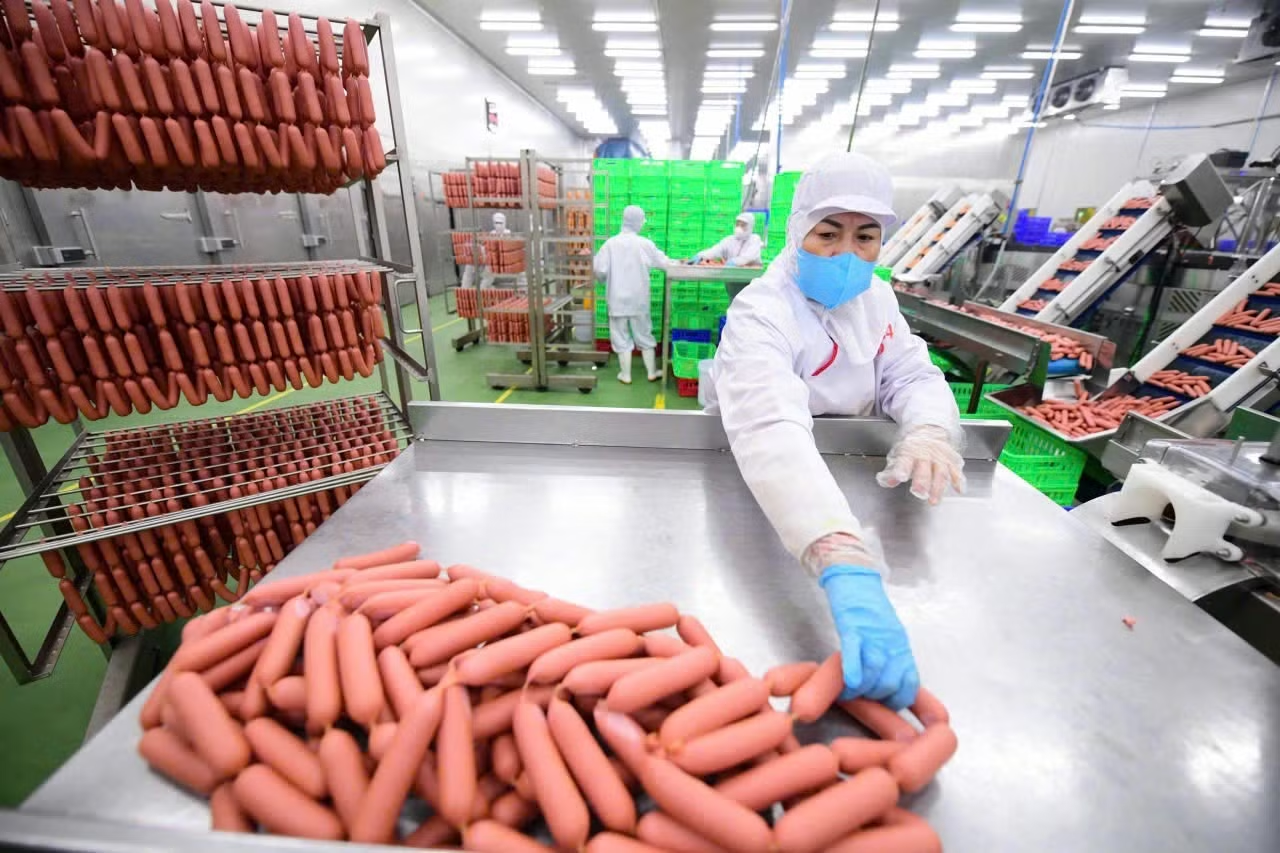
Second, industrial production, particularly manufacturing, should be sustained. Orders, inventories and raw material supplies in key export industries must be closely monitored so that emerging difficulties can be identified and addressed early.
Businesses should be supported in accessing markets, while bottlenecks in transport and customs clearance must be eased.
Enterprises with existing orders should be given favourable conditions to maintain production capacity, finish products and deliver goods on schedule.
Third, year-end consumer and service demand should be fully tapped.
It is essential to ensure adequate supplies and the smooth circulation of goods, to organise trade and tourism promotion activities suited to market demand, and to improve the quality of transport, accommodation and other tourism services.
Effectiveness should be measured by the volume of goods sold, visitor numbers, services delivered and value added generated, rather than simply by revenue gains driven by higher prices.
Fourth, measures to maintain macroeconomic stability should continue to be implemented.
Energy and raw material prices, exchange rates and the overall price level must be closely monitored to enable flexible policy responses and to prevent rising costs from undermining purchasing power and businesses’ ability to sustain production.
The priority in the fourth quarter is therefore to accelerate implementation by turning investment capital into completed construction work, orders into goods produced and sold, and year-end demand into actual service output.
The extent to which these resources and opportunities can be converted into tangible results will determine how much the final three months contribute to Viet Nam’s GDP growth in 2026.
Thank you very much.