Breakthroughs in mobilising social resources for expressway construction
The year 2025 marked a significant turning point for the Viet Nam Road Administration as it completed organisational restructuring and streamlining, overcame historic storms and floods, and surpassed the target of 3,000 km of expressways. On that foundation, the road sector enters 2026 with strong determination to accelerate digital transformation, vigorously mobilise social resources and develop road infrastructure with a network mindset, towards the goal of 5,000 km of expressways, affirming its role as the lifeline and backbone of national transport.
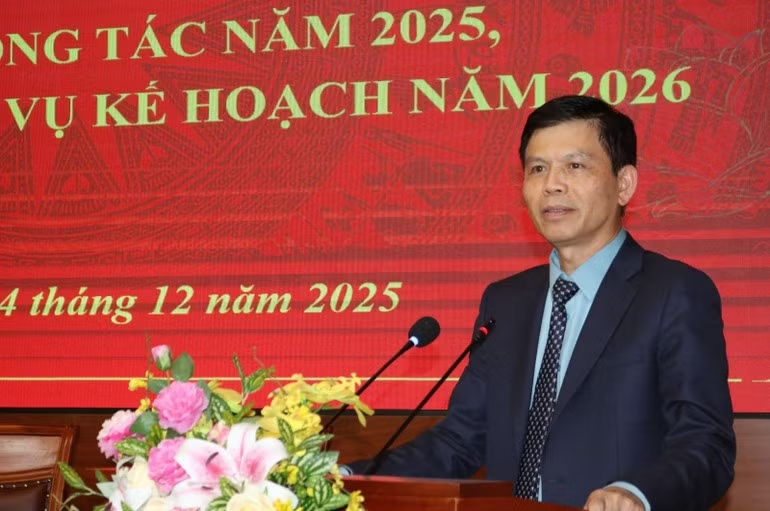
In particular, after four years of the Public–Private Partnership (PPP) Law taking effect, 2025 marked a strong unblocking of non-budget capital, with more than 43 trillion VND mobilised for two major expressway projects: Dau Giay–Tan Phu and the expansion of the Trung Luong–My Thuan Expressway. This is a positive signal, affirming the feasibility of the PPP model in transport infrastructure investment. Assessing these results, Deputy Minister of Construction Le Anh Tuan stated that the increasingly PPP mechanism has created confidence among investors, with the Viet Nam Road Administration playing a core role in project preparation, completion of procedures and coordination of implementation, thereby effectively mobilising social resources, sharing the budget burden and accelerating progress on key transport projects.
Determination to build a National Intelligent Traffic Operations Centre
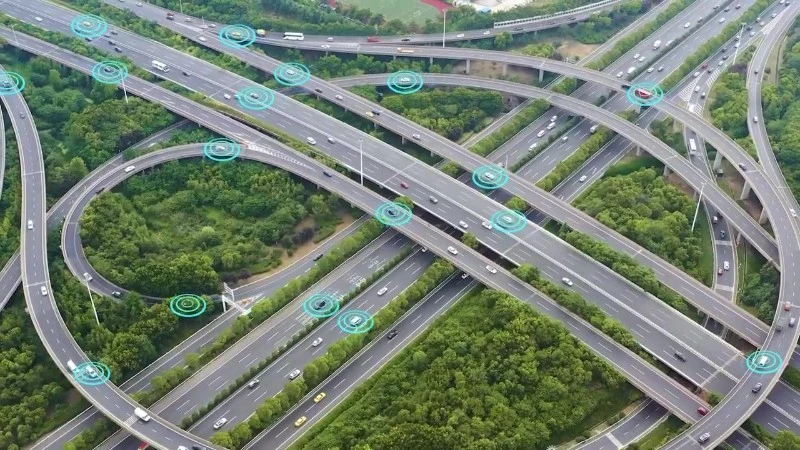
Alongside institutional reform, digital transformation has been identified as a key pillar. The Viet Nam Road Administration has put into operation the road infrastructure database system, gradually integrating it with the national database to effectively serve management, operations and policy-making.
Electronic toll collection without stopping continues to be a prominent highlight. To date, the system has been deployed at 168 toll stations, with more than 6.4 million vehicles using it, accounting for about 96% of vehicles in circulation—a high rate in the region. Not limited to expressways and national highways, this model has also been expanded to airports and parking facilities, helping reduce congestion, save social costs and form an intelligent transport ecosystem.
According to Nguyen Thanh Hoai, Deputy Director of the Viet Nam Road Administration, preparations for building the National Intelligent Traffic Operations Centre represent a strategic step, enabling real-time nationwide traffic monitoring, analysis and operations, while also expanding international cooperation and absorbing advanced experience and technology.
Inter-agency coordination to enhance traffic safety effectiveness
Under conditions of limited resources, the Viet Nam Road Administration has focused on reorganising traffic more scientifically and efficiently exploiting existing infrastructure. Close coordination with the Traffic Police Department in piloting truck lane separation on expressways has yielded positive results.
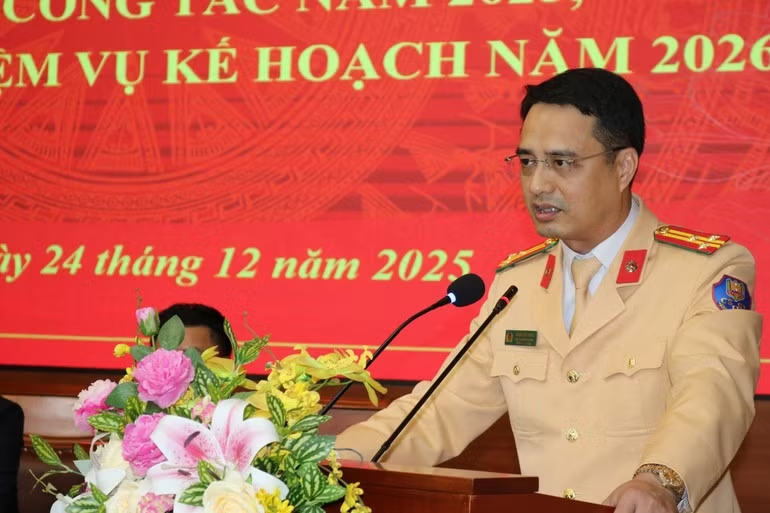
Senior Lieutenant Colonel Pham Duc Dong assessed that coordination between the two forces has contributed to curbing and reducing traffic accidents across all three criteria.
At the same time, transport management has been tightened, gradually addressing illegal passenger vehicles, unauthorised terminals and disguised contract vehicles, restoring order in road transport operations.
The year 2025 also marked the success of the Viet Nam–China road transport route under the GMS-CBTA Agreement, enabling deeper connections into the hinterlands of both countries. This route has helped reduce costs by 15–20%, shorten transport time by 2–3 days per trip, and bring significant benefits to agricultural exports and logistics development in border areas.
Accelerating in 2026 to complete the final pieces toward the 5,000 km expressway target by 2030
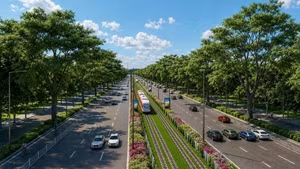
Amid pressure from tight schedules and extreme weather, 2025 marked a breakthrough year for road infrastructure. By the end of 2025, the country had put into operation 3,188 km of expressways, surpassing the 3,000 km target. Entering 2026, the sector will focus on accelerating investment and completing the network towards 5,000 km by 2030.
In the north, projects to expand and upgrade key arterial routes are being prioritised, from the Bac Kan–Cao Bang Expressway, the expansion of the Ha Noi–Thai Nguyen and Ha Noi–Bac Giang expressways, to the Phap Van–Cau Gie route, helping ease traffic pressure and strengthen connectivity in the Capital Region. In the central region and the Central Highlands, the Quy Nhon–Pleiku Expressway, recently approved by the National Assembly, has become a strategic corridor linking the coast to the Central Highlands, together with the Vinh–Thanh Thuy route, opening up new development space for a region with great potential.
In the south, progress is being accelerated on key projects such as Dau Giay–Tan Phu and Tan Phu–Bao Loc–Lien Khuong, which have just been launched and are required to speed up from the outset, along with Ring Road 4 of Ho Chi Minh City, the My An–Cao Lanh Expressway and the Ho Chi Minh City–Trung Luong–My Thuan route, completing the connectivity network of the Southern Key Economic Region.
According to Bui Quang Thai, Party Secretary and Director of the Viet Nam Road Administration, 2026 will focus on the synchronised implementation of three strategic breakthroughs: continued institutional improvement and administrative reform; realisation of digital transformation schemes, with early deployment of the Traffic Operations Centre; and intensified mobilisation of social resources for infrastructure investment.
Emphasising the important role of the Viet Nam Road Administration in the coming period, Deputy Minister Le Anh Tuan stated that the core task is to closely coordinate with ministries, sectors and localities to accelerate the development of road transport infrastructure, especially the expressway system and strategic ring roads of Ha Noi and Ho Chi Minh City, with the key objective that the next 2,000 km of expressways must be completed by 2030, making an important contribution to the goal of developing a synchronous, modern and sustainable transport infrastructure system.