In response to the situation, Viet Nam has demonstrated strategic proactiveness by simultaneously implementing a range of measures to safeguard petroleum supply, stabilise the domestic market and maintain energy security — often described as the “lifeblood” of the economy, particularly as the target of 10% economic growth requires strong macroeconomic stability.
According to the latest information from the Energy Security Task Force on March 8, 2026, despite sharp fluctuations in global markets, domestic petroleum supply has remained basically stable due to effective coordination among ministries, sectors and businesses, as well as flexible management policies. This is not merely a short-term response but also reflects a long-term strategy aimed at minimising geopolitical risks, supporting post-pandemic economic recovery and facilitating the transition to green energy.
Global energy prices surge
The global oil market has witnessed the sharpest price surge since 1983 as military conflict in the Middle East escalated, raising concerns over supply disruptions and the safety of shipping through the Strait of Hormuz — a vital route for about 20% of the world’s oil.
At the close of trading on March 6, 2026, West Texas Intermediate (WTI) crude jumped to 90.90 USD per barrel, up 12.2% from the previous day, while Brent crude reached 92.69 USD per barrel, an increase of 8.5%. Refined petroleum product prices also rose sharply: the average price over March 5–6 saw RON92 petrol (used for blending E5RON92) reach 109.73 USD per barrel, up more than 23%; RON95 petrol rose by over 26%; and both diesel and kerosene increased by nearly 36%.
The wave of price increases has spread widely, directly affecting many countries. In the US, petrol prices rose by about 0.88–1 USD per litre (equivalent to roughly 11%), while diesel increased by 15%. In Southeast Asia, Laos recorded petrol price hikes of 11–15% and diesel up to 33%; Thailand raised petrol prices by 4–8% and diesel by 14%; while the Philippines is expected to increase prices by 15–30% depending on the fuel type. In Europe, countries such as France saw increases of 8–15%, while China also adjusted its fuel prices in line with global trends.
These fluctuations not only push up transport and logistics costs but also fuel inflationary pressures, threatening the momentum of global economic recovery. In a context where inflationary pressures still linger after previous crises, ensuring stable fuel supply has become an urgent task, requiring timely intervention from governments worldwide. In this regard, Viet Nam has stood out with a proactive and multidimensional approach.
Proactively securing domestic supply, flexibly managing prices in line with the market
Viet Nam currently relies on two major oil refineries — Dung Quat and Nghi Son — which together meet around 70% of domestic petroleum demand. The Dung Quat refinery maintains a stable supply of crude oil and is not directly affected by tensions in the Middle East, with sufficient feedstock to sustain production at least until the end of April 2026. Meanwhile, although Nghi Son depends partly on crude oil from Kuwait, it continues to operate normally thanks to existing inventories and shipments already in transit, while also actively diversifying supply sources to avoid disruptions.
The remaining portion, about 30%, is supplied through imports. Major fuel traders have confirmed that supply plans for March 2026 remain secured, although April could present challenges due to rising global prices and export restrictions imposed by some countries seeking to safeguard their domestic energy security. In response to this risk, the Ministry of Industry and Trade has instructed businesses to diversify import sources from Southeast Asia, Australia and the US, while maintaining circulating reserves in accordance with regulations to avoid supply chain disruptions — a lesson drawn from previous global energy crises.
With global prices soaring, the Ministry of Industry and Trade and the Ministry of Finance have adjusted domestic fuel prices in accordance with Government Resolution No. 36/NQ-CP adopted at the Government’s regular meeting in February 2026. In the price adjustment on March 7, 2026, the retail price of RON95-III petrol rose to 27,047 VND per litre (up 4,707 VND, more than 21%), while diesel 0.05S increased to 30,239 VND per litre (up 7,202 VND, more than 31%).
The Ministry of Industry and Trade emphasised that price adjustments closely follow global market developments in order to encourage businesses to maintain imports, prevent hoarding and ensure a balance of interests among the State, enterprises and consumers. This regulated market mechanism not only helps limit inflationary spillover effects but also promotes healthy competition, contributing to the development of a more sustainable energy economy.
Maintaining market confidence
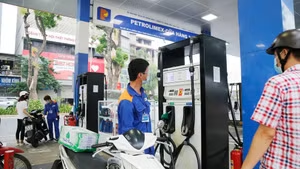
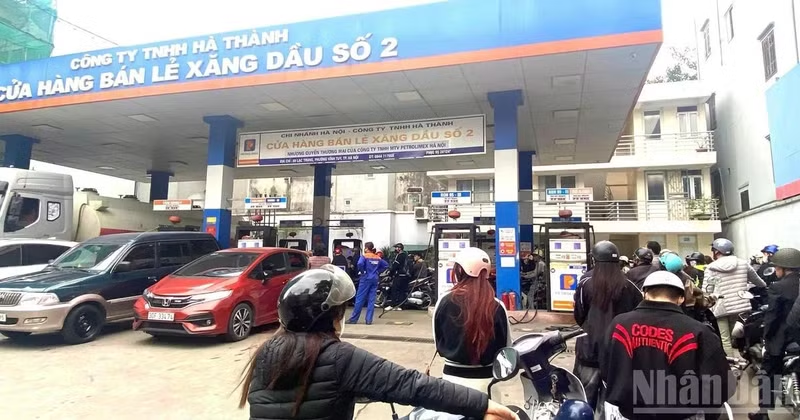
In recent days, concerns over potential shortages have led to a sudden surge in fuel demand in several northern localities. In Ha Noi, fuel sales from March 4 to March 8 increased by 50% compared with January levels. In Thanh Hoa, demand rose by 80–100%, with Petrolimex recording an increase of over 100%. In several provinces such as Bac Ninh, Thai Nguyen, Phu Tho and Gia Lai, large trucks were seen queuing to purchase diesel for resale, while some residents began stockpiling fuel in cans and bottles — reflecting psychological concerns rather than an actual supply shortage.
However, following the price adjustment on March 7, these phenomena declined significantly from March 8 onwards, demonstrating that timely policy intervention helped stabilise market sentiment.
Overall, the petroleum market continues to operate normally. Ho Chi Minh City, Da Nang, Hue and Can Tho have not recorded any supply disruptions. Hai Phong, with 10 storage depots holding nearly 468,000 cubic metres and almost 500 retail outlets, has maintained stable supply, while Nghe An and other provinces have also ensured adequate distribution.
Nevertheless, in border areas such as Tay Ninh, Gia Lai and Nghe An, foreign buyers have crossed into Viet Nam to purchase fuel due to lower domestic prices. RON95 petrol, for instance, costs about 31,000 VND per litre in Cambodia and 39,000 VND per litre in Laos, compared with 27,047 VND per litre in Viet Nam. This highlights Viet Nam’s price advantage but also underscores the need for strict management to prevent losses.
Deputy Minister of Industry and Trade Nguyen Sinh Nhat Tan affirmed: “Ensuring energy security is a key task for 2026. Immediately after the Government’s resolutions were issued, we developed an implementation plan aimed at both promoting growth and stabilising the market amid global risks. Petroleum is the ‘lifeblood’ of the economy, so we are accelerating the diversification of import sources to avoid dependence on any single region, while encouraging long-term supply contracts with partners in Southeast Asia, Australia and the US to mitigate potential disruptions to shipping through the Middle East.”
In addition to price management, relevant authorities have intensified inspections and strengthened coordination with the police, market surveillance forces and border guards to prevent speculation, hoarding and smuggling — particularly in border areas. Businesses are also required to comply with minimum reserve regulations.
In the longer term, the Government is developing scenarios to diversify crude oil sources, expand domestic production and promote biofuels and ethanol. Expanding national reserves, strengthening coordination mechanisms between the State and enterprises, and implementing financial support policies such as preferential foreign exchange allocation and lower interest rates will help enhance resilience. At the same time, the transition to greener energy use is being encouraged through greater use of public transport, electric vehicles and reduced reliance on traditional fossil fuels.
Experts emphasise that alongside technical solutions, stabilising public sentiment is key. The Ministry of Industry and Trade has called on the public to remain calm and avoid unnecessary stockpiling, as fuel supply remains assured. In a world marked by uncertainty, such proactive measures not only safeguard the economy in 2026 but also lay the foundation for long-term energy security, helping Viet Nam integrate more deeply into global supply chains.



![[Infographic] Viet Nam's 16 Comprehensive Strategic Partners](https://en-cdn.nhandan.vn/images/nyM650OGFWrOVWc-xajqN-rTZ68Rlmc1fiGJOhBRYHHdkBILL2hAdMw_FHcqH-128bTaQBSOAMd0_NcTypwz7H-j_NBZzuSdgF8ETMmVl1xLtdcCjym8rCUyKZqQgOZtC4ouMEzxlJoQ-MllehtjehDxIkn58uqaoaCRy4fSY54/1792513260540-1528117236743671738-1528117236743671738-9e797c256fe32c7c7b9c1cc03b0ca64e.jpg.avif)