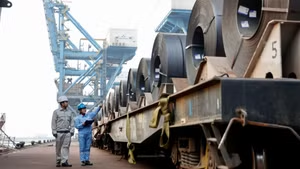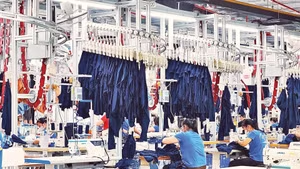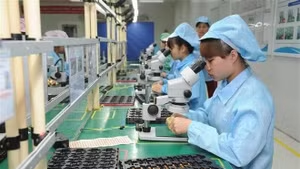
In recent years, the Red River Delta has witnessed robust growth in manufacturing, trade, and logistics hubs. Hanoi serves as the central hub and the core for research and development (R&D); Bac Ninh has emerged as a high-tech manufacturing centre; Quang Ninh acts as the eastern maritime economic gateway; and Hai Phong is increasingly solidifying its role as a major maritime gateway and a regional logistics centre.
Creating momentum for sustainable logistics development
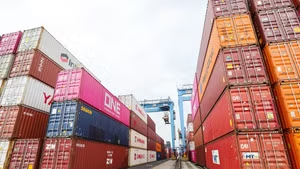
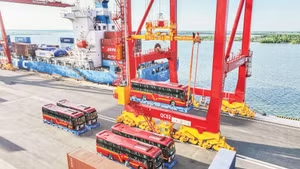
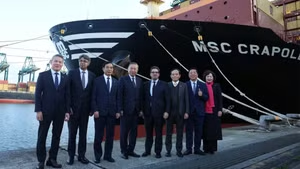
Alongside the expansion of manufacturing and import-export activities, Hai Phong’s seaport system is growing rapidly. The Lach Huyen deep-water terminal complex is capable of accommodating large-tonnage container ships, connecting Hai Phong to numerous international markets. Continued development of new terminals is expected to further boost Hai Phong Port’s cargo throughput capacity in the coming years.
However, the rapid expansion of port infrastructure presents a challenging puzzle: how to efficiently, quickly, and cost-effectively transport ever-increasing volumes of cargo from the maritime gateway deep into the hinterland.
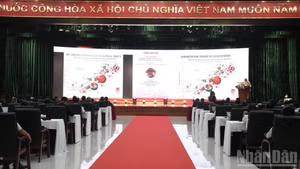
Speaking at the recently held 7th Regional Logistics Forum (2026)—themed “Creating New Development Spaces for Logistics in the Red River Delta”—Tran Tien Dung, Vice Chairman of the Viet Nam Logistics Business Association and Chairman of the Hai Phong Logistics Association, stated that container throughput at Hai Phong port is projected to reach between 13 million and over 15.6 million TEUs by 2030, a significant increase from the 8.1 million TEUs recorded in 2025.
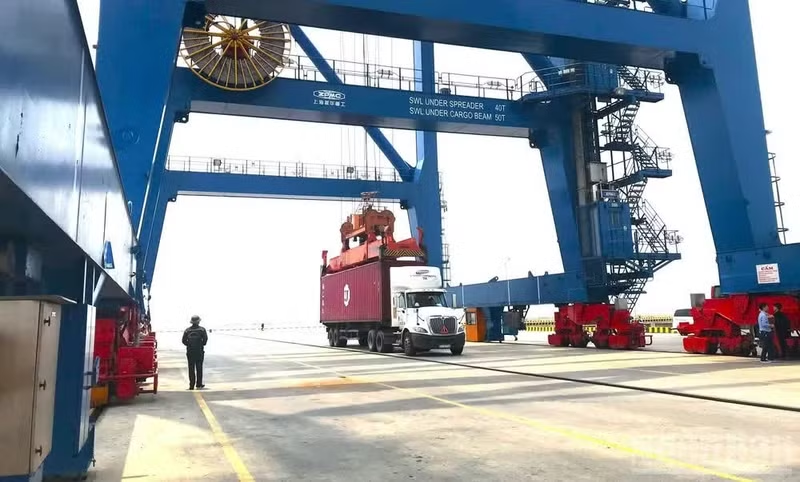
Meanwhile, 98% of containerised cargo is currently transported by road. This heavy reliance on road transport not only places strain on the transport infrastructure but also heightens the risks of congestion, accidents, and environmental pollution, while contributing to the persistently high logistics costs faced by Vietnamese enterprises.
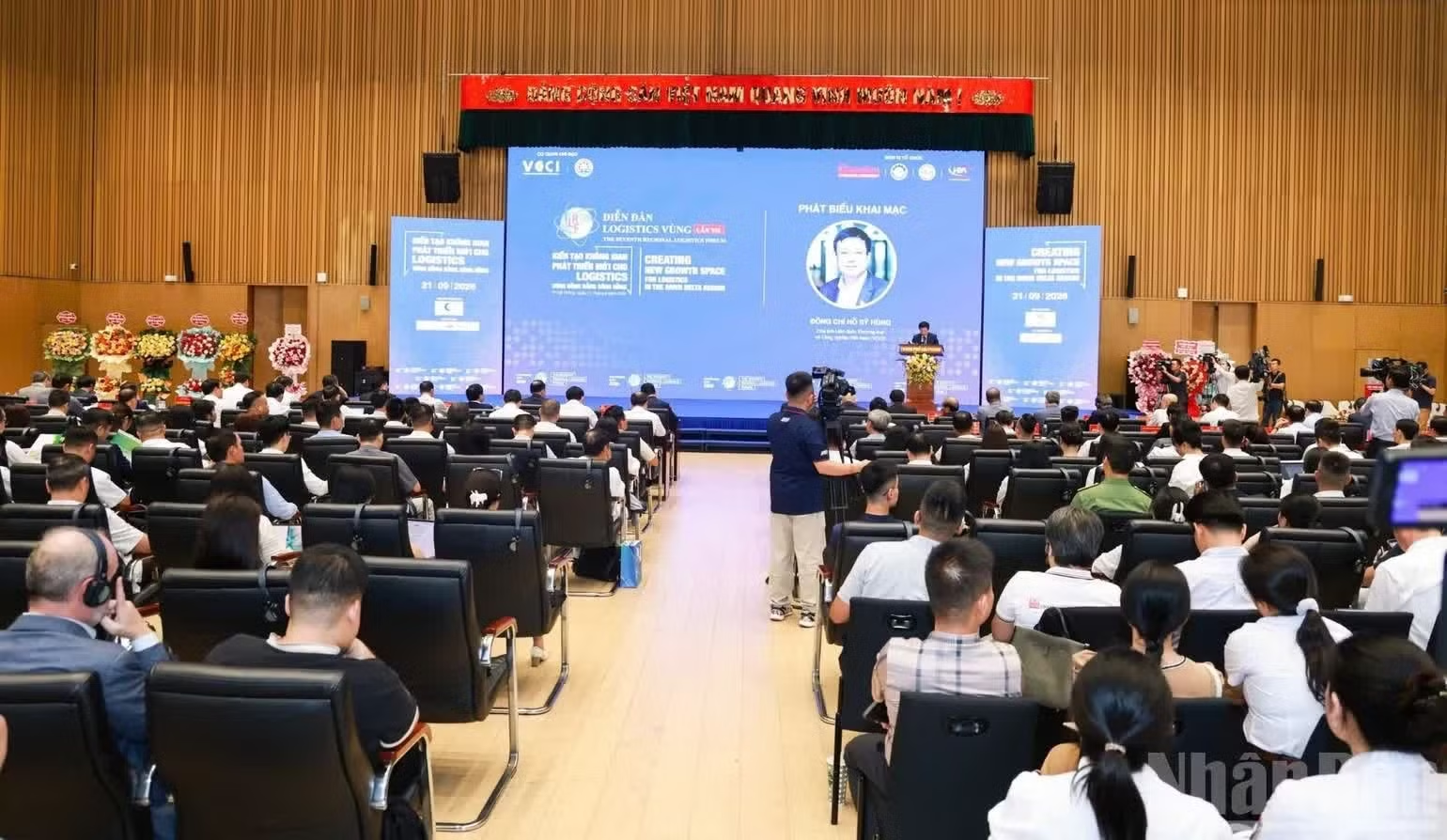
Against this backdrop, inland waterway transport faces a significant opportunity to become a more vital link in the region's logistics chain. The Northern and North Central regions boast over 4,000 km of inland waterways and approximately 300 km of coastal routes suitable for commercial exploitation.
This offers a considerable advantage, given that waterborne transport provides high cargo capacity, low costs, and low carbon emissions. However, this potential has not yet been adequately translated into actual transport capacity.
The Hai Phong–Bac Ninh waterway corridor currently handles only about 20 trips per week, primarily using small river vessels with capacities under 120 TEU due to limitations regarding bridge clearances and channel dimensions. Routes from Hai Phong to Ninh Binh or Nghi Son also see only a few trips weekly, serviced by a limited fleet of coastal vessels.
These bottlenecks demonstrate that the challenge of developing waterborne transport extends beyond the mere availability of rivers, ports, or fleets; it is directly linked to connectivity infrastructure, navigation channels, bridge clearances, and technical regulations governing vessel operations.
From a business perspective, this is precisely why the logistics community pins its hopes on the upcoming amendments to Viet Nam’s maritime and inland waterway laws.
Removing connectivity bottlenecks to create new space for regional logistics
Dung believed that refining the legal framework could lay the foundation for inland waterway and maritime transport to play a deeper role in the movement of goods. According to him, a key requirement is to review and adjust regulations regarding the operational conditions for transport vehicles connecting transshipment hubs, deep-water ports, and inland ports, thereby enabling the use of higher-capacity vehicles. Increasing transport capacity can lower costs per unit of cargo while simultaneously reducing emissions.
Another issue of concern to logistics enterprises is the mechanism for channel maintenance, dredging, and upkeep. Dung proposes empowering local authorities to take a more proactive role and simplifying maintenance and dredging procedures to suit the specific characteristics of each region, ensuring that vessel movements are smooth, rapid, and cost-effective.

Alongside this, there is a need to resolve infrastructure bottlenecks. Maintenance of navigation channels and buoy systems, as well as increasing vertical clearance at certain bridges, could extend daily operating hours for waterway vessels and boost cargo-carrying capacity.
Regarding riverside land, Dung proposed a comprehensive assessment of actual flood discharge capacity to serve as a scientific basis for evaluating the use of riverside areas for logistics infrastructure—such as shipyards, container yards, logistics warehouses, and port operations centres.
Developing waterway transport is inseparable from the creation of a multimodal logistics system. Seaports are merely one link in the entire chain; the system's overall efficiency depends on connectivity between deep-water ports and inland ports, logistics centres, warehouses, and production zones.
Dung argued that focusing solely on increasing cargo throughput at ports—without simultaneously expanding inland transport modes—will place mounting pressure on the road network. Therefore, inland waterways, railways, and coastal shipping must be vigorously developed to create additional cargo flow routes.
This is also a matter of regional integration; while Hai Phong possesses a deep-water seaport advantage, transforming this into a driving force for the entire region requires connecting the port with the warehouse systems, logistics centres, and production capacities of neighboring localities.
Instead of localities developing in isolation, leveraging their complementary strengths can foster a more integrated logistics service chain, linking seaports with production areas and markets. In this vision, waterborne transport is not merely an alternative to road transport; it serves as a vital link capable of restructuring the region's entire flow of goods.
As institutional and infrastructural barriers are gradually removed, goods from deep-water ports will gain additional options for inland distribution. This alleviates pressure on road transport and enhances connectivity between production hubs and seaports, while simultaneously better meeting the demands for green transport and emissions reduction.
Leveraging its seaports, waterway networks, and the strategic location of production and logistics hubs, the Red River Delta is well-positioned to expand its development through a multimodal approach. The remaining challenge lies in resolving institutional and infrastructural bottlenecks, ensuring that the flow of goods—both riverine and maritime—can operate at a level commensurate with the region’s true potential.