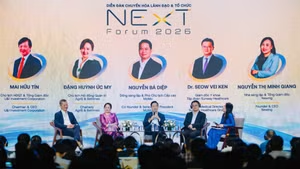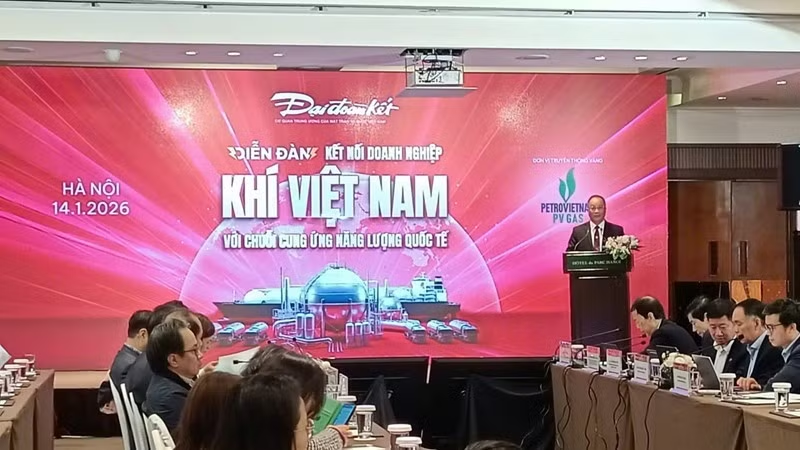
At the opening of the forum, Nguyen Dang Khang, Deputy Editor-in-Chief of Dai Doan Ket Newspaper, stated that on August 20, 2025, the Politburo issued Resolution No. 70-NQ/TW on ensuring national energy security through 2030, with a vision to 2045. The resolution affirms a consistent viewpoint: energy development must be closely linked with the socialist-oriented market economy, ensuring social progress and equity, social welfare, and national defence and security.
With a vision to 2045, the resolution sets the goal of building a synchronous and modern energy system, a competitive and transparent energy market, efficient use of resources, reduced greenhouse gas emissions, and strengthened regional and international connectivity. In particular, it clearly identifies the role of clean energy, especially liquefied natural gas (LNG), as a key pillar in ensuring energy security and promoting the energy transition.
Deputy Editor-in-Chief of Dai Doan Ket Newspaper Nguyen Dang Khang said through presentations and thematic reports by leading experts in policy, energy, and gas markets, the forum not only provides theoretical perspectives but also opens up many practical issues such as LNG infrastructure and logistics development, the use of LNG in power generation and industry, and connecting the domestic market with international markets, toward fulfilling the Government’s net-zero commitment.
In addition, the forum creates a space for policy dialogue, academic exchange, and practical sharing among policymakers, experts, and businesses, thereby seeking solutions to develop Viet Nam’s LNG market and enhance the international integration capacity of gas enterprises, Khang added.
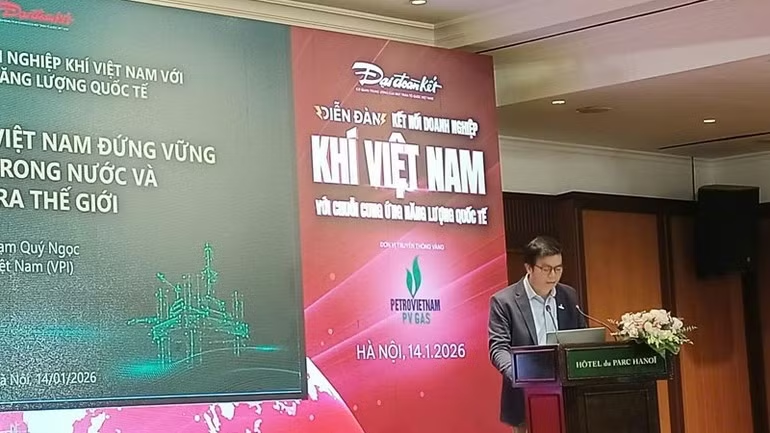
According to Nguyen Quoc Thap, Chairman of the Viet Nam Petroleum Association, 2024 marked a milestone when imported LNG was supplied for power generation in Vietnam for the first time. LNG supply to northern Viet Nam was successfully implemented via rail and road tankers, completing a comprehensive gas energy supply chain through pipelines, waterways, roads, and railways, thereby expanding a flexible and nationwide energy supply map. Viet Nam also successfully carried out its first international LNG trading deal with a volume of more than 70,000 tons, officially entering and being recognised on the global LNG trading map.
Notably, in January 2026, the Nhon Trach 3 and 4 power plants officially commenced commercial operation, marking a significant turning point for Viet Nam’s power sector as the country’s first large-scale LNG-to-power project came online, providing flexible baseload power for the southern region.
These achievements demonstrate the determination, innovation, and pioneering spirit of Vietnamese gas enterprises in developing new products with breakthrough business models; affirm their leading role in building a competitive energy market and ensuring national energy and economic security; and create momentum for expanding operations into international markets, promoting sustainable energy development, and contributing to the robust growth of Viet Nam’s oil and gas industry.
Thap also noted that alongside opportunities, such as rapidly growing demand for LNG-fired power and gas-consuming industries and the potential to become an LNG import and distribution hub in ASEAN, enterprises face challenges including LNG pricing mechanisms that fluctuate with global markets; limited experience in full value-chain trading; management and human resources constraints; and the fact that although LNG is an international market, Vietnamese gas enterprises must still comply with domestic legal frameworks.
Therefore, it is necessary to further perfect the legal framework for an internationally oriented LNG market, design flexible LNG–electricity–gas pricing mechanisms, and establish risk- and benefit-sharing arrangements in line with market principles. With appropriate and progressive policy support, Vietnamese gas enterprises can fully become international players in the regional and global LNG value chain.
Experts noted that the National Power Development Plan for the 2021–2030 period, with a vision to 2050, identifies gas-fired power as one of the most important pillars for ensuring energy security and driving the green transition. By 2030, total installed capacity of gas-fired power sources is expected to reach 37,330 MW, accounting for about 24.8% of the total national power system capacity. Of this, power generation using domestically produced natural gas will reach 14,930 MW, while LNG-import-based power will reach 22,400 MW, requiring the development of massive LNG terminal and storage infrastructure.
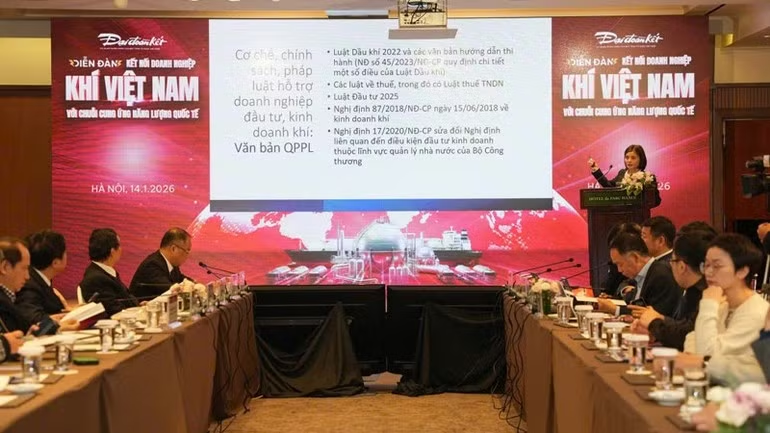
Addressing policy mechanisms to support and promote enterprise development, Nguyen Minh Thao, Deputy Head of the Department of Enterprise Development and Business Environment at the Institute for Strategy and Economic–Financial Policy (under the Ministry of Finance), said that one of the new points of Resolution No. 79-NQ/TW on developing the state-owned economic sector is the focus on investing in and developing several strong, large-scale state-owned economic groups and enterprises to play a leading role in key and strategic sectors of the economy, including energy.
Accordingly, the State will adopt policies to encourage the development of large-scale state-owned enterprises by increasing charter capital; allowing the full use of proceeds from equitisation and divestment of state capital; and increasing the proportion of after-tax profits retained by enterprises. For nationally important projects and overseas investment projects assigned by competent authorities beyond enterprises’ existing plans, the State will ensure sufficient capital, provide interest rate support, and facilitate access to adequate credit.