The event was held as Viet Nam accelerates efforts to improve its institutional framework and market infrastructure in order to build a modern, transparent and internationally connected commodity trading ecosystem—an important component of the roadmap toward establishing an International Financial Centre in Viet Nam.
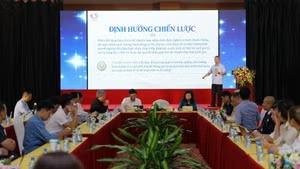
At the event, representatives from the Ministry of Industry and Trade of Viet Nam, regulatory agencies, international experts and relevant organisations shared global experiences, discussed market development models and addressed risk management issues in derivatives commodity trading. Experts also introduced commodity and derivatives market models currently applied worldwide and analyzed lessons learned from several notable countries. Based on these insights, participants discussed Vietnam’s current position in the global market landscape and key considerations for developing the market in the coming period.
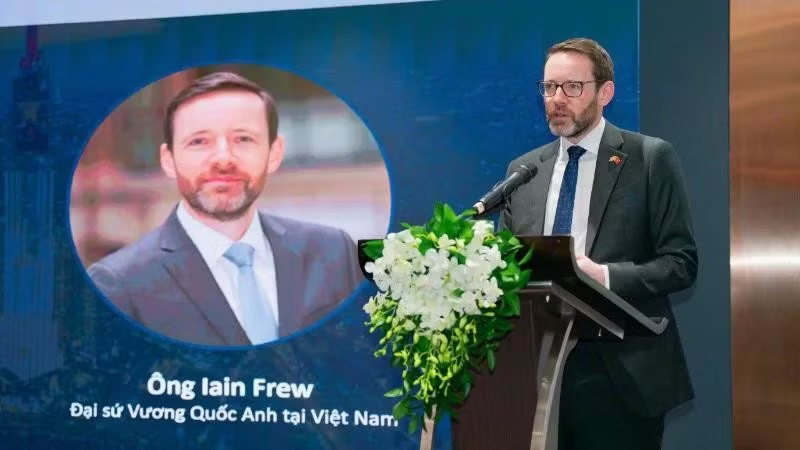
Speaking at the workshop, Iain Frew, UK Ambassador to Viet Nam, emphasised that he recognises and highly appreciates the leadership of the Ministry of Industry and Trade of Viet Nam, particularly the Agency for Domestic Market Management and Development, in studying international standards, reviewing the legal framework, and closely coordinating with ministries, experts and the business community to implement this breakthrough reform. The UK believes Viet Nam is well positioned to become one of the region’s most attractive destinations for commodity and derivatives trading.
The UK is also proud to accompany Viet Nam on its journey to develop an International Financial Centre and build a world-class commodity and derivatives market, he added.
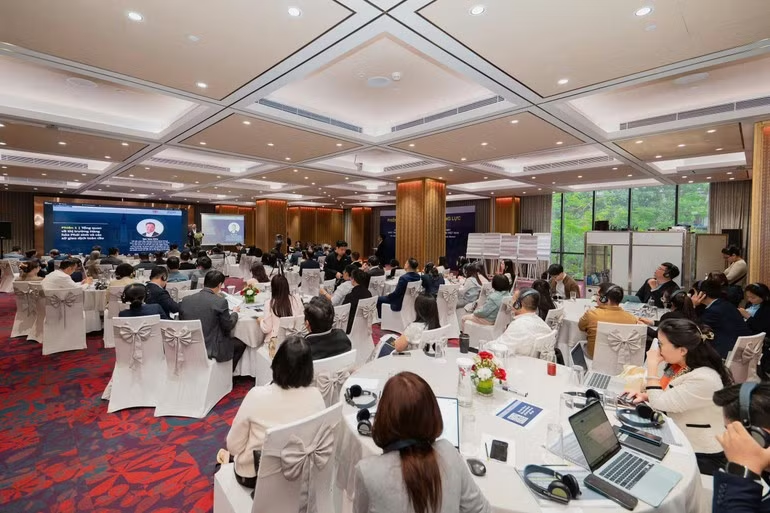
As Viet Nam gradually develops commodity trading and derivative instruments to help businesses hedge against price risks, the programme is expected to provide additional international perspectives and practical lessons from developed markets.
One notable part of the programme was a group discussion on Viet Nam’s competitive advantages in the commodities and derivatives sector. Participants analysed the country’s strengths—from its agricultural and industrial production base to its potential for deeper participation in global value chains—thereby exploring ways to build distinctive competitive advantages for Viet Nam’s domestic commodity trading market.